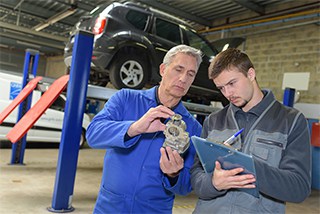
Compare Automotive Training Paths



Automotive training can lead in several directions, from diagnosing cars and light trucks to repairing diesel equipment, restoring classic vehicles, refinishing collision damage, or servicing motorcycles. Start by choosing the kind of vehicles and work you actually want, then compare the training paths available for that specialty.
If cars and light trucks are your goal, go straight to our automotive mechanic and technician schools guide. This page is the broader automotive-path chooser, with routes into diesel, collision repair, motorcycle, heavy equipment, restoration, performance, and related transportation training.
Start With the Kind of Work You Want
| If you want to work on... | Start with this training path |
|---|---|
| Cars and light trucks | Automotive mechanic and technician training |
| Diesel trucks, buses, and fleet vehicles | Diesel mechanic training |
| Collision damage, body panels, and refinishing | Collision repair and auto body training |
| Motorcycles and powersports equipment | Motorcycle mechanic training |
| Construction, agricultural, and other heavy mobile equipment | Heavy equipment technician training |
| Classic, custom, or performance vehicles | Automobile restoration or high-performance training |
The biggest mistake is treating every automotive program as interchangeable. A strong school for collision repair may be a poor fit for diesel work, and a general passenger-car program is not the same thing as heavy equipment training. Pick the work first, then compare schools within that lane.
Not Sure Which Automotive Program Fits You?
Cars, trucks, diesel engines, motorcycles, and collision repair all live under the automotive umbrella, but they do not lead to the same daily work. Answer a few quick questions to narrow your path before you start comparing schools.
Compare Automotive Training Paths
Automotive training is not one single path. Compare the vehicle type and day-to-day work first, then use the dedicated TSNET page for the details that matter within that specialty.
| Training path | Best for | Typical training focus | Go deeper |
|---|---|---|---|
| Automotive service | Cars and light trucks | Engines, brakes, steering and suspension, electrical systems, diagnostics, maintenance | Automotive mechanic and technician schools |
| Diesel service | Trucks, buses, and fleet vehicles | Diesel engines, heavy-duty systems, electrical diagnostics, fleet maintenance | Diesel mechanic schools |
| Collision repair / auto body | Exterior and structural vehicle repair | Body panels, structural repair, refinishing, paint, glass, damage analysis | Collision repair schools |
| Motorcycle / powersports | Motorcycles, scooters, ATVs, and related equipment | Engines, transmissions, brakes, ignition, electrical systems, chassis | Motorcycle mechanic schools |
| Heavy equipment service | Construction, agricultural, rail, and industrial mobile equipment | Hydraulics, diesel systems, electrical systems, powertrains, heavy mobile equipment | Heavy equipment training |
| Restoration / high performance | Classic, custom, and performance vehicles | Restoration techniques, performance systems, custom work, specialty engines | Restoration or high-performance programs |
| CDL / truck driving | Operating commercial vehicles instead of repairing them | Vehicle operation, inspections, safety, regulations, logistics | CDL training |
If you are deciding specifically between collision repair and passenger-car mechanical work, see our auto body vs. auto mechanic comparison.
Browse Automotive and Transportation Programs
Choose a specialty first. The dedicated pages below go deeper on training, career fit, credentials, and school-selection details for that path.
Automotive Schools
Sponsored Listings


Lincoln Tech
- Automotive Technology
- Collision Repair and Refinishing
- Diesel Technology
Lincoln Tech
- Denver
- East Windsor
- East Point
- Melrose Park
- Indianapolis
- Columbia
- Mahwah
- South Plainfield
- Union
- Queens
- Levittown
- Grand Prairie
- Automotive Technology
- Collision Repair and Refinishing
- Diesel Technology
Nashville Auto-Diesel College
- Nashville, Tennessee
- Automotive Technology
- Collision Repair and Refinishing
- Diesel Technology
- Heavy Equipment

UEI College
- Mesa
- Bakersfield
- Chula Vista
- Garden Grove
- Gardena
- Oceanside
- Sacramento
- Stockton
- West Covina
- Tacoma
- Automotive Technician


All-State Career
- Baltimore, Maryland
- Lester, Pennsylvania
- Pittsburgh, Pennsylvania
- Advanced Tractor Trailer Driving
- Class A CDL Driving
- Class A CDL Preparatory
- Class B CDL Driver Training
- Class B CDL Truck Driving
- Commercial Truck Driver Training

Advanced Technology Institute
- Virginia Beach, Virginia
- Automotive Technology
- Automotive Technology with Service Management
- Diesel/Heavy Vehicle Technology
- Diesel/Heavy Vehicle Technology with Service Management

Universal Technical Institute
- Avondale
- Long Beach
- Rancho Cucamonga
- Sacramento
- Miramar
- Orlando
- Lisle
- Bloomfield
- Mooresville
- Exton
- Austin
- Dallas/Fort Worth
- Houston
- Automotive Technology
- Collision Repair & Refinish Technology
- Diesel & Industrial Technology
- NASCAR Technician
Canadian Automotive and Trucking Institute
- Cambridge, Ontario
- Automotive Service Advisor
- Automotive Technician
- Transportation Operations and Dispatching
Automotive Training Centres
- Surrey, British Columbia
- Toronto, Ontario
- Online
- Auto Body & Refinishing Prep Technician
- Auto Body Collision Estimating
- Auto Body Technician
- Automotive Business Manager
- Automotive Detailing
- Automotive Parts & Warehousing
- Automotive Refinishing Prep Technician
- Automotive Sales & Leasing
- Automotive Service Operations Specialist
- Automotive Service Technician
- Automotive Technology
- CFC Regulation Air Conditioning
- Dispatching & Transportation Operations
- Dispatching & Transportation Operations Specialist
- Hybrid & Electric Vehicles
- Hybrid Technology and Service
- Ozone Depletion Prevention
- Transportation Operations and Dispatching
- Transportation Safety Supervisor
How to Choose an Automotive Training Specialty
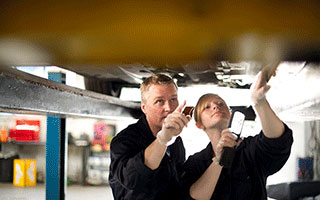 Start with the work, not the school name. Programs that all look "automotive" on the surface can prepare you for very different shops, vehicles, and equipment.
- Passenger cars and light trucks: Choose automotive service technology if you want mechanical repair, electrical diagnostics, maintenance, and modern vehicle systems.
- Trucks and buses: Choose diesel training if heavy-duty engines, fleets, and commercial vehicles are the main attraction.
- Vehicle exteriors: Choose collision repair if you prefer structural repair, bodywork, refinishing, paint, and damage restoration.
- Large mobile machinery: Choose heavy equipment training for construction, agricultural, rail, or industrial equipment.
- Motorcycles or specialty vehicles: Look for motorcycle, restoration, or high-performance programs that match the machines you actually want to work on.
If you are still split between two paths, use the comparison and path-finder above before requesting school information. That usually saves more time than trying to compare every automotive school at once.
Want to Work on Cars and Light Trucks?
That is the passenger-car mechanic and technician path, and it now has its own national decision guide. Use our automotive mechanic and technician schools page to compare program types, hands-on training, school costs, ASE Education Foundation accreditation, modern diagnostics, career data, and the questions worth asking before you enroll.
Keeping that detail on the dedicated mechanic page makes this hub more useful too. You can choose among automotive specialties here without wading through a second, competing mechanic-school guide.
What to Compare Once You Pick a Path
Once you know the specialty you want, compare programs on the things that can actually change your training experience:
- Program focus: Does the curriculum match the vehicles and systems you want to work on?
- Hands-on time: How much real shop, lab, externship, or employer-supported practice is included?
- Equipment: Are students training on current tools, diagnostic systems, and vehicle technology?
- Schedule and location: Can you realistically complete the program without the commute or timetable becoming the problem?
- Total cost: Compare tuition plus tools, books, fees, testing, and other required expenses.
- Industry connections: Ask about local employers, internships, manufacturer relationships, and graduate-placement support.
Credential and licensing questions vary by specialty, so use the dedicated program page for the path you choose rather than assuming the same rules apply across the whole automotive field.
Find Automotive Training Programs Near You
 Use the school listings above or the ZIP search to compare nearby automotive programs. A short commute is useful, but specialty fit matters more: verify that a school teaches the kind of work you want before you request information.
If your goal is specifically passenger-car repair, compare the dedicated auto mechanic training guide before choosing among schools.
What's Next?
Featured Automotive School Locations