
Automotive Schools in California



Automotive schools in California can help you build the hands-on skills needed to inspect, maintain, diagnose, and repair cars and light trucks. The right training can also help you understand California-specific paths such as Smog Check licensing and Vehicle Safety Systems Technician licensing.
California Mechanic License Path Finder
Answer a few questions to see whether your next step is general mechanic training, Smog Check Inspector licensing, Smog Check Repair Technician licensing, or Vehicle Safety Systems Technician licensing.
Your path will appear here
Choose your goal and current background, then select Show My Path.
Important: This tool summarizes published BAR requirements. It does not replace BAR approval, exam eligibility review, or school admissions guidance.
Education & Training
Mechanic trade schools in California can help students develop the practical skills repair shops need now: electrical diagnostics, engine performance, emissions systems, brakes, steering and suspension, shop safety, and customer communication. Some programs are broad automotive technology programs. Others focus on collision repair, diesel technology, manufacturer-specific systems, or Smog Check preparation.
Automotive Training Options in California
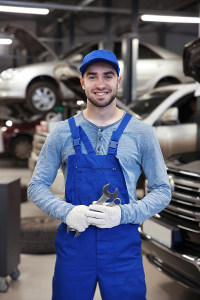 The best training route depends on your timeline, budget, location, and career goal. If California is not your target state, you can also compare automotive schools in New Jersey for another snapshot of campus-based mechanic training options.
| Training path | Best for | What to watch |
|---|---|---|
| Certificate or diploma program | Students who want focused, career-oriented automotive training without a full degree path. | Ask about total tuition, tools, shop hours, ASE prep, and whether the program helps with Smog Check-related prerequisites. |
| Associate degree | Students who want broader academic study plus automotive technology training. | Degree programs can take longer, but BAR recognizes qualifying automotive degrees as one possible Smog Check license route when paired with experience. |
| Community college | Cost-conscious students and people who want transfer-friendly or public-college options. | Check waitlists, course sequencing, lab access, evening options, and whether Smog Check courses are available. |
| Private trade school | Students who want a more direct, shop-focused training experience and stronger career-services support. | Private programs can cost more. Compare placement support, equipment, schedule, tools, and employer partnerships. |
| Manufacturer or dealer training | Students aiming for dealership work or brand-specific training. | Training may be valuable but narrower. Ask whether skills transfer beyond that brand or employer network. |
| Employer training or apprenticeship-style entry | People who want to earn while learning and are comfortable starting in entry-level shop roles. | On-the-job training can be practical, but may be less structured and may not satisfy school-hour requirements for some licensing paths. |
What You Can Learn
Automotive technology keeps getting more electronic, diagnostic, and software-driven. A strong program should help you build skills in areas such as:
- Electrical and electronic systems
- Engine performance and drivability diagnostics
- Fuel, ignition, and emissions systems
- Brakes
- Steering and suspension
- Heating, ventilation, and air conditioning systems
- Scan tools and diagnostic equipment
- Hybrid and electric vehicle fundamentals
- Repair estimates, work orders, and customer communication
- Shop safety and environmental practices
How to Choose a California Automotive School
A glossy shop photo is nice. A program that actually gets you under the hood with modern diagnostic equipment is better. When comparing California automotive schools, ask about:
- Hands-on shop time: How many lab hours are included?
- Diagnostic equipment: Are students using current scan tools and electrical testing equipment?
- ASE alignment: Does the curriculum prepare students for relevant ASE areas?
- BAR and Smog Check prep: Are any BAR-certified courses offered or supported?
- EV and hybrid exposure: Does the program cover high-voltage safety and modern drivetrains?
- Tool policy: Are tools included, discounted, borrowed, or bought separately?
- Schedule: Are evening, weekend, or accelerated options available?
- Employer connections: Which shops, dealerships, or manufacturers recruit from the program?
- Total cost: What is the real all-in cost after tuition, fees, tools, books, uniforms, and exams?
Licensing & Certification in California
Do Mechanics Need a License in California?
No, not for general automotive repair mechanic work. The California Bureau of Automotive Repair says a BAR license is not required to work as a general automotive repair mechanic. BAR does license auto repair businesses, Smog Check inspectors and repair technicians, and individuals who perform vehicle safety systems inspections and repairs.
That distinction matters. You can train for general mechanic work without becoming individually licensed by BAR. But if your goal includes Smog Check inspections, emissions repairs under the Smog Check Program, or vehicle safety systems inspections, you need to understand BAR's license paths.
Smog Check Inspector vs. Smog Check Repair Technician
California has two separate individual Smog Check license paths. One is for inspection and certification. The other is for diagnosis and repair. Some people pursue both, but they are not the same license.
| License | What it allows | What it does not allow | Core requirement pattern |
|---|---|---|---|
| Smog Check Inspector | Inspect and certify vehicle emissions control systems. | Diagnose, adjust, or repair emissions systems. | Level 2 Smog Check training plus one qualifying route. |
| Smog Check Repair Technician | Diagnose, adjust, and repair emissions control systems. | Inspect and certify vehicles for Smog Check purposes. | ASE, education/experience, experience/training, or military route. |
Smog Check Inspector requirements
To apply for a Smog Check Inspector license, BAR says applicants must complete Smog Check Level 2 training within the last two years and meet one of several qualification routes:
- Complete Level 1 Engine and Emission Control training within the last two years
- Hold ASE A6, A8, and L1 certifications
- Have an automotive associate degree or higher plus one year of engine-performance repair experience
- Have an automotive certificate with at least 720 hours of coursework, including 280 hours in engine performance, plus one year of engine-performance repair experience
- Have two years of engine-performance repair experience plus BAR diagnostic and repair training within the last five years
- Have comparable military education or experience
Smog Check Repair Technician requirements
Smog Check Repair Technician applicants do not need Level 2 inspector training unless they also want to inspect vehicles. BAR lists these qualification routes:
- Hold ASE A6, A8, and L1 certifications
- Have an automotive associate degree or higher plus one year of engine-performance repair experience
- Have an automotive certificate with at least 720 hours of coursework, including 280 hours in engine performance, plus one year of engine-performance repair experience
- Have two years of engine-performance repair experience plus BAR diagnostic and repair training within the last five years
- Have comparable military education or experience
BAR Smog Check course-hour requirements
| Training | Minimum hours | Common use |
|---|---|---|
| Engine and Emission Control Training, Level 1 | 68 hours | For Smog Check Inspector applicants with minimal or no experience. |
| Smog Check Training, Level 2 | 28 hours | Required for all Smog Check Inspector applicants. |
| Diagnostic and Repair Training | 72 hours | One route for repair technician applicants with at least two years of engine-performance repair experience. |
| Inspector update training | 4 hours | Required every two years for Smog Check Inspector renewal. |
| Repair technician update training | 16 hours | Required every two years for Smog Check Repair Technician renewal. |
Vehicle Safety Systems Technician Requirements
Older California pages, forms, and DMV language may still mention brake and light certificates. BAR now explains that brake and light certificates are no longer required for revived salvage vehicles; a vehicle safety systems inspection certificate is used instead.
A Vehicle Safety Systems Technician license is for individuals who inspect and certify vehicle safety systems. BAR says applicants must hold all three of these ASE certifications:
- ASE A4 Suspension and Steering
- ASE A5 Brakes
- ASE A6 Electrical/Electronic Systems
Vehicle safety systems inspections can include body structure, brakes and lights, passenger compartment, steering and suspension, tires and wheels, an OBD scan, a check for open safety recalls, and a road test.
ASE and EPA Section 609 Certification
ASE certification is not legally required for general mechanic work in California, but it can matter. Employers may value it, and certain ASE combinations are built into BAR license qualification routes.
Technicians who service motor vehicle air conditioning systems also need to understand EPA Section 609 technician certification. This certification is tied to training and testing for motor vehicle air conditioning refrigerant handling.
For a deeper overview of ASE, see our guide to ASE certification.
How Much Does Automotive School Cost in California?
Automotive school costs vary a lot because California students can choose between community colleges, private trade schools, manufacturer-backed programs, short Smog Check courses, and employer training. Instead of comparing sticker prices only, ask for the total cost of attendance and what is included.
| Cost area | Questions to ask |
|---|---|
| Tuition and fees | What is the full program cost? Are there registration, lab, campus, or technology fees? |
| Tools and supplies | Are tools included, required, borrowed, discounted, or bought separately? |
| Books and digital materials | Are manuals, online platforms, and diagnostic subscriptions included? |
| Certification and exam costs | Does tuition include ASE entry-level tests, EPA 609 prep, BAR training, or exam fees? |
| Schedule and commute | Will class times, transportation, childcare, or work hours add hidden costs? |
| Financial aid | Is the program eligible for federal financial aid, scholarships, military benefits, or employer support? |
Cost should not be the only factor. A cheaper program that lacks shop time, modern diagnostic equipment, or employer connections can be less useful than it looks. A more expensive program still needs to justify itself with training quality, career support, and realistic outcomes.
Where to Train in California
California automotive training options are spread across major metro areas and inland regions. Search locally, but think regionally too, since the best fit may be one or two commuting zones away.
- Los Angeles and Long Beach
- Orange County
- Inland Empire
- San Diego County
- Sacramento
- Bay Area
- Central Valley
- Bakersfield and Fresno areas
For broader program browsing, see our list of trade schools in California or compare related automotive paths such as automotive mechanic training, diesel mechanic training, and collision repair training.
FAQs About California Automotive Technician Training
Do I have to go to school to become a mechanic in California?
 No. Formal training is not legally required for general mechanic work. But training can help you learn systems faster, build confidence with diagnostic tools, prepare for ASE certifications, and compete for better entry-level opportunities.
How do I become a Smog Check Inspector in California?
You need to complete BAR Smog Check Level 2 training within the last two years, meet one BAR qualification route, apply, and pass the required exam. Many applicants qualify through Level 1 training, ASE certifications, automotive education plus experience, engine-performance experience plus diagnostic training, or comparable military experience.
What is the difference between a Smog Check Inspector and a Smog Check Repair Technician?
An Inspector performs Smog Check inspections and certifies vehicles. A Repair Technician diagnoses, adjusts, and repairs emissions control systems. One license does not automatically authorize the other role.
What replaced California brake and light certificates?
BAR now uses vehicle safety systems inspection certificates. Some DMV paperwork may still mention brake and light certificates, but BAR says those certificates are no longer required.
How long does automotive school take in California?
Many certificate or diploma programs can be completed in months to about a year. Associate degree programs often take about two years. Shorter BAR Smog Check courses may be completed separately by people pursuing specific license paths.
Is ASE certification required in California?
ASE certification is not required for general mechanic work. But ASE A6, A8, and L1 can satisfy one qualification route for Smog Check licenses, and ASE A4, A5, and A6 are required for the Vehicle Safety Systems Technician license.
What is EPA Section 609 certification?
EPA Section 609 certification applies to technicians who service motor vehicle air conditioning systems. It involves training and testing related to refrigerant handling and recovery.
Can I train for hybrid or electric vehicles?
Some automotive programs include hybrid and electric vehicle fundamentals, high-voltage safety, battery systems, and modern diagnostics. Ask each school how much EV or hybrid content is actually hands-on versus lecture-only.
Should I choose a certificate or an associate degree?
Choose a certificate or diploma if you want focused training and a shorter path. Choose an associate degree if you want broader academic coursework, a longer credential, or a BAR qualification route that can pair with one year of engine-performance repair experience.
Is automotive school worth it?
It can be, especially if the program gives you real shop time, current equipment, employer connections, and useful certification preparation. It is less compelling if the total cost is high and the program cannot clearly explain outcomes, tools, schedule, and job support.
California Automotive Schools
Sponsored Listings

UEI College
- Bakersfield
- Chula Vista
- Garden Grove
- Gardena
- Oceanside
- Sacramento
- West Covina
- Automotive Technician

Universal Technical Institute
- Long Beach
- Rancho Cucamonga
- Sacramento
- Automotive Technology
- Collision Repair & Refinish Technology
- Diesel & Industrial Technology
Salary & Job Outlook
California has a large vehicle market, a large repair economy, and extra state-specific inspection needs. Training does not guarantee a particular wage, but automotive technicians who build diagnostic, electrical, emissions, hybrid/EV, and customer-service skills may be better positioned than people who only know basic maintenance.
| Metric | California automotive service technicians and mechanics |
|---|---|
| Employment, 2022 | 64,200 |
| Projected employment, 2032 | 66,300 |
| Projected growth, 2022-2032 | 3 percent |
| Projected annual openings, 2022-2032 | 5,700 |
For wage research, check the latest BLS Occupational Employment and Wage Statistics state tables for SOC 49-3023, Automotive Service Technicians and Mechanics. BLS also reports a national median pay of $49,670 per year for automotive service technicians and mechanics in 2024.
Mechanic Training Helps Many Californians Start Moving
Whether you want to work as a general automotive technician, prepare for ASE certifications, qualify for Smog Check licensing, or build toward a specialized role, the right training can give you a cleaner path. Use the school finder tool to locate nearby programs, or browse our full list of California trade schools.
Related California Programs
Related Automotive Pages
Sources
- California Bureau of Automotive Repair, Apply for a License
- California Bureau of Automotive Repair, Training for Applicants and Licensees
- California Bureau of Automotive Repair, Safety Systems Inspections for Revived Salvage Vehicles
- O*NET OnLine, California Employment Trends for Automotive Service Technicians and Mechanics
- U.S. Bureau of Labor Statistics, Occupational Outlook Handbook: Automotive Service Technicians and Mechanics
- U.S. Bureau of Labor Statistics, OEWS Data Tables
- U.S. Environmental Protection Agency, Section 609 Technician Training and Certification Programs
* Length of training varies by credential type, program structure, course load, and student schedule.
** California outlook data is from O*NET OnLine / Projections Central for SOC 49-3023, Automotive Service Technicians and Mechanics.