
Artificial Intelligence Programs: Degrees, Certificates, and Training



AI education is no longer one thing. You can earn a degree, specialize within computer science, complete an academic or professional certificate, or take an assessment-based vendor certification. The right route depends on your starting background and the work you want to do. A certificate and a certification are not interchangeable credentials.
Artificial intelligence education now comes in several very different forms. You can major in AI, study computer science with an AI or machine learning concentration, earn an academic certificate, complete a short professional program, or take a certification exam from a technology vendor.
Those routes are not interchangeable. A bachelor's degree is not a longer version of a vendor certification, and a course-completion certificate does not prove the same thing as passing a proctored certification exam.
For most students, the useful question is not "What is the best AI certification?" It is "What kind of AI education fits the work I want to do, and how can I tell whether a program is technically substantial?"
A 2026 Stanford SCALE Initiative mapping project identified more than 350 undergraduate AI majors, minors, concentrations, and certificates at four-year U.S. universities. That does not mean every program is equally deep. It does mean AI education has moved well beyond a handful of experimental courses.
- Which AI education path fits you?
- Degree vs. certificate vs. certification
- Artificial intelligence schools and programs
- AI degree vs. computer science
- Bachelor's, master's, associate, and certificate pathways
- What a modern AI program should teach
- Math and programming prerequisites
- AI vs. machine learning vs. data science vs. AI engineering
- Online AI programs and costs to verify
- Current AI certifications in 2026
- AI career paths and federal labor data
- How to evaluate an AI program
- Frequently asked questions
Which AI Education Path Fits You?
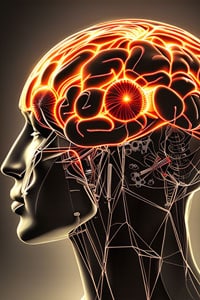 No single AI credential is automatically "best." Start with the work you want to do, then work backward to the depth of education that makes sense.
| If you are... | A reasonable path to compare first | What to check carefully |
|---|---|---|
| A high-school student choosing a technical major | Computer science with an AI/ML concentration and well-designed standalone AI degrees | Breadth in programming, algorithms, data structures, math, software engineering, and AI |
| A current CS student | AI/ML concentration, minor, electives, research, or an academic certificate | Whether the specialization adds real depth instead of repeating introductory material |
| A software developer moving toward AI engineering | Graduate certificate, applied AI master's, focused professional training, or role-relevant certification | Prerequisites, production projects, model evaluation, deployment, and MLOps |
| A data professional moving toward machine learning | ML/AI graduate study or technically rigorous certificate work | Probability, statistics, linear algebra, model development, evaluation, and programming depth |
| A professional applying AI inside another occupation | Professional or continuing-education certificate | Whether the program is designed for your role and avoids pretending AI literacy equals engineering |
| A manager or executive | AI strategy, governance, or literacy training | Business application, risk, governance, and decision-making rather than coding claims |
A broad computer science degree can preserve flexibility, while a strong standalone AI degree can provide earlier specialization. A short vendor credential can be useful for someone already working with a platform, but it should not be mistaken for a degree or a substitute for missing technical foundations.
Degree vs. Certificate vs. Certification: A Credential Decoder
Credential marketing gets messy fast, so start by decoding the word on the page.
| Route | What it is | Often best for | What it does not automatically prove |
|---|---|---|---|
| Bachelor's degree | Multi-year undergraduate academic degree with general education plus technical major requirements | Students building a first substantial computing/AI foundation | Mastery of every current AI platform or readiness for advanced research roles |
| Master's degree | Graduate-level academic study with advanced coursework and sometimes a capstone, practicum, or research component | People with bachelor's-level preparation who want deeper specialization | Expertise in every AI subfield or guaranteed access to a particular job |
| AI/ML concentration or specialization | A focused sequence inside a broader degree, often computer science or software-related | Students who want broad computing foundations plus AI depth | The same curriculum as every standalone AI degree |
| Academic certificate | A credit-bearing undergraduate or graduate sequence offered by a college or university | Students or degree-holders who want focused academic study without completing another full degree | A standardized industry assessment or universal employer recognition |
| Professional certificate | Structured non-degree education, often through continuing education, a technology company, or an online provider | Working professionals adding a defined skill set | Academic degree status or a standardized certification exam |
| Vendor certification | An assessment-based credential defined by an issuer such as AWS, Microsoft, Google Cloud, NVIDIA, or Databricks | People who need to validate platform-specific or role-specific knowledge | Broad, vendor-neutral AI engineering competence or completion of an academic program |
Certificate and certification are not synonyms
A certificate usually documents completion of an educational program. It might be a credit-bearing university certificate or a non-credit professional program.
A certification usually requires you to meet an issuer's assessment requirements. Many technology certifications use proctored exams and may expire or require renewal as products and job roles change.
There are exceptions and provider-specific rules. Verify exactly what the credential is, who issues it, what assessment is required, whether it carries academic credit, and whether it expires.
Artificial Intelligence Schools
Sponsored Listings

AI Degree vs. Computer Science: Which Is the Better Major?
There is no universal winner.
Computer science is the broader discipline. Strong CS programs typically cover programming, data structures, algorithms, software development, theory, systems, and other computing foundations. An AI or machine-learning concentration adds focused electives on top of that base.
A standalone artificial intelligence degree can still be rigorous and broad. Purdue University's current AI bachelor's curriculum, for example, includes Python and data engineering, programming, data structures and algorithms, linear algebra, probability, machine learning, AI, statistics, ethics, and a capstone or research option. The important point is to inspect the actual curriculum rather than assume "AI degree" means either cutting-edge or overly narrow.
A practical rule of thumb
A CS degree with an AI concentration can be attractive if you:
- want broad software/computing flexibility;
- are interested in AI but are not certain you want to specialize long-term;
- want strong systems and software foundations alongside AI electives.
A standalone AI degree can make sense if you:
- already know you want substantial AI/ML study;
- the program still provides strong computing and mathematical foundations;
- the advanced AI coursework, projects, faculty, and research opportunities are meaningfully deeper than a thin concentration.
Compare course requirements side by side. The name on the diploma is much less useful than knowing what you will actually learn and build.
Bachelor's, Master's, Associate, and Certificate Pathways
Bachelor's degrees in AI
Standalone bachelor's degrees in AI are now a real U.S. option, alongside AI concentrations inside computer science and related programs. Stanford's 2026 mapping project found more than 350 undergraduate AI credentials across majors, minors, concentrations, and certificates.
A technically serious bachelor's program should normally give you more than exposure to AI tools. Look for a foundation in areas such as:
- programming;
- data structures and algorithms;
- linear algebra and probability/statistics;
- machine learning;
- software engineering or substantial software projects;
- model evaluation;
- ethics, privacy, security, or responsible AI;
- advanced AI electives and a capstone, research project, or comparable applied experience.
Not every program needs the same course titles or every trendy specialty. A curriculum built around durable foundations is usually more valuable than one organized around whatever product names are hottest this semester.
Master's degrees in AI
Master's-level AI education deserves separate attention because many programs assume you already have undergraduate-level computing and mathematics.
Johns Hopkins' current Artificial Intelligence master's, for example, requires preparation in multivariable calculus, linear algebra, probability/statistics, and programming. Its current course options include machine learning, AI system design, algorithms, and generative AI.
That does not mean every AI master's has identical prerequisites. Some are research-oriented; others focus on applied systems, product development, or professional practice. Before paying graduate tuition, find out:
- which undergraduate prerequisites are expected;
- whether missing prerequisites can be completed before admission;
- how much of the curriculum is theory versus applied engineering;
- whether the program includes a thesis, capstone, practicum, or research option;
- whether online students have access to the faculty, projects, compute resources, and career support that matter to their goals.
Associate degrees
Standalone associate degrees in artificial intelligence do exist. Keiser University, for example, currently offers an Associate of Science in Artificial Intelligence. Availability and purpose vary, so treat a two-year AI credential as its own product rather than assuming it is simply half of a bachelor's degree.
Check whether a program is designed for direct workforce preparation, transfer into a bachelor's degree, or both. If transfer is part of your plan, verify articulation and transfer-credit policies before enrolling. Do not assume an AI-labeled associate degree automatically replaces the broader preparation expected for advanced ML engineering roles.
Undergraduate and graduate academic certificates
Academic certificates vary dramatically. The University of Iowa's current undergraduate AI certificate requires 18 semester hours and is designed as an interdisciplinary addition to undergraduate study. Penn's current graduate AI certificate consists of four graduate course units. Johns Hopkins also offers a graduate certificate with substantial math and programming prerequisites.
Those are very different products from a weekend certificate of completion. Check whether the certificate carries academic credit, whether credits can be applied toward a degree, what prerequisites are required, who teaches the courses, and how students are assessed.
Technical vs. Nontechnical AI Education
Not everyone studying AI needs to become a machine-learning engineer.
A technical program may prepare students to build, evaluate, integrate, or deploy AI systems. It can require programming, mathematics, data structures, statistics, and substantial project work.
A nontechnical program may focus on selecting useful AI applications, managing AI-enabled projects, organizational adoption, governance and risk, evaluating vendors, responsible use, or product and business strategy.
That can be valuable education. It is simply a different goal. An executive AI certificate should not be marketed or interpreted as preparation for a technical ML engineering job unless the curriculum genuinely supports that claim.
What Should a Modern AI Program Teach?
 A good curriculum should balance durable foundations with current practice. No program needs to cram every buzzword into one semester, but a technical program should make it possible to understand more than a user interface.
1. Computing foundations
Look for meaningful work in programming, data structures, algorithms, software design, debugging, version control, and data handling. Python is common in AI education, but the important skill is learning to build and reason about software rather than memorizing one language or library.
2. Mathematics and statistics
For technical machine learning, linear algebra, probability/statistics, and calculus are common foundations. The depth varies by credential. An introductory AI-for-business program does not need the same mathematics as a graduate ML course.
3. Machine learning and deep learning
Core technical programs commonly cover supervised and unsupervised learning, model selection, overfitting, validation, neural networks, and evaluation. More advanced programs may add computer vision, natural language processing, reinforcement learning, or other specialties.
4. Generative AI and foundation models
By 2026, a current AI program should at least make deliberate decisions about generative AI rather than pretending the field stopped before transformers. Depending on the program's depth, useful topics can include transformer and foundation-model concepts, embeddings, retrieval-augmented generation (RAG), fine-tuning or adaptation methods, multimodal systems, prompt/context design, and tool use.
Prompt engineering alone is not a technical AI curriculum. It is one operational skill inside a much larger field.
5. AI agents
Agentic AI is moving quickly, so be suspicious of programs that make one agent framework the entire product. Useful education may cover tool-using systems, planning, workflow orchestration, memory, guardrails, multi-step reasoning, and evaluation. The durable lesson is how to design and test systems, not how to click through today's trendiest framework.
6. Evaluation and reliability
A program that teaches students to build models but not evaluate them is missing a major part of the job. Look for work involving validation, error analysis, benchmark design, human evaluation where appropriate, hallucination/failure analysis for generative systems, monitoring, and testing under realistic conditions.
7. Deployment and MLOps
Engineering-oriented programs should go beyond notebooks when the credential claims to prepare students for production AI. Useful topics can include APIs, containers, model serving, pipelines, versioning, monitoring, cloud environments, observability, and deployment tradeoffs. If your primary goal is general infrastructure rather than AI systems, compare cloud computing training.
8. Responsible AI, privacy, and security
A modern program should address the consequences of deploying AI systems, including privacy, security, bias, reliability, human oversight, and governance. NIST's AI Risk Management Framework and its Generative AI Profile are useful reference points for the kinds of risk and trustworthiness questions organizations increasingly need to manage. NIST is revising AI RMF 1.0 in 2026, which is also a reminder that responsible-AI material must be maintained rather than frozen in time.
9. Projects that force you to integrate skills
Good projects make you connect multiple parts of the curriculum. Depending on the level, that could mean training and evaluating a model, building an AI-enabled application, creating a RAG system, deploying a service, monitoring failures, or completing a research/capstone project.
A portfolio is not a magic substitute for formal education or work experience. But projects are useful evidence that a program requires students to do more than watch lectures and collect a badge.
Do You Need Calculus and Python for AI?
It depends on the kind of AI education you want.
For technical degree and graduate study
Expect mathematics. Strong programs often require or teach some combination of calculus, linear algebra, probability, statistics, and discrete mathematics. Johns Hopkins' current AI master's requires multivariable calculus, linear algebra, probability/statistics, and prior programming. Purdue's current undergraduate AI curriculum likewise includes substantial mathematics and computing.
Programming is equally important. Python is extremely common in ML education, but students may also encounter Java, C++, SQL, shell tools, APIs, Git, and cloud environments depending on the program.
For AI literacy or business programs
You may not need calculus or substantial coding. If your goal is to evaluate AI use cases, manage risk, lead implementation, or understand what the technology can and cannot do, a nontechnical program can be entirely appropriate.
The red flag is not "this program has no calculus." The red flag is a program claiming to produce advanced AI engineers while avoiding the technical prerequisites needed for that work.
AI vs. Machine Learning vs. Data Science vs. AI Engineering
These terms overlap, but they are not synonyms.
| Area | Main educational emphasis | Typical output |
|---|---|---|
| Artificial intelligence | Broad methods for building systems that perform tasks involving reasoning, perception, learning, language, planning, or decision-making | AI-enabled systems and applications |
| Machine learning | Statistical/computational methods that learn patterns from data | Predictive or generative models |
| Data science | Data preparation, statistics, analysis, modeling, experimentation, and communicating insight | Analysis, models, data products, and decision support |
| AI engineering | Integrating models into reliable software systems, often including deployment, evaluation, APIs, pipelines, and monitoring | Production AI applications and services |
Machine learning is a major part of modern AI, but AI also includes areas beyond ML. Data science overlaps heavily with ML but often puts more emphasis on statistical analysis, experimentation, data preparation, and decision support. AI engineering sits close to software development because deployed AI has to work inside real systems.
If you need to build coding fundamentals first, explore computer programming training. If you are more interested in physical machines, controls, and industrial systems, compare robotics and automation training. AI security can overlap with this field, but broad security education belongs on the cybersecurity programs page.
Online AI Programs, Cost, and Compute: What to Verify
AI can be taught well online, but delivery format is only one part of program quality. Costs also vary too widely across degrees, academic certificates, short courses, and certification exams for one national "AI training cost" figure to be very useful.
Compare the school's published tuition and fees, the total credits or courses required, and any costs that sit outside tuition. For degree programs, federal tools such as College Scorecard can add institution-level context, but always confirm the specific program's current charges with the school.
Before enrolling in an online program, ask:
- How do labs work?
- Are cloud, GPU, or hosted notebook resources included?
- Are there usage limits or extra compute/API charges?
- Can students get live help when code or environments break?
- Does the program include team projects or code review?
- Are capstones and portfolio projects required?
- Are research opportunities available to online students if research matters to you?
- What career services, internships, or employer connections are actually available to remote learners?
Do not assume you need to buy a high-end GPU workstation. Course requirements vary enormously. Some programs provide cloud labs; some use modest local workloads; others expect students to pay for cloud or API usage. Ask what is included before you budget for hardware.
This page contains affiliate links. We may receive a small commission, at no extra cost to you, for qualifying purchases or enrollments made through those links.
Short online courses can be useful for exploring a topic or filling a specific skills gap before committing to a larger program. Providers such as Coursera offer introductory options, while paid course sequences and professional certificates can provide more structured study. Check whether any credential is academic credit, a completion certificate, or preparation for a separate certification exam.

Current AI Certifications to Know About in 2026
Vendor certifications can be useful when they match your job responsibilities or a platform you actually use. They are poor substitutes for missing fundamentals.
The table below is representative, not exhaustive, and was verified September 8, 2026. Certification programs change quickly, so confirm the issuer's current exam page before paying.
| Certification | Current scope | Exam/price snapshot | Renewal/status note |
|---|---|---|---|
| AWS Certified AI Practitioner | Foundational AI/ML and generative-AI concepts and AWS AI services; aimed at people who use but do not necessarily build AI/ML solutions | AIF-C01; 90 minutes; 65 questions; $100 | Valid 3 years |
| AWS Certified Machine Learning Engineer - Associate | Implementing and operationalizing ML workloads on AWS | MLA-C01 is $150 and remains available in English through Sept. 28, 2026 | AWS is transitioning to an updated MLA-C02 beta; check the issuer before scheduling |
| Microsoft Certified: Azure AI Fundamentals | Foundational AI concepts and implementing AI solutions using Microsoft Foundry/Azure | AI-901; $99 U.S. list price | Microsoft fundamentals certifications do not expire |
| Microsoft Certified: Azure AI Apps and Agents Developer Associate | Building and deploying Azure AI applications and agents with Python and Microsoft Foundry | AI-103; 120-minute proctored assessment; $165 U.S. list price | Microsoft role-based associate certifications are generally valid one year and eligible for free renewal assessment |
| Google Cloud Professional Machine Learning Engineer | Building, evaluating, productionizing, and optimizing AI/ML solutions on Google Cloud | 2 hours; 50-60 questions; $200 | No formal prerequisite; Google recommends 3+ years of industry experience including 1+ year on Google Cloud |
| NVIDIA-Certified Associate: Generative AI LLMs | Foundational generative-AI/LLM concepts and NVIDIA-oriented application skills | NCA-GENL; 1 hour; 50-60 questions; $125 | Valid 2 years; recertification by retaking the exam |
| Databricks Certified Generative AI Engineer Associate | Designing, building, deploying, evaluating, and governing LLM/RAG/agent solutions on Databricks | Current March 2026 guide; $200; 90 minutes; 45 scored questions | Valid 2 years; full current exam required for recertification |
A warning about stale certification lists
Certification names can age badly. Microsoft retired the old AI-900 and AI-102 exams on June 30, 2026. The current Azure AI Fundamentals exam is AI-901, and Microsoft's current intermediate Azure AI developer credential uses AI-103.
AWS is also updating its Machine Learning Engineer - Associate exam in September 2026. When certification is part of your plan, verify the issuer's page immediately before registering instead of trusting an old roundup.
Is AI certification worth it?
It can be, when the credential solves a specific problem. A certification may be useful if your employer uses the platform, a target role mentions that technology, you already have enough background to benefit from an assessment-based credential, or the exam gives you a structured way to validate role-relevant knowledge.
Be skeptical when marketing implies that one certification proves broad AI expertise or guarantees hiring. AWS's own AI Practitioner exam guide, for example, explicitly puts developing ML models, feature engineering, hyperparameter tuning, production pipelines, and mathematical/statistical analysis outside the target candidate's scope.
That does not make the credential bad. It makes it specific.
AI Career Paths: Use Occupation-Specific Data, Not an Imaginary "AI Salary"
There is no single federal occupation called "AI Engineer" with one official national salary. O*NET reported job titles such as AI Engineer and Machine Learning Engineer map into multiple established occupational groups, depending on the work.
Useful federal comparison points include Software Developers, Data Scientists, and Computer and Information Research Scientists.
| Federal occupation | Typical entry education | 2025 median annual wage | 2025-35 projected growth | Average annual openings |
|---|---|---|---|---|
| Software Developers (SOC 15-1252) | Bachelor's degree | $135,980 | 10.2% | 95,300 |
| Data Scientists (SOC 15-2051) | Bachelor's degree | $120,230 | 34.6% | 24,800 |
| Computer and Information Research Scientists (SOC 15-1221) | Master's degree | $140,300 | 21.8% | 2,900 |
These figures are from May 2025 Bureau of Labor Statistics wage data and the BLS 2025-35 Employment Projections. They describe those occupations, not every person who studies AI.
Your degree title, certificate, or certification does not place you automatically into one of these occupations. Actual roles depend on your education, work history, technical depth, projects, industry, and what you do on the job.
AI Education for Managers and Other Nontechnical Professionals
AI education for nontechnical professionals is not fake just because it does not teach backpropagation. A manager may need to understand where AI can and cannot improve a workflow, how to evaluate vendors and project proposals, how to set expectations for reliability and human oversight, privacy/security/governance, and how AI projects change process and measurement.
That is legitimate professional education. Keep the claim proportional to the curriculum. A certificate in AI strategy can support better management decisions; it does not qualify the holder as a machine-learning engineer.
How to Spot a Strong AI Program
For a technical degree or certificate
Look for:
- clearly stated prerequisites;
- substantial programming rather than no-code demos only;
- appropriate mathematics and statistics;
- core machine learning;
- current treatment of generative AI where relevant;
- model evaluation and testing;
- projects that require original work;
- deployment/MLOps for engineering-oriented programs;
- privacy, security, ethics, and responsible AI;
- access to the compute and software needed for coursework;
- faculty with relevant academic or professional expertise;
- clear credential and accreditation information.
Red flags
Be cautious when a provider promises:
- to turn a complete beginner into an "AI expert" in days;
- guaranteed jobs or guaranteed salaries;
- a mysterious "globally recognized AI certification" without naming the issuer and assessment;
- vague or unverifiable accreditation;
- advanced engineering preparation with no programming or math;
- a curriculum that is essentially prompt writing plus a collection of trendy tools;
- expensive tuition for little more than prerecorded videos and a completion badge.
Also check how quickly the curriculum is updated. AI tools change rapidly, but the answer is not to chase every new product. Strong programs maintain durable computing, math, ML, evaluation, and engineering foundations while updating the applied layer around them.
Accreditation: What Should You Verify?
Start with the institution itself. For U.S. colleges and universities, verify institutional accreditation through recognized accrediting organizations and official federal resources.
ABET's 2026-27 Computing Accreditation Commission criteria contain general computing criteria and established discipline-specific program criteria. They also publish proposed program criteria for Artificial Intelligence, Machine Learning, and similarly named computing programs, intended for a future review cycle if adopted.
So the practical question is not, "Is this AI-accredited?" Ask:
- Is the institution appropriately accredited?
- Does the specific program hold any relevant programmatic accreditation?
- If the school makes an accreditation claim, can you verify it directly with the accreditor?
- Does the curriculum support the outcomes the school is advertising?
10 Questions to Ask Before Enrolling
- What exact credential will I receive? Degree, academic certificate, non-credit professional certificate, or certification preparation?
- What prerequisites do you expect? Ask specifically about math, programming, and prior computing coursework.
- What will I build? Request examples of capstones, labs, or student projects.
- How is model evaluation taught? A modern program should care about failures, not just demos that work once.
- How much of the curriculum is current generative AI versus durable ML/CS foundations? You want both in the right proportions.
- Does the program teach deployment or MLOps? Especially important if it advertises AI-engineering preparation.
- What compute resources are included? Ask about cloud credits, GPU access, hosted labs, API fees, and usage limits.
- How often is the curriculum reviewed? AI material can become stale quickly.
- What accreditation applies? Verify claims independently.
- What career outcomes can the school actually document? Treat guaranteed-job or guaranteed-salary language as a serious warning sign.
Frequently Asked Questions
Is an AI degree worth it?
It can be if the curriculum gives you strong computing, mathematics, machine-learning, evaluation, and project foundations at a cost that makes sense for your goals. Compare a standalone AI degree with computer science programs that offer AI/ML concentrations. The degree title alone is not enough to judge quality.
What is the difference between an AI certificate and an AI certification?
An AI certificate usually documents completion of an educational program. It may be credit-bearing or non-credit. An AI certification is typically an assessment-based credential issued by a vendor or credentialing organization and may require renewal. Always verify the issuer's rules because terminology is not perfectly standardized.
Should I major in AI or computer science?
Computer science is broader and can preserve flexibility across many computing careers. A well-designed standalone AI degree can provide deeper specialization while still teaching strong CS and math foundations. Compare actual required courses, projects, faculty, and outcomes rather than choosing by title alone.
Do I need calculus to study AI?
Not for every AI course. Nontechnical AI literacy and business programs may require little or no advanced math. Technical degree and graduate ML programs commonly rely on calculus, linear algebra, probability, and statistics.
Do I need Python for AI?
Python is widely used in AI and machine-learning education, so it is a practical language to know. Strong technical programs also teach broader programming and software problem-solving skills, and some use languages such as Java or C++ as well.
Do I need a master's degree to work in AI?
Not for every role. BLS lists a bachelor's degree as the typical entry education for Software Developers and Data Scientists, while Computer and Information Research Scientists typically need at least a master's degree. Specific AI-related jobs vary, and employers may expect different combinations of education, experience, and technical work.
Are AI certifications worth it?
They can be useful for validating a defined skill set, especially on a platform you use professionally. They do not automatically prove broad AI-engineering expertise or guarantee employment. Match the certification to the role, confirm that it is current, and understand exactly what the exam assesses.
Sources
Credential, curriculum, accreditation, and labor-market information was independently checked against the following primary sources. Certification details were verified September 8, 2026.
- Stanford SCALE Initiative: Mapping AI Programs in the U.S. (May 2026)
- Purdue University: Artificial Intelligence Degree Requirements, Fall 2026 to Present
- Johns Hopkins Engineering for Professionals: Artificial Intelligence
- University of Iowa: Artificial Intelligence Certificate
- University of Pennsylvania: Artificial Intelligence Graduate Certificate
- ABET: Criteria for Accrediting Computing Programs, 2026-2027
- NIST: AI Risk Management Framework
- AWS Certified AI Practitioner
- AWS Certified Machine Learning Engineer - Associate
- Microsoft Certified: Azure AI Fundamentals
- Microsoft Certified: Azure AI Apps and Agents Developer Associate
- Google Cloud Professional Machine Learning Engineer
- NVIDIA-Certified Associate: Generative AI LLMs
- Databricks Certified Generative AI Engineer Associate Exam Guide, March 2026
- U.S. Bureau of Labor Statistics: Data Scientists
- U.S. Bureau of Labor Statistics: Software Developers
- U.S. Bureau of Labor Statistics: Computer and Information Research Scientists
- U.S. Bureau of Labor Statistics: Occupational Projections and Worker Characteristics, 2025-35