
How to Become a Personal Trainer: Certification, Cost, Requirements, and Timeline



Becoming a personal trainer usually does not require a college degree or a government-issued occupational license. But if you want to work for an established gym or fitness organization, professional certification is often a practical requirement.
For many beginners, the most direct route is to choose a reputable personal trainer certification, meet its CPR or CPR/AED requirements, prepare for and pass the certification exam, and then build hands-on coaching experience.
A certification-only route can take roughly one to six months, depending on your existing knowledge and how much time you can devote to studying. The certification exam itself generally costs several hundred dollars, with study materials, CPR/AED training, retests, and future renewal costs potentially adding more.
The part that deserves the most attention is which certification you choose. Requirements, testing formats, CPR rules, prices, and renewal obligations differ enough that choosing first and reading the fine print later can be an expensive mistake.
Data check: Certification pricing, credential rules, and labor-market information on this page were verified August 27, 2026. Provider pricing and policies can change, so confirm current terms before paying.
How to Become a Personal Trainer in 7 Steps
1. Decide what kind of personal training work you want.
 Start with the job, not the certification brochure. Personal trainers can work in commercial gyms, recreation centers, boutique studios, corporate wellness programs, private facilities, clients' homes, or their own businesses. Some also coach clients online.
Your target workplace matters because employers set their own hiring standards. The U.S. Bureau of Labor Statistics (BLS) says employers prefer to hire fitness trainers and instructors who have certification, but exact credential, education, and experience requirements vary.
Before paying for a certification, look at current personal trainer openings where you want to work. Note which credentials employers accept or prefer and whether they specify CPR/AED, a degree, or prior coaching experience.
2. Check the eligibility requirements.
Many major personal trainer certifications are designed for beginners, but they do not all have identical prerequisites.
ACE, ACSM, and NSCA require candidates to be at least 18 and have a high school diploma or equivalent. NASM requires a high school diploma or GED for its accredited CPT exam. NCCPT's current CPT eligibility rules list age 18, valid CPR certification, and government identification without listing a high-school or AED prerequisite.
A college degree is not required for these entry-level personal trainer credentials.
3. Choose the right professional certification.
Certification is where the alphabet soup begins: NASM, ACE, ACSM, NSCA, NCCPT, and plenty of others.
Do not choose solely because one provider claims to be the "best." Instead, compare:
- whether your target employers accept the credential;
- whether the certification program has independent accreditation;
- exam eligibility and CPR requirements;
- in-person versus remote testing;
- exam and preparation costs;
- recertification requirements; and
- whether the organization's broader education options fit your future goals.
For many aspiring trainers, an NCCA-accredited certification is a useful starting point because the National Commission for Certifying Agencies independently accredits professional certification programs. Its standards address areas such as program governance, examination development and administration, scoring, policies, and ongoing credential maintenance.
NCCA accreditation is not a personal trainer license, nor does it mean NCCA accredited your college, study course, or you as an individual.
4. Get the CPR or CPR/AED credential your certification requires.
Do this after you have narrowed down your CPT credential, because the rules differ.
ACE requires current adult CPR/AED with a hands-on skills check. ACSM requires adult CPR/AED with a live, in-person practical skills component. NSCA requires CPR/AED with a hands-on skills assessment and requires in-person attendance when earning a new NSCA certification. NASM requires adult CPR/AED and currently accepts its own online CPR/AED course for NASM exam eligibility, although NASM tells candidates to verify whether an employer or insurer will accept online-only training. NCCPT's published CPT exam eligibility currently requires valid CPR.
Buying a random online CPR certificate first and discovering later that your certification or employer will not accept it is an avoidable own-goal.
5. Prepare for the certification exam.
How long you should study depends on your background. Someone who already has coursework in anatomy, exercise physiology, biomechanics, or kinesiology may need less preparation than someone starting from scratch.
A good preparation plan should follow the content outline for the actual credential you intend to earn. Depending on the certification, that can include anatomy and exercise science, client assessment, program design, exercise technique, safety, behavior change, professional responsibilities, and basic nutrition.
Prep packages can be helpful, but they are not automatically required. ACSM and NSCA, for example, explicitly state that candidates may sit for their CPT exams without buying the organizations' exam-preparation materials.
6. Pass the certification exam and build practical coaching skills.
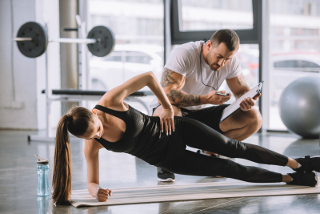 An accredited certification exam establishes that you met the certification program's competency standard. It does not magically give you thousands of repetitions coaching real humans.
After certification, look for opportunities to practice exercise demonstrations, cueing, regressions and progressions, client communication, assessments, program adjustments, and handling the wonderfully unpredictable reality that people do not move like textbook diagrams.
Structured personal trainer programs can be useful if you want classroom instruction, labs, practicums, or more guided preparation rather than relying entirely on self-study. Gym onboarding, mentorship, supervised practice, or entry-level employment can also help bridge the gap between knowing the material and coaching it effectively.
7. Maintain your certification and keep learning.
Certification is not permanent. ACE and NASM use two-year renewal cycles. ACSM uses a three-year cycle. NSCA uses a three-year recertification cycle, with continuing-education requirements affected by when during the cycle the credential was earned. NCCPT certifications are valid for two years.
Plan for continuing education, renewal fees, and CPR or CPR/AED maintenance as recurring career expenses rather than one-time surprises.
Do Personal Trainers Need a License or Certification?
Certificate, certification, accreditation, and license sound interchangeable when you are reading sales pages at 1 a.m. They are not.
Occupational license
A license is government authorization to practice a regulated occupation. General personal training does not normally operate under the kind of state occupational-licensing system that governs professions such as physical therapy or athletic training.
The District of Columbia once had a personal-fitness-trainer registration provision, but that requirement was repealed effective July 19, 2024.
That does not mean a trainer has no legal responsibilities. State and local business rules can apply to self-employed trainers, and activities that cross into another licensed profession can be regulated.
Professional certification
Certification is a credential issued by a professional certification organization after you meet its eligibility rules and pass its assessment. Employers can require certification even when a government license is not required.
That distinction matters: "not universally required by law" does not mean "irrelevant when you apply for a job."
Certificate of completion
A certificate usually shows that you completed an educational course or assessment. A certificate and a professional certification can come from the same company while representing different credentials.
ACE is an especially clear example. It currently offers an online, open-book Personal Training Certificate exam that is not NCCA accredited, as well as a separate live-proctored ACE Certified Personal Trainer exam that is NCCA accredited. ACE explains the distinction directly.
Before buying a program, verify exactly what credential you will receive and which examination you must pass.
Major Personal Trainer Certifications Compared
There is no universally best personal trainer certification. The better question is which credential fits your target employers, budget, study preferences, and future plans.
| Certification | Basic eligibility | Exam format | Current exam cost* | Maintenance |
|---|---|---|---|---|
| NASM-CPT | High school diploma/GED; current adult CPR/AED | 120 questions; 2 hours; test center or live remote proctor | $599 exam-only | Every 2 years; 2.0 CEUs including CPR/AED |
| ACE Certified Personal Trainer | 18+; high school/equivalent; CPR/AED with hands-on skills check | 150 questions; 3 hours; test center or live remote proctor | $499 standalone; $99 add-on with an ACE study program | Every 2 years; 2.0 CECs; current CPR/AED; $129 on-time renewal for one credential |
| ACSM-CPT | 18+; high school/equivalent; adult CPR/AED with live practical skills | 135 items; 2.5 hours; Pearson VUE test center or online | $310 member / $410 nonmember | Every 3 years; 45 CECs; $60 |
| NSCA-CPT | 18+; high school/equivalent; current CPR/AED | 155 items; 3 hours; proctored test center | $300 member / $435 nonmember | 3-year cycle; CEUs vary by certification date |
| NCCPT-CPT | 18+; current CPR; government-issued photo ID | 2-hour closed-book proctored exam; test center or remote | $599 plus $79 Prometric delivery fee | Every 2 years; continuing education; $75 renewal for one certification |
*Prices checked August 27, 2026. Membership costs, preparation materials, CPR training, retests, and other fees may be additional. Promotions and package pricing can change.
Official current details: NASM, ACE, ACSM, NSCA, and NCCPT.
Which certification should you choose?
Start with your target employer. If several gyms where you want to work accept the same group of credentials, you can then compare price, study support, exam delivery, and long-term continuing education.
- Want remote testing? NASM, ACE, ACSM, and NCCPT currently offer remote-proctored options. NSCA-CPT currently uses Pearson VUE testing centers.
- Confident in self-study? Exam-only routes can avoid paying for premium preparation packages. ACSM and NSCA have comparatively low exam fees, particularly for members, although membership itself has a cost.
- Want extensive built-in study support? Compare the actual contents and total price of provider packages rather than judging by a monthly-payment advertisement.
- Interested in strength and conditioning later? NSCA offers separate advanced credentials, including the CSCS, with additional eligibility requirements.
- Considering ISSA coursework? Be precise about the final credential. NCCPT is an ISSA subsidiary, but the NCCPT-CPT is the NCCA-accredited certification program compared here.
CPR and AED Requirements Are Not Identical
Do not assume one CPR course satisfies every CPT certification. Check the certification and your intended employer before enrolling.
| Credential | Current safety prerequisite | Important detail |
|---|---|---|
| NASM-CPT | Adult CPR/AED | NASM currently accepts its own online CPR/AED course for NASM exam eligibility; verify employer and insurer acceptance separately. |
| ACE-CPT | Adult CPR/AED | Requires a hands-on skills check; AED is required in the U.S. and Canada. |
| ACSM-CPT | Adult CPR/AED | Requires a live/in-person practical skills component. ACSM states first aid becomes an additional requirement in 2027. |
| NSCA-CPT | CPR/AED | Must include a hands-on skills assessment; in-person attendance is required when earning a new NSCA certification. |
| NCCPT-CPT | Current CPR | NCCPT's current CPT exam eligibility page lists CPR rather than a blanket AED prerequisite. |
Those differences are exactly why the safe order is choose the CPT credential first, then buy the CPR or CPR/AED course that satisfies it.
Do You Need a College Degree to Be a Personal Trainer?
Usually, no. BLS lists a high school diploma or equivalent as the typical entry-level education for fitness trainers and instructors and notes that employers prefer certification. It also says some employers prefer an associate or bachelor's degree, particularly for personal trainers.
| Path | Approximate time | What it offers |
|---|---|---|
| Certification only | Roughly 1-6 months | Fastest common route to an entry-level CPT credential |
| Structured certificate/diploma program | Varies by school | Guided coursework, potential hands-on practice, and certification preparation |
| Associate degree | About 2 years full-time | Broader exercise/fitness education plus general education |
| Bachelor's degree | About 4 years full-time | Deeper exercise-science preparation and access to more degree-dependent pathways |
A certification-only route can make sense if your goal is general personal training and you are comfortable learning independently. A school-based program may make more sense if you want structured instruction and hands-on practice.
A degree in exercise science, kinesiology, or a related field can become more valuable if you want broader career options. For example, ACSM's Certified Exercise Physiologist pathway requires relevant college-level preparation.
How Much Does It Cost to Become a Personal Trainer?
Separate two questions:
- What does it cost to become certified?
- What does it cost to start your own personal training business?
They are not the same thing.
Cost to become certified
Current standalone or base examination fees for the major credentials compared above range from about $300 to $599, before extras such as membership, study materials, CPR/AED, proctoring, or retests.
You may also need to budget for:
- CPR or CPR/AED training;
- textbooks or digital study materials;
- practice tests or prep courses;
- membership if you want member pricing;
- a retest if you do not pass;
- continuing education; and
- future certification renewal.
Study packages can push the initial cost substantially higher. Do not automatically assume the expensive bundle is better for you. If you already have a strong exercise-science background, an exam-only route may be enough. If anatomy currently sounds like the name of a nightclub, more structured preparation may be money well spent.
Cost to become self-employed
Starting an independent personal training business is a separate financial decision. Potential expenses can include professional or general liability coverage, state or local business registration, permits depending on where you train, facility costs, equipment, software, bookkeeping, tax preparation, and client acquisition.
Those costs vary too much by business model and location to support one honest national "startup cost." An employee starting at a gym may face almost none of those expenses.
How Long Does It Take to Become a Personal Trainer?
 For a certification-only route, roughly one to six months is a reasonable planning range. Faster completion is possible for some experienced or intensive learners, but that should not be confused with instant job readiness.
Your timeline depends on prior anatomy and exercise-science knowledge, weekly study time, the certification you choose, CPR requirements, exam availability, and whether you want practical instruction in addition to exam preparation.
The fastest possible exam path should not automatically be your goal. There is a difference between being eligible to hold a credential and being confident at assessing, teaching, cueing, adapting exercises, managing different personalities, and making good decisions when a workout stops going according to plan.
Personal Trainer Salary and Job Outlook
The latest BLS data provides the best national baseline, with one important limitation: the federal occupation combines personal trainers with other fitness trainers and group fitness instructors.
For that broader occupation, the median wage was $47,160 per year, or $22.67 per hour, in May 2025. Half of workers earned more than the median and half earned less.
BLS projects employment to grow 7 percent from 2025 to 2035, compared with 3 percent for all occupations, with about 68,000 openings per year on average. Many openings are expected to come from workers changing occupations or leaving the labor force, not solely from newly created jobs. See the current BLS Occupational Outlook Handbook profile.
BLS also notes that many fitness trainers and instructors work variable or part-time schedules that may include nights, weekends, and holidays.
Do not confuse a session price with hourly pay.
A client paying a gym $80 for a session does not mean the trainer personally earns $80 for that hour.
An employee may receive hourly pay, commission, or some combination. An independent trainer may keep more of the client fee but also spend unpaid time on scheduling, sales, programming, administration, travel, and client acquisition while paying business expenses.
Advertised session rates, employee wages, business revenue, and take-home income are not interchangeable figures.
What Can a Personal Trainer Do?
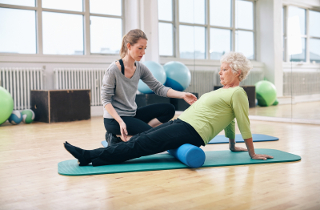 A personal trainer's professional role centers on fitness, not medical diagnosis or treatment.
Within their competence and certification standards, personal trainers commonly gather health and fitness information, conduct appropriate non-clinical fitness assessments, establish fitness goals, design exercise programs, teach and supervise exercise technique, modify exercises, motivate clients, monitor progress, and provide general lifestyle guidance.
The NSCA describes its CPT scope as assessing, motivating, educating, and training clients regarding personal health and fitness needs while referring clients to other healthcare professionals when appropriate.
A general personal trainer should not act as a physician, physical therapist, dietitian, psychologist, or other licensed healthcare professional unless they separately hold the qualifications required for that profession.
What about nutrition advice?
General nutrition education can fall within a personal trainer's scope. For example, a trainer may discuss broad evidence-based nutrition principles and healthy habits.
But disease-specific nutrition treatment and medical nutrition therapy require a different level of professional qualification, and exact legal boundaries vary by state. NSCA advises personal trainers to refer clients with disease-related or sufficiently complex nutrition issues to appropriately qualified nutrition professionals. If nutrition is the career direction that interests you most, explore fitness and nutrition training pathways rather than assuming a CPT specialty course expands healthcare scope.
A specialty certification can improve your knowledge. It does not magically expand your legal healthcare scope.
Employee vs. Contractor vs. Self-Employed Personal Trainer
 How you work can change the job almost as much as the certification you choose.
| Work model | Potential advantages | Responsibilities and trade-offs |
|---|---|---|
| Employee | Employer infrastructure, facility access, possible lead flow, fewer startup tasks | Less control over pricing and policies; compensation and schedules depend on employer |
| Independent contractor | More autonomy while using another facility | Contract terms, taxes, insurance, client ownership, and facility rules require attention |
| Self-employed | Maximum control over clients, prices, schedule, and business direction | You handle client acquisition, administration, taxes, compliance, insurance, facilities, and other business expenses |
For many new trainers, employment at an established facility can provide a useful environment for gaining experience without simultaneously having to learn every part of running a business. Independent work can come later if it fits your goals.
Self-employed trainers should check the actual state, county, and municipal business-registration, tax, zoning, and permitting rules where they operate. There is no useful national rule that says every personal trainer automatically needs the same local business license.
If an employer or facility gives you a contract containing restrictions on outside work or client solicitation, read the agreement rather than relying on generalized Internet advice. Those rules and their enforceability vary by state.
Personal Trainer vs. Related Careers
A few similar-sounding careers involve very different qualifications.
- Athletic trainers are healthcare professionals, not simply personal trainers who work with athletes. Their education, certification, and state regulatory path are substantially different. TSNET's sports medicine and athletic training guide covers that pathway.
- Strength and conditioning coaches generally focus on improving athletic performance. Employer and credential expectations vary, and advanced strength-and-conditioning credentials can have degree requirements.
- Exercise physiologists generally have college-level exercise-science preparation and may work with more medically complex populations.
- Physical therapists are licensed healthcare professionals with professional doctoral education and a clinical scope far beyond personal training. See how to become a physical therapist.
If your goal is injury diagnosis, rehabilitation, or clinical treatment rather than general fitness coaching, personal trainer certification is probably not the endpoint you are looking for.
A Practical Personal Trainer Checklist
Before spending money, make sure you can answer these questions:
- Where do I want to work?
- Which certifications do those employers accept?
- Am I buying a professional certification or merely a course-completion certificate?
- Does my chosen credential have an age or education requirement?
- What exact CPR or CPR/AED credential does it accept?
- What will the exam, study materials, CPR training, and future renewal actually cost?
- Do I want self-study or a more structured training program?
- How will I build practical coaching experience after or during certification?
- Do I understand my scope of practice and when to refer a client?
- Am I prepared for continuing education and recertification?
If you want more structure than a certification-prep package provides, personal trainer programs at career schools and colleges can offer guided instruction in areas such as anatomy, kinesiology, exercise programming, assessment, and coaching while helping prepare you for relevant certification exams.
The fastest route is not automatically the best route. The useful goal is to earn a credential employers will recognize, understand the science well enough to coach safely, and develop enough practical skill that a real client is more than a multiple-choice question with knees.
Sources and Data Notes
Consequential certification, accreditation, and labor-market claims were checked against primary sources on August 27, 2026:
Explore Personal Trainer Training Options
If structured instruction fits you better than self-study, explore personal trainer schools and training programs. Compare program length, hands-on components, certification preparation, and what the school includes in tuition before enrolling.