Active Jobs That Pay Well and Keep You Away From a Desk



Active jobs can get you out from behind a desk without forcing you to choose between movement and money. The trick is separating real careers from the fluffy listicle junk pile: dog walker, retail cashier, and "professional adventurer" may keep you moving, but they probably are not what you meant by active jobs that pay well.
This guide focuses on careers with national median pay above the May 2025 median for all U.S. occupations, which was $50,980 according to the Bureau of Labor Statistics (BLS). It also looks at projected growth, typical training, and the kind of physical activity each job actually involves. Some roles are mostly standing and walking. Others involve ladders, heavy parts, emergency calls, weather, confined spaces, or all the joint-friendly charm of wrestling a refrigerator in a crawlspace.
Use the table and filter below to compare options by sector, training path, and activity level. Then read the career notes to get the practical reality before you start chasing a path that sounds cool but secretly wants to turn your knees into soup. If you want inspiration beyond the usual suspects, browse unique careers that keep you moving for more unconventional options.
Pay figures below use May 2025 national median annual wages from the BLS Occupational Employment and Wage Statistics program. Growth, openings, typical education, and on-the-job training notes use BLS 2024-34 Employment Projections data unless otherwise noted.
25 Active Jobs That Pay Well
The jobs below are not identical just because they keep you moving. A dental hygienist, lineworker, firefighter, and wind turbine technician all have active workdays, but the risks, training paths, schedules, and long-term body tax are wildly different beasts.
Activity level guide: Moderate usually means regular standing, walking, bending, positioning, or field movement. High means frequent hands-on work, patient support, tools, equipment, lifting, awkward positions, or long periods on your feet. Very high means heavy physical demands plus serious hazards such as heights, emergency scenes, high voltage, underwater work, harsh weather, or confined spaces.
Active Career Match Finder
Use these filters to narrow the table. No quiz wizardry, no personality-type horoscope nonsense. Just a quick way to find active careers that fit your preferred work setting, training path, and physical intensity.
Showing all 25 careers.
| Career | Median annual pay | Projected growth | Typical training path | Activity level | Related training |
|---|---|---|---|---|---|
| Registered nurse | $97,550 | 4.9% | Associate or bachelor's degree; RN license | High | Registered nursing |
| Dental hygienist | $98,100 | 7% | Associate degree; state license | Moderate | Dental hygiene |
| Diagnostic medical sonographer | $96,590 | 13% | Associate degree or certificate | Moderate | Sonography |
| Respiratory therapist | $82,280 | 12.1% | Associate degree; state license except Alaska | High | Respiratory therapy |
| Radiologic technologist | $80,110 | 4.3% | Associate degree; licensure/certification varies | Moderate | Radiologic technology |
| Occupational therapy assistant | $72,300 | 19.2% | Associate degree; state license | High | Occupational therapy assistant |
| Physical therapist assistant | $68,380 | 22% | Associate degree; state license/certification | High | Physical therapist assistant |
| Surgical technologist | $64,650 | 4.5% | Certificate, diploma, or associate degree | High | Surgical technology |
| Massage therapist | $58,450 | 15.4% | Postsecondary certificate; license in most states | High | Massage therapy |
| Elevator and escalator installer | $109,910 | 5% | Apprenticeship | Very high | Skilled trades |
| Electrical power-line installer | $95,320 | 6.6% | Long-term on-the-job training or apprenticeship | Very high | Lineworker training |
| Aircraft mechanic | $79,870 | 4% | FAA-approved certificate or military training | High | Aircraft mechanic |
| Industrial machinery mechanic | $64,520 | 16.1% | Long-term on-the-job training; certificate can help | High | Industrial maintenance |
| Plumber, pipefitter, or steamfitter | $63,800 | 4.5% | Apprenticeship | Very high | Plumbing |
| Wind turbine technician | $64,120 | 49.9% | Certificate plus long-term on-the-job training | Very high | Wind energy |
| Electrician | $63,190 | 9.5% | Apprenticeship | High | Electrician |
| Diesel mechanic | $61,770 | 2.4% | Long-term on-the-job training; certificate can help | High | Diesel mechanic |
| HVAC/R technician | $61,010 | 8.1% | Certificate or apprenticeship | High | HVAC/R |
| Heavy equipment operator | $59,850 | 3.6% | Moderate-term on-the-job training or apprenticeship | Moderate | Heavy equipment |
| Welder | $53,750 | 2.2% | Certificate or moderate-term on-the-job training | Moderate | Welding |
| Solar photovoltaic installer | $53,140 | 42.1% | Moderate-term on-the-job training; certificate can help | High | Solar energy |
| Police officer | $76,210 | 3.1% | Police academy and field training | High | Law enforcement |
| Commercial diver | $72,990 | 8.5% | Specialized commercial diving certificate | Very high | Explore programs |
| Firefighter | $59,280 | 3.4% | Fire academy; EMT certification often required | Very high | EMT training |
| Surveying and mapping technician | $54,240 | 4.5% | High school diploma plus moderate-term training; certificate can help | High | Programs |
Best Active Jobs in Healthcare and Wellness
 Healthcare has some of the best active jobs for people who want movement without spending every day in bad weather or on a ladder. The physical demands here are usually stamina, patient positioning, repeated hand movements, and long periods of standing rather than brute-force lifting all day.
1. Registered nurse: $97,550
Registered nurses are rarely parked in one place for long. They move between patients, monitor vital signs, administer medications, coordinate care, and often help lift or reposition people who cannot move safely on their own. The route can start with an associate degree in nursing, although many employers prefer or require a bachelor's degree for some roles. After training, nurses must pass the NCLEX-RN and meet state licensing requirements.
Best fit: You want active healthcare work with strong pay, broad job options, and room to specialize. Watch out: The work can mean long shifts, patient lifting, emotional stress, and sore feet that file complaints with management.
2. Dental hygienist: $98,100
Dental hygienists clean teeth, take oral health histories, screen for disease, educate patients, and assist dentists with preventive care. It is active in a different way than construction work: less hauling lumber, more fine motor control, repeated hand movements, and sustained positions while working around a patient's mouth. Most hygienists need an associate degree in dental hygiene and a state license.
Best fit: You want strong pay, patient interaction, and active work that is more precise than heavy. Watch out: The physical strain is sneaky: neck, wrist, shoulder, and posture issues can pile up if ergonomics are ignored.
3. Diagnostic medical sonographer: $96,590
Diagnostic medical sonographers use ultrasound equipment to create images that help physicians diagnose medical conditions. The job keeps you moving between patients, equipment, and exam rooms, and it often requires helping patients position themselves safely. Many sonographers enter the field with an associate degree, while people who already have healthcare training may qualify through a certificate program.
Best fit: You want healthcare work with technology, patient contact, strong pay, and less chaos than emergency care. Watch out: Sonographers often use sustained pressure and awkward shoulder positions, so repetitive strain is a real concern.
4. Respiratory therapist: $82,280
Respiratory therapists care for patients who have trouble breathing, from premature infants to older adults with chronic lung disease. They assess patients, run breathing treatments, manage ventilators, and respond to emergencies throughout hospitals. An associate degree is the common entry route, and nearly every state requires licensure.
Best fit: You want hands-on patient care, medical equipment, and a role that matters during emergencies. Watch out: Respiratory care can include urgent calls, night shifts, infectious disease exposure, and emotionally intense cases.
5. Radiologic technologist: $80,110
Radiologic technologists perform diagnostic imaging exams, position patients, operate imaging equipment, and help physicians capture usable images. The job usually involves standing, walking, adjusting equipment, and helping patients who may be injured or in pain. Most radiologic technologists complete an associate degree, and licensing or certification requirements vary by state and employer.
Best fit: You like healthcare, imaging equipment, and active work that mixes technical precision with patient care. Watch out: You may need to help move patients, stand for long periods, and follow strict radiation-safety procedures.
6. Occupational therapy assistant: $72,300
Occupational therapy assistants help people regain or improve the skills needed for everyday life. Under an occupational therapist's direction, they guide patients through therapeutic activities, adaptive techniques, and exercises. The job keeps you on your feet and often requires bending, supporting patients, setting up equipment, and demonstrating movements. Entry usually requires an associate degree and state licensure.
Best fit: You want active, people-focused rehab work that helps patients regain daily skills. Watch out: You may assist patients with movement, transfers, exercises, and daily tasks, so body mechanics matter.
7. Physical therapist assistant: $68,380
Physical therapist assistants help patients recover movement and manage pain after injuries, surgeries, or illnesses. They guide exercises, monitor progress, use therapeutic techniques, and help patients practice safe movement. The work is active by design: lots of standing, demonstrating, repositioning, and hands-on support. Most PTAs need an associate degree from an accredited program and state licensure or certification.
Best fit: You want active rehab work with strong growth and direct patient progress you can actually see. Watch out: Supporting patients during exercises and mobility work can be hard on your back if you get careless.
8. Surgical technologist: $64,650
Surgical technologists prepare operating rooms, sterilize and arrange instruments, help maintain sterile fields, and pass tools to surgeons during procedures. It is not a casual stroll-around job. It often means long stretches of standing, intense concentration, and fast response when the team needs something immediately. Training may be a certificate, diploma, or associate degree.
Best fit: You want operating-room work, medical detail, and active focus without years of medical school. Watch out: The activity is often static: standing in one precise place for long procedures while staying sharp.
9. Massage therapist: $58,450
Massage therapists use their hands, forearms, elbows, and body mechanics to relieve tension, support recovery, and promote relaxation. It can be physically demanding in a controlled, intentional way, especially when working multiple appointments in a day. Most states regulate massage therapy, and training requirements vary.
Best fit: You want wellness work, a shorter training path, and a job that uses strength and touch. Watch out: Income can vary a lot by location, schedule, employer, clientele, and whether you are self-employed.
High-Paying Active Skilled Trade and Technical Jobs
 Skilled trades and technical maintenance roles are where the phrase physically demanding jobs that pay well really earns its boots. Many of these careers involve tools, equipment, heights, tight spaces, heavy parts, weather, and apprenticeship or certificate-based training paths.
1. Elevator and escalator installer: $109,910
Elevator and escalator installers and repairers install, maintain, and fix equipment that moves people between floors. It is mechanical, electrical, physical, and high-stakes. The pay is excellent, but the trade earns it: cramped shafts, heavy equipment, ladders, and strict safety requirements are part of the package. The standard path is an apprenticeship.
Best fit: You want one of the highest-paying active trades and can handle mechanical work, heights, and tight spaces. Watch out: This is not soft work. Expect heavy components, elevator shafts, ladders, hazards, and a serious apprenticeship.
2. Electrical power-line installer: $95,320
Electrical power-line installers and repairers keep the grid running. They climb poles, work from buckets, handle heavy cable, repair storm damage, and maintain high-voltage lines. It is one of the clearest examples of a physically demanding job that pays well, but the risks are not theoretical. Training is often long-term on the job or through an apprenticeship-style route.
Best fit: You want outdoor, high-pay infrastructure work and can handle heights, weather, and risk. Watch out: Storm work, high voltage, climbing, and emergency repairs make this a serious physical and safety commitment.
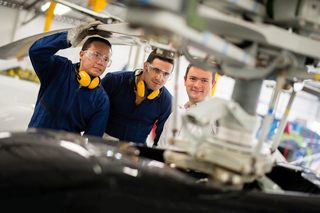
3. Aircraft mechanic: $79,870
Aircraft mechanics inspect, maintain, and repair airplanes and helicopters. The work can involve climbing over aircraft, opening panels, troubleshooting systems, replacing parts, and documenting repairs carefully. Many aircraft mechanics train through FAA-approved aviation maintenance programs or the military. Certification requirements depend on the role and work performed.
Best fit: You like machines, aviation, troubleshooting, and hands-on technical work with real responsibility. Watch out: Expect awkward positions, climbing, strict procedures, and the kind of accuracy where 'close enough' can piss off gravity.
4. Industrial machinery mechanic: $64,520
Industrial machinery mechanics maintain and repair the equipment used in factories, plants, and production environments. They inspect machines, replace worn parts, troubleshoot breakdowns, and help keep operations moving. Training can happen on the job, but technical training in industrial maintenance, machinery, electronics, or related trades can help.
Best fit: You want active mechanical troubleshooting in factories, plants, or production facilities. Watch out: Concrete floors, heavy parts, lockout/tagout rules, grease, noise, and odd hours can all join the party.
5. Plumber, pipefitter, or steamfitter: $63,800
Plumbers, pipefitters, and steamfitters install and repair piping systems that move water, gas, steam, and other materials. The work can involve cutting pipe, carrying equipment, soldering, reading plans, crawling through tight spaces, and working in unfinished or uncomfortable areas. Apprenticeship is the classic route, and licensing requirements vary by state and locality.
Best fit: You want practical, licensed trade work with clear demand and a hands-on path. Watch out: Crawlspaces, heavy pipe, awkward positions, emergency calls, and gross surprises are not rare. Shocking, I know.
6. Wind turbine technician: $64,120
Wind turbine technicians inspect, maintain, and repair wind turbines. That means climbing tall towers, working with mechanical and electrical systems, using safety harnesses, and troubleshooting problems in changing weather. Training often starts with a postsecondary certificate or similar technical program, followed by extensive on-the-job training.
Best fit: You want renewable-energy work, mechanical/electrical troubleshooting, and do not mind heights. Watch out: Tiny occupation, big growth rate. Also: climbing towers is a lifestyle choice, not a casual hobby.
7. Electrician: $63,190
Electricians install, maintain, and repair electrical power, lighting, communications, and control systems. The job can involve pulling wire, bending conduit, climbing ladders, crawling through attics, reading diagrams, and testing circuits. Most electricians learn through apprenticeships, and licensing requirements vary widely by state and locality.
Best fit: You want a respected trade with strong growth, licensing milestones, and work that mixes brain and body. Watch out: The path usually takes years, and electrical work is very much not a place for cowboy nonsense.
8. Diesel mechanic: $61,770
Diesel mechanics inspect, repair, and maintain buses, trucks, and other diesel-powered equipment. The work is hands-on and can include lifting parts, using power tools, working under vehicles, and diagnosing mechanical or electronic problems. Many mechanics learn on the job, but postsecondary diesel technology training can make entry easier.
Best fit: You want active shop work with trucks, buses, heavy vehicles, and practical troubleshooting. Watch out: Diesel components are heavy, spaces are awkward, and your work clothes may retire before you do.
9. HVAC/R technician: $61,010
HVAC/R technicians install and repair heating, ventilation, air conditioning, and refrigeration systems. The work can include carrying equipment, climbing ladders, navigating cramped spaces, checking electrical components, and handling refrigerants safely. Many workers complete a certificate program, apprenticeship, or both.
Best fit: You want mechanical, electrical, and troubleshooting work with a relatively direct training path. Watch out: Expect rooftops, attics, crawlspaces, extreme weather calls, refrigerant rules, and equipment that refuses to be light.
10. Heavy equipment operator: $59,850
Heavy equipment operators run bulldozers, excavators, graders, loaders, and other machinery used in construction and infrastructure work. It is not always cardio-heavy, but it is active in a physical-control sense: constant attention, machine vibration, climbing in and out of equipment, and working around rough sites. Training can happen on the job, through apprenticeships, or through heavy equipment programs.
Best fit: You want construction work but prefer operating powerful machines over carrying drywall until your soul leaves. Watch out: Sitting in a cab does not mean easy: vibration, focus, uneven terrain, weather, and long hours all count.
11. Welder: $53,750
Welders join, cut, and repair metal parts using heat, equipment, and technical skill. The work can be hot, bright, noisy, and physically awkward. It may involve standing, kneeling, carrying materials, reading blueprints, and working in tight or uncomfortable positions. Certificate training can help build entry-level skills, but earnings vary sharply by industry and specialization.
Best fit: You want hands-on fabrication work, a shorter training route, and portable skills. Watch out: The national median is only modestly above the all-occupation median, and better pay often depends on specialization, industry, location, overtime, or travel.
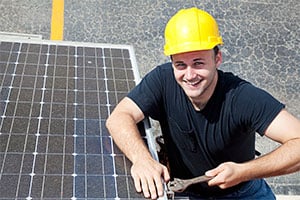
12. Solar photovoltaic installer: $53,140
Solar photovoltaic installers assemble, set up, and maintain solar panel systems on rooftops and other structures. It is active outdoor work that can involve carrying panels, climbing ladders, fastening racking systems, wiring components, and working in direct sunlight. Training may happen on the job, but solar or electrical training can help.
Best fit: You want active renewable-energy work with very fast projected growth. Watch out: The work can mean roofs, sun, ladders, panels, wiring, and pay that varies a lot by region and employer.
Outdoor, Field, and Protective Service Jobs That Keep You Moving
 Some active careers happen outside the shop, clinic, or classroom. Field and public-service jobs can bring movement, variety, and mission-driven work, but they can also bring risk, stress, bad weather, and unpredictable schedules.
1. Police officer: $76,210
Police officers patrol communities, respond to calls, enforce laws, document incidents, and sometimes physically pursue or restrain people. Activity levels vary by assignment, but the job requires readiness for sudden intense physical effort. Entry typically involves a police academy and field training, and requirements vary by agency.
Best fit: You want public-service work with movement, variety, authority, and high responsibility. Watch out: Physical risk, shift work, public scrutiny, stress, and local hiring standards are serious factors.
2. Commercial diver: $72,990
Commercial divers inspect, install, repair, and recover equipment or structures underwater. Some work around bridges, ships, dams, offshore structures, or salvage operations. The job can require heavy gear, poor visibility, currents, cold water, and technical tasks under pressure. Training requires specialized commercial diving instruction and safety preparation.
Best fit: You want extreme hands-on field work and can handle water, gear, pressure, and risk. Watch out: This is specialized, physically serious work with a tiny employment base. Research schools and safety records hard.
3. Firefighter: $59,280
Firefighters respond to fires, rescues, medical emergencies, accidents, and hazardous situations. The physical demands can be extreme: carrying equipment, climbing ladders, hauling hoses, forcing doors, crawling through smoke, and lifting people. Many departments require EMT certification, academy training, physical ability testing, and ongoing drills.
Best fit: You want emergency-response work that is physically intense and community-focused. Watch out: Firefighting involves risk, trauma exposure, heavy gear, irregular schedules, and tough hiring competition in some areas.
4. Surveying and mapping technician: $54,240
Surveying and mapping technicians help collect data used for maps, construction, engineering, and land records. They may carry tripods, GPS equipment, and other tools across construction sites, roadsides, rural land, or uneven terrain. Training often happens on the job, but technical programs in surveying, drafting, GIS, or related fields can help.
Best fit: You want outdoor field work that mixes measurement, mapping, technology, and walking terrain. Watch out: Pay is more modest than the top trades, and field conditions can mean weather, uneven ground, and travel.
Active Jobs to Approach With Caution
Some jobs absolutely keep you moving, but they do not fit the "pay well" promise cleanly. That does not make them bad jobs. It just means you should understand the trade-off before a career article sells you a dream wrapped in vague enthusiasm and stale salary dust.
EMT and paramedic
Emergency medical work is active, important, and often intense. EMTs lift, carry, kneel, climb stairs, respond fast, and deal with people on some of the worst days of their lives. But the May 2025 median pay for EMTs was $44,470, below the all-occupation median. Paramedics earned a stronger median of $60,600, but emergency medical services can still involve injury risk, stress, shift work, and burnout. It may be a calling, a stepping stone, or a strong fit for the right person, but do not treat it as an easy high-pay route.
Fitness trainer
Fitness training sounds like the obvious active career, and it can be rewarding. But the May 2025 median pay for exercise trainers and group fitness instructors was $47,160. Some trainers earn much more, especially with strong client bases, specialties, management roles, or business ownership. Entry-level reality can involve split shifts, unpaid marketing, client churn, and income swings. Good path for some people; terrible magic-money machine.
Retail, food service, childcare, and gig work
Servers, retail workers, childcare workers, warehouse helpers, delivery workers, and dog walkers can all be physically active. Many are also underpaid, unstable, or hard to turn into long-term career mobility without a plan. If your goal is simply to avoid sitting, they count. If your goal is an active career that pays well and builds durable skills, be pickier.
Correctional officer
Correctional work can be active, stressful, and dangerous, but the physical and psychological demands can be heavy relative to the pay in many locations. It also has a very different day-to-day reality from police work, firefighting, or healthcare. Research local agencies, turnover, safety conditions, and advancement routes before treating it as a default active-career choice.
How to Choose an Active Career
The best active job is not always the one with the highest pay. A career can look fantastic in a table and still be wrong for your body, schedule, family life, tolerance for risk, or willingness to spend years in training. Use these filters before you get seduced by a salary number in shiny pants.
1. Match the activity type to your body
Want movement without heavy lifting? Look at dental hygiene, sonography, radiologic technology, surgical technology, or inspection-type work. Want hard mechanical work? Trades like plumbing, electrical, HVAC/R, diesel, and industrial machinery can fit. Want high-risk adventure? Linework, wind turbine technology, firefighting, and commercial diving are in a different physical universe.
2. Be honest about training time
Short certificates can help with welding, solar, HVAC/R, massage therapy, and some technical roles. Associate degrees are common for many high-paying allied health careers. Apprenticeships take longer but let you earn while learning in trades like electrical, plumbing, and elevator work. Academy routes are common in firefighting and law enforcement. None of these paths is automatically better. They solve different problems.
If long-term demand matters as much as staying active, compare these options with our guide to the best careers for the future.
3. Think beyond year one
A physically demanding job can be great at 25 and miserable at 52 if you never build an exit strategy. Heavy trades can lead to inspection, estimating, supervision, teaching, project management, or business ownership. Healthcare roles can lead to specialization, leadership, education, or advanced credentials. Educators leaving the classroom for similar reasons often compare second careers for teachers when they want active work without returning to a traditional school setting. The smartest active career plan includes what happens after your back starts sending angry emails.
4. Check licensing and local rules
Many active careers are regulated. Nurses, dental hygienists, respiratory therapists, radiologic technologists, electricians, plumbers, massage therapists, and public-service roles can all have state or local licensing, certification, exam, or supervised-work requirements. Before enrolling, ask schools exactly which credentials their program prepares you for and what steps remain after graduation.
5. Ask schools practical questions
- Does the program include hands-on labs, clinicals, externships, or field training?
- Which licenses, certifications, or exams does it prepare students for?
- What are the physical requirements for training and entry-level work?
- Are job placement, apprenticeship connections, or employer partnerships available?
- What tools, uniforms, books, safety gear, exam fees, or licensing fees are not included in tuition?
- What percentage of students complete the program and enter the field?
Benefits and Trade-Offs of Active Work
Active work can help you avoid the soul-flattening experience of sitting under fluorescent lights while your hip flexors fossilize. It can also bring variety, real-world problem solving, direct patient care, outdoor work, practical skills, and the satisfaction of making something tangible happen.
But active does not automatically mean healthy. Repetitive strain, fatigue, weather exposure, patient lifting, awkward positions, vibration, falls, electrical hazards, emotional stress, and shift work can all take a toll. The winning move is not "pick the hardest job and become a legend." It is choosing a path where the pay, training, demands, and long-term options make sense for your actual life.
FAQs About Active Jobs
What active jobs pay the most?
Among the careers in this guide, elevator and escalator installers, dental hygienists, registered nurses, diagnostic medical sonographers, and electrical power-line installers have some of the highest national median wages. The trade-off is that high pay often comes with higher training requirements, licensing, hazard exposure, or physical demands.
What active jobs do not require a four-year degree?
Many active jobs do not require a four-year degree. Skilled trades like electrical, plumbing, elevator installation, HVAC/R, welding, diesel technology, and solar installation can use apprenticeships, certificates, or on-the-job training. Several allied health careers, including dental hygiene, radiologic technology, sonography, and physical therapist assisting, commonly require associate degrees instead of bachelor's degrees.
Are there active jobs that are not physically brutal?
Yes. Dental hygienist, diagnostic medical sonographer, radiologic technologist, surgical technologist, and some inspection or mapping roles can keep you standing, walking, positioning, and working hands-on without the same heavy lifting or hazard exposure as linework, firefighting, plumbing, or commercial diving.
What are good active jobs for women?
Good active jobs depend on training, stamina, safety, schedule, and work preferences, not outdated gender boxes. Nursing, dental hygiene, sonography, radiologic technology, physical therapy assisting, occupational therapy assisting, electrical work, linework, wind energy, aviation maintenance, and welding can all be viable when the training path and work environment fit the person. The better question is: What activity level, schedule, risk profile, and credential path do you want?
What active jobs are growing fastest?
Using BLS 2024-34 projections, the fastest-growing jobs in this guide include wind turbine technician, solar photovoltaic installer, physical therapist assistant, occupational therapy assistant, massage therapist, diagnostic medical sonographer, respiratory therapist, and electrician. Growth rates can look dramatic for smaller occupations, so also consider total openings, location, and training availability.
Find Training for an Active Career
If an active career sounds better than watching your posture slowly lose a knife fight with an office chair, start comparing training options. Trade schools, technical colleges, community colleges, apprenticeships, and career-focused programs can help you build practical skills for hands-on work. Enter your zip code into our school search tool below to find nearby or online programs that match your goals.
Sources
Salary data: Bureau of Labor Statistics, U.S. Department of Labor, Occupational Employment and Wage Statistics, May 2025 national median wages. Data accessed May 22, 2026.
Growth, openings, education, and training data: Bureau of Labor Statistics, U.S. Department of Labor, Employment Projections: Occupational projections and worker characteristics, 2024-34. Data accessed May 22, 2026.
Career duties, work environments, and training context: Bureau of Labor Statistics, U.S. Department of Labor, Occupational Outlook Handbook, and O*NET OnLine occupation profiles. Data accessed May 22, 2026.