
Industrial Maintenance Technician Careers: Pay, Training, Skills & the Reality of the Work



What the title really means, what modern plants expect, and how to tell whether training is worth paying for.
Quick take: Industrial maintenance can be a strong path for people who like mechanical systems and systematic troubleshooting. The federal title that best matches many machine-focused roles is Industrial Machinery Mechanics (SOC 49-9041), but employer titles vary enough that you should compare actual duties, not just job names.
Sources: BLS May 2025 OEWS and 2025-35 Employment Projections. National data for SOC 49-9041.
Table of Contents
Industrial maintenance can be a strong career path if you like fixing machines, tracing problems instead of guessing, and learning enough electrical and automation technology to keep modern production equipment running. The catch is that “industrial maintenance technician” is not one perfectly defined occupation. Employers use that title for jobs that can lean mechanical, electrical, controls-heavy, facilities-oriented, or some blend of all four.
That title problem matters when you compare salaries, training requirements, and job outlook. The closest federal occupation for many machine-focused industrial maintenance roles is Industrial Machinery Mechanics (SOC 49-9041), but O*NET also associates industrial-maintenance titles with other occupational groups. So the smartest way to evaluate a job or training program is to look past the title and ask: What equipment will I work on, what systems am I expected to troubleshoot, and which tasks am I legally allowed to perform where I live?
Quick answer: Is industrial maintenance a good career?
For someone who enjoys mechanical systems and troubleshooting, the current labor-market numbers are favorable. In the Bureau of Labor Statistics’ 2025-35 projections, employment for industrial machinery mechanics is expected to grow 17.8%, from 446,900 jobs in 2025 to 526,600 in 2035. BLS projects about 44,400 openings per year on average, including openings created by growth and by workers leaving the occupation.
Current pay is solid too. May 2025 BLS Occupational Employment and Wage Statistics show a national median of $64,520 per year ($31.02 per hour) for industrial machinery mechanics. The 10th percentile was $46,120 and the 90th percentile was $95,170. Those percentiles are not “beginner” and “senior” pay bands. Geography, industry, overtime, shift premiums, union status, and employer size can all move pay up or down.
The bigger story is automation. BLS specifically identifies increasing manufacturing automation as a reason demand for industrial machinery mechanics is rising in many industries. More automated conveyors, packaging lines, sensors, motors, drives, and production machines mean more equipment that needs to be inspected, diagnosed, repaired, and kept available.
That does not mean the career is automation-proof. It means the work is changing toward technicians who can handle increasingly interconnected mechanical, electrical, and control systems.
First, decode the job title
If you search job boards for “industrial maintenance technician,” you will see titles that look interchangeable but are not. Federal occupational data make the same point.
O*NET lists Industrial Maintenance Mechanic as an alternate title under Industrial Machinery Mechanics (49-9041.00), and it lists Maintenance Technician among reported titles for that occupation. But “Industrial Maintenance Technician” also appears under other O*NET occupations, including industrial engineering technologists and technicians, electrical and electronics repairers for commercial and industrial equipment, and general maintenance workers.
That is why one employer may expect a maintenance technician to rebuild gearboxes and align shafts, while another expects PLC diagnostics and motor-control troubleshooting, and another mainly wants facility repairs.
The three BLS occupations most often confused in industrial maintenance
| Occupation | SOC | What it mainly covers | Typical 2025-35 training assignment |
|---|---|---|---|
| Industrial machinery mechanics | 49-9041 | Diagnosing, repairing, adjusting, installing, and maintaining industrial production and processing machinery | High school diploma or equivalent; long-term on-the-job training |
| Maintenance workers, machinery | 49-9043 | More routine machinery servicing, parts replacement, lubrication, setup, inspection, and maintenance | High school diploma or equivalent; long-term on-the-job training |
| Millwrights | 49-9044 | Installing, dismantling, moving, aligning, and repairing heavy machinery and equipment | High school diploma or equivalent; apprenticeship |
Data note: Training assignments are from BLS Employment Projections 2025-35. Employer titles and job scopes can differ from federal occupational categories.
These occupations overlap, but they are not interchangeable. A millwright may spend more time on installation, rigging, precision alignment, and machinery moves. An industrial machinery mechanic is more likely to be a permanent plant-side troubleshooter keeping production equipment running. A machinery maintenance worker may focus more heavily on scheduled routine service and basic repair work.
The title on a business card matters less than the actual scope.
What industrial maintenance technicians actually do
A modern industrial maintenance job usually combines several types of work.
1. Reactive troubleshooting
When a machine stops unexpectedly, the technician has to find the real cause without making the problem worse. O*NET tasks for industrial machinery mechanics include:
- observing and testing machinery to diagnose malfunctions;
- analyzing test results, machine error messages, and operator reports;
- disassembling equipment to remove damaged parts;
- repairing or replacing broken components;
- reassembling and testing equipment after repair;
- reading technical manuals and blueprints;
- recording maintenance and repair work.
The glamorous version is “solve the mystery and save the production line.” The less glamorous version is crawling behind a conveyor because a cheap sensor bracket moved just enough to stop the sequence. Both are the job.
2. Preventive maintenance
Not every shift is an emergency. A lot of good maintenance work is deliberately boring because the goal is to prevent a failure before it ruins anyone’s night.
That can include:
- lubrication;
- belt and chain inspection;
- bearing checks;
- filter changes;
- alignment checks;
- inspection of guards and safety devices;
- checking motors, pumps, gearboxes, and conveyors;
- documenting work in a computerized maintenance system.
3. Mechanical repair
Industrial machinery mechanics routinely work with components such as:
- bearings and shafts;
- gearboxes and couplings;
- chain and belt drives;
- pumps;
- conveyors;
- pneumatic cylinders and valves;
- hydraulic systems;
- production and packaging machinery.
O*NET also includes cutting and welding metal to repair components or fabricate parts, although the amount of welding or machining varies widely by plant.
4. Electrical and controls troubleshooting
This is where modern industrial maintenance increasingly separates itself from basic mechanical repair.
Depending on the employer, a technician may need to understand:
- AC/DC electrical fundamentals;
- three-phase motors;
- contactors and overloads;
- motor starters;
- sensors and switches;
- variable-frequency drives (VFDs);
- control circuits;
- basic PLC input/output diagnostics;
- electrical schematics and ladder diagrams.
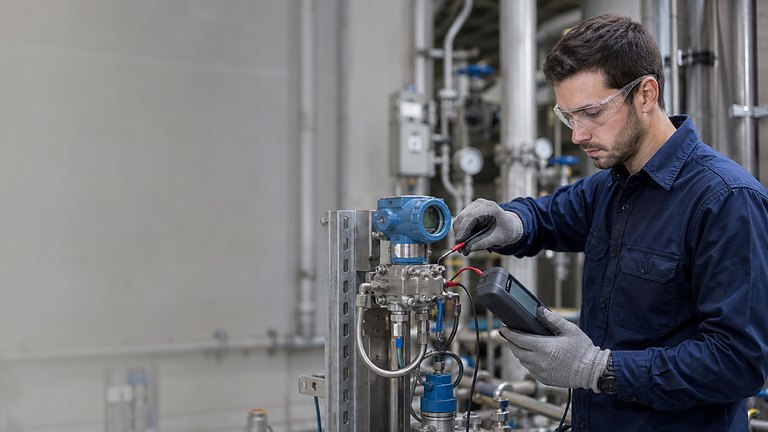
A maintenance technician does not automatically need to be a controls engineer or write a PLC program from scratch. But many plants expect technicians to use the control system as a diagnostic window. For example, you may need to determine whether a PLC is receiving a sensor input, whether an output is being commanded, or whether the actual problem is a broken wire, failed limit switch, bad motor, jammed mechanism, or misaligned sensor.
Why automation is creating more demand for machinery mechanics
This is one of the more interesting parts of the career right now.
BLS’s 2025-35 occupational-utilization analysis repeatedly identifies automation in manufacturing as a factor increasing demand for industrial machinery mechanics across food, beverage, textile, wood-product, chemical, plastics, machinery, electronics, vehicle, aerospace, and other manufacturing industries.
The logic is straightforward: a more automated plant may need fewer people doing repetitive production tasks, but it also operates more conveyors, motors, sensors, drives, actuators, robots, and control hardware. That equipment has to stay operational.
BLS projects:
| Occupation | 2025 employment | 2035 projected employment | Change | Average annual openings |
|---|---|---|---|---|
| Industrial machinery mechanics | 446,900 | 526,600 | +17.8% | 44,400 |
| Maintenance workers, machinery | 59,700 | 58,600 | -1.9% | 4,400 |
| Millwrights | 40,700 | 41,000 | +0.9% | 3,200 |
Source: BLS Employment Projections 2025-35. Employment and openings are national projections, not promises of local hiring.
That split is important. BLS says maintenance-worker employment is expected to decline partly because industrial machinery mechanics increasingly perform maintenance tasks, while predictive maintenance makes work scheduling more efficient. For millwrights, BLS points to slower growth in industries such as paper mills and to slower nonresidential construction growth.
So the opportunity is not simply “maintenance is booming.” The stronger story is that multi-skilled machinery troubleshooting is gaining value faster than routine maintenance work.
Industrial maintenance technician salary
The wage figures below come from May 2025 BLS OEWS national data. OEWS employment counts are survey estimates and are a different dataset from the 2025 baseline employment used in BLS Employment Projections, so the employment figures are not expected to match exactly.
| Occupation | May 2025 OEWS employment | 10th percentile | Median | 90th percentile |
|---|---|---|---|---|
| Industrial machinery mechanics | 439,640 | $46,120 | $64,520 | $95,170 |
| Maintenance workers, machinery | 60,020 | $42,000 | $60,850 | $88,550 |
| Millwrights | 40,330 | $46,290 | $65,700 | $93,600 |
Source: BLS Occupational Employment and Wage Statistics, May 2025. Wage percentiles are not experience bands.
For industrial machinery mechanics specifically, the hourly figures were:
- 10th percentile: $22.17/hour
- 25th percentile: $26.45/hour
- median: $31.02/hour
- 75th percentile: $37.88/hour
- 90th percentile: $45.76/hour
Do not treat the 10th percentile as universal starting pay or the 90th percentile as an automatic “experienced technician” wage. BLS wage distributions reflect many factors beyond experience.
Also remember that base wage data do not tell you exactly what a specific rotating-shift or overtime-heavy plant will pay you in a year. If a job posting mentions shift differential, on-call pay, scheduled shutdown overtime, or union wage steps, those details belong in your real-world comparison.
How much education do you need?
There is no single postsecondary credential that every industrial machinery mechanic must earn.
BLS assigns high school diploma or equivalent as the typical entry education for industrial machinery mechanics and long-term on-the-job training as the typical training path. The Occupational Outlook Handbook says industrial machinery mechanics may receive more than a year of on-the-job training and notes that some mechanics complete a two-year associate degree in industrial maintenance.
That leaves several legitimate entry routes.
Route 1: High school plus employer training
This is the official BLS baseline for industrial machinery mechanics. Some employers hire mechanically inclined workers and train them on plant equipment, safety procedures, maintenance methods, and troubleshooting.
This path can be excellent when the employer has a real training system and senior technicians who are expected to teach. It is less attractive when “training” means being handed a radio on day two and figuring out the plant through emergency calls.
Route 2: Certificate or diploma program
A shorter industrial maintenance, mechatronics, or manufacturing-maintenance program can help build fundamentals before you compete for plant jobs.
A useful program should be more than a stack of online modules. Industrial maintenance is physical. You want meaningful lab access and repeated troubleshooting practice on real equipment.
Route 3: Associate degree
Some community and technical colleges offer two-year associate degrees in industrial maintenance, mechatronics, electromechanical technology, or a closely related field.
An associate degree can make particular sense if you are starting with little mechanical or electrical background and want a broader foundation that includes controls, industrial electricity, math, schematics, and lab work.
Route 4: Apprenticeship
Apprenticeships are most standardized for millwrights, where BLS identifies apprenticeship as the typical on-the-job training model. The OOH says most millwrights learn through a three- or four-year apprenticeship.
Industrial machinery mechanic apprenticeships and employer-sponsored apprenticeship models also exist, but structures vary. Do not assume every industrial maintenance apprenticeship is an identical four-year, 8,000-hour program. Check the actual registered program standards, wage progression, classroom instruction, and job scope.
Route 5: Internal promotion
Production operators sometimes move into maintenance-helper or trainee roles after demonstrating mechanical aptitude and strong knowledge of the equipment they run.
This route can be powerful because experienced operators already know what normal machine behavior looks and sounds like. The limitation is portability: learning one plant’s machines is not the same as building broad electrical, mechanical, and controls fundamentals.
Ready to compare training options?
Explore industrial maintenance programs, then use the lab, electrical, PLC, safety, and employer-connection questions below to compare them.
What should industrial maintenance training actually teach?
You do not need every advanced technology on day one. You do need a foundation that lets you troubleshoot systematically instead of replacing parts by guesswork.
Core mechanical skills
Look for training in:
- bearings, shafts, and couplings;
- chain and belt drives;
- gearboxes;
- pumps and conveyors;
- precision measurement;
- alignment;
- lubrication;
- blueprint and mechanical drawing interpretation;
- basic fabrication and welding where appropriate.
Hydraulics and pneumatics
Industrial equipment frequently uses fluid power for clamping, lifting, pressing, conveying, positioning, and actuation. Programs should teach students to read basic fluid-power schematics and diagnose common component failures safely.
Industrial electricity and motor controls
This is one of the most important differentiators between a purely mechanical program and training that matches modern plant work.
Useful subjects include:
- electrical safety;
- AC/DC fundamentals;
- Ohm’s law and practical circuit calculations;
- three-phase motors;
- relays, contactors, and overloads;
- motor starters;
- transformers and control voltage;
- electrical schematics;
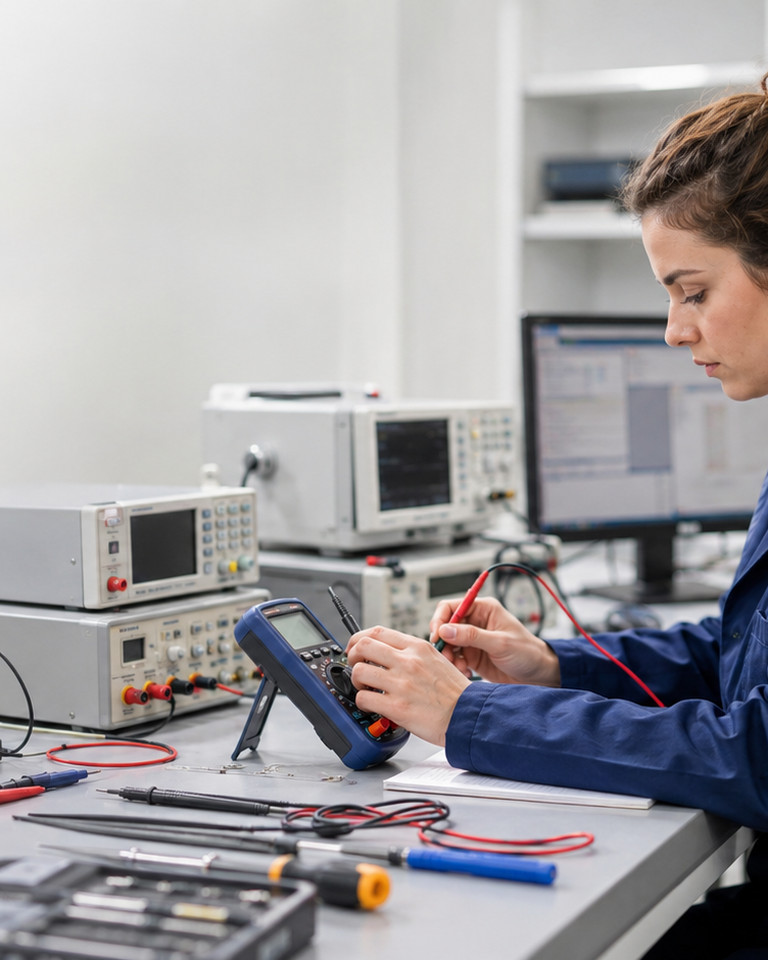
- multimeter use;
- VFD fundamentals.
PLC and sensor troubleshooting
A beginner does not need to become a controls engineer. But a modern program should teach enough PLC architecture and I/O logic to follow a machine sequence and find where a command or feedback signal has failed.
Ask whether students work with physical PLC hardware, sensors, motors, and controlled equipment, not only screen-based simulations.
Safety and lockout/tagout
OSHA’s lockout/tagout standard, 29 CFR 1910.147, applies to servicing and maintenance where unexpected startup, energization, or release of stored energy could injure workers. A credible program should teach hazardous-energy control as an operating habit, not as a one-hour lecture students forget before lab.
OSHA 10-hour and 30-hour Outreach courses can be useful hazard-awareness training, but OSHA explicitly says the Outreach program is voluntary, is not a certification or license, and does not replace training required by OSHA standards.
Certifications: useful, optional, and easy to misunderstand
There is no single national “industrial maintenance technician license” that everyone needs.
SMRP Certified Maintenance & Reliability Technician (CMRT)
The Society for Maintenance & Reliability Professionals offers the CMRT credential. Its exam covers four domains:
- Maintenance Practices
- Preventive and Predictive Maintenance
- Troubleshooting and Analysis
- Corrective Maintenance
SMRP’s current eligibility page does not list a minimum number of years of work experience as an application requirement. That is worth knowing because older or third-party descriptions sometimes present the credential as if several years of experience were formally required.
The credential can be useful evidence of maintenance and reliability knowledge, but it is voluntary. It is not a government occupational license, and the official eligibility page currently lists application, fee, and exam-attempt conditions rather than a minimum experience requirement.
OSHA 10 or OSHA 30
These are course-completion cards from OSHA’s voluntary Outreach Training Program. They are not professional certifications, and OSHA says they do not satisfy the job-specific training requirements found in OSHA standards.
An employer, union, locality, or state may still require one for a particular workplace.
EPA Section 608
EPA Section 608 certification can matter if your maintenance job includes servicing equipment that could release regulated refrigerants. It is not a general industrial-maintenance credential. If refrigeration is part of the role, verify exactly what equipment you will service and which certification type applies.
State and local licenses
Industrial maintenance can cross into regulated work such as certain electrical, boiler, elevator, pressure-system, or refrigeration tasks. Rules vary by jurisdiction and by the exact task.
Ask both the school and potential employers: Which tasks can an in-house maintenance technician legally perform here, and which ones must be handled by a separately licensed trade?
That question is a lot more useful than asking whether “industrial maintenance is licensed” in the abstract.
How to compare industrial maintenance program cost
There is no single useful national tuition number for industrial maintenance training because the options range from employer-paid apprenticeship and workforce programs to community-college certificates, associate degrees, and private technical schools. A sticker-price comparison can be misleading.
Ask each school for the total program cost in writing, including:
- tuition and mandatory fees;
- tools, PPE, uniforms, books, software, and lab charges;
- certification or testing fees that are not included in tuition;
- whether credits can stack into a longer credential;
- whether paid co-op, apprenticeship, employer sponsorship, or tuition reimbursement is available;
- how long you are realistically out of the workforce or limited to part-time work while training.
A cheaper program with weak labs can be a bad bargain. An expensive program with no clear employer relationships can be one too. Compare what you will actually practice, which employers recruit there, and what credential you will hold at the end.
Work environment: what the job is really like
Most industrial machinery mechanics and machinery maintenance workers work in manufacturing facilities. BLS says most work full time during regular business hours, but mechanics may be on call or work nights and weekends, and overtime is common, particularly for mechanics.
So do not assume every job is a permanent graveyard shift, but do not assume a neat Monday-to-Friday schedule either.
Physical realities
The work can involve:
- standing and walking through large facilities;
- bending, kneeling, crouching, and reaching around machinery;
- climbing ladders or platforms;
- handling tools and components;
- working in noisy areas;
- working around hot equipment, lubricants, and moving machinery.
BLS warns that industrial machinery work can be dangerous and emphasizes safety precautions and protective equipment such as hardhats, safety glasses, steel-toed shoes, gloves, and hearing protection.
The exact physical demands depend heavily on the plant. A technician in a modern distribution center can have a very different day from one in a foundry, sawmill, food plant, refinery, or paper mill.
The pressure is real
Troubleshooting a failed production line can be satisfying, but it can also be high visibility. Operators are waiting. Production supervisors are waiting. The clock is very visible.
A good technician learns to stay methodical when everyone else wants an instant answer. If you hate being interrupted, hate ambiguous problems, or freeze when a repair becomes urgent, that matters more than whether you “like working with your hands.”
Who tends to like industrial maintenance?
This career may fit you well if you:
- enjoy finding the cause of a mechanical or electrical problem;
- like variety more than repetitive production work;
- can follow safety procedures even when people are impatient;
- are comfortable learning from manuals, schematics, and diagnostic tools;
- do not mind getting dirty or working in noisy industrial environments;
- like a mix of hands-on work and technical reasoning;
- are willing to keep learning as equipment becomes more automated.
You may want to think twice if you strongly prefer:
- predictable desk work;
- little physical activity;
- zero on-call or overtime potential;
- clean, quiet work environments;
- tasks with obvious answers and little troubleshooting uncertainty.
None of those preferences are bad. They just point toward different careers.
Industrial maintenance vs. nearby trades
A useful way to understand the field is to compare the center of gravity of each role.
| Career | Main focus | How it differs from industrial maintenance |
|---|---|---|
| Millwright | Machinery installation, dismantling, rigging, alignment, heavy mechanical repair | More installation and machinery-move work; apprenticeship is the typical BLS training route |
| Industrial electrician | Electrical distribution, wiring, controls, and code-compliant electrical work | More deeply electrical; licensing rules can be much more specific by jurisdiction |
| Instrumentation/controls technician | Sensors, transmitters, loops, calibration, PLC/automation systems | More controls and instrumentation, less heavy mechanical repair |
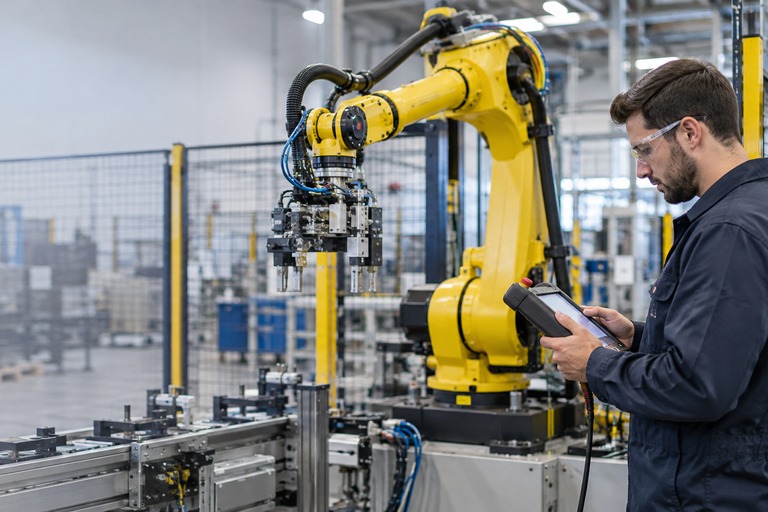
| Robotics technician | Robotic cells, teach pendants, end-of-arm tooling, sensors, motion systems | More robot-specific diagnostics and integration |
| General maintenance worker | Buildings, facilities, fixtures, minor mechanical/electrical/plumbing repairs | Broader facility scope, usually less focused on production machinery |
| CNC machinist | Making precision parts with machine tools | Production and machining are the main job, not plantwide equipment maintenance |
| Welder/fabricator | Joining, cutting, and fabricating metal | Welding may be one maintenance skill, but it is not the whole maintenance role |
If you like fixing machines but are not sure which direction fits, see our broader guide to mechanical and repair careers.
For deeper comparisons, see:


Where can the career lead?
Industrial maintenance is not one straight ladder. Common directions include:
- senior or lead maintenance technician;
- maintenance planner;
- preventive/predictive maintenance specialist;
- reliability technician;
- controls or automation technician;
- maintenance supervisor;
- maintenance manager.
Some transitions are skill extensions rather than promotions. A strong mechanical technician who becomes excellent at electrical troubleshooting may move toward controls. Someone who likes planning, inventory, work orders, and scheduling may prefer maintenance planning. A technician who likes root-cause analysis and condition monitoring may lean toward reliability.
Higher-level engineering or management roles can require additional education or employer-specific qualifications. Do not assume years in maintenance automatically convert into an engineering title.
Questions to ask before choosing an industrial maintenance program
This is where prospective students can save themselves a lot of money and disappointment.
Ask about the lab
- What machines and mechanical systems will I physically work on?
- Will I troubleshoot real faults, or mainly watch demonstrations?
- Do students work with bearings, drives, conveyors, pumps, hydraulics, and pneumatics?
- Is shaft alignment taught with actual equipment?
Ask about electrical training
- How much industrial electrical troubleshooting is included?
- Do students work on motor controls, relays, contactors, overloads, and VFDs?
- Are electrical schematics and ladder diagrams part of the curriculum?
- How is electrical safety taught and practiced?
Ask about PLCs and automation
- Which PLC platforms are used?
- Do students connect to physical PLCs and troubleshoot real inputs and outputs?
- Are sensors, safety circuits, and machine sequencing included?
- Is the program teaching diagnostic skills, programming, or both?
Ask about safety
- How is lockout/tagout practiced in labs?
- Are students trained to identify stored mechanical, pneumatic, hydraulic, and electrical energy?
- What PPE is required during shop work?
Ask about employment outcomes
- Which local employers hire graduates?
- How is “job placement” defined?
- Does the published placement rate count only related industrial-maintenance jobs?
- Are internships, co-ops, apprenticeships, or employer-sponsored labs available?
- What do local employers say graduates are still missing?
That last question is underrated. A good program should know where its graduates still have gaps.
The practical bottom line
Industrial maintenance is becoming less about being “the guy who greases the machine” and more about being the person who can understand why an interconnected machine system stopped working.
For many machine-focused roles, Industrial Machinery Mechanics (SOC 49-9041) is the closest BLS benchmark. Current federal data show a $64,520 median annual wage, 17.8% projected employment growth from 2025 to 2035, and about 44,400 annual openings. Those are strong numbers, but the title “industrial maintenance technician” is broad enough that you should always verify the actual job scope before comparing pay or training.
The strongest training options build both sides of the trade: mechanical fundamentals plus enough industrial electrical and controls knowledge to troubleshoot modern automated equipment safely.
If that combination sounds like your kind of work, you can explore industrial maintenance training programs and schools and compare what their labs, curriculum, employer connections, and credentials actually include.
Frequently asked questions
Do industrial maintenance technicians need a college degree?
No. BLS lists a high school diploma or equivalent as the typical entry education for industrial machinery mechanics and long-term on-the-job training as the typical training path. Some workers complete certificate, diploma, or two-year associate programs to build skills before applying.
Is industrial maintenance the same as being a millwright?
No. The jobs overlap, but BLS classifies them separately. Millwrights focus more heavily on installing, moving, dismantling, aligning, and repairing heavy machinery, while industrial machinery mechanics are more focused on keeping production and processing machinery operating.
Do industrial maintenance technicians need to know PLC programming?
Not necessarily. Many jobs require enough PLC knowledge to diagnose machine inputs, outputs, interlocks, and sequence problems. Writing original control programs or designing automation architecture is a different skill level and may belong to controls specialists or engineers.
Is industrial maintenance being replaced by automation?
Current BLS projections point in the opposite direction for industrial machinery mechanics. BLS expects increasing manufacturing automation to raise demand for workers who maintain and repair that equipment. Routine machinery-maintenance roles, however, are projected to decline modestly as mechanics absorb more maintenance tasks and predictive maintenance improves scheduling.
Is OSHA 10 or OSHA 30 required for industrial maintenance?
Not by OSHA as a universal rule. OSHA says its Outreach Training Program is voluntary, and OSHA 10/30 cards are not certifications or licenses. An employer, union, state, or locality may still require the training.
Do industrial maintenance technicians need EPA 608 certification?
Only if their work falls within EPA Section 608 requirements for servicing equipment that could release regulated refrigerants. It is not a general industrial-maintenance credential.
Sources and data, checked September 23, 2026
- U.S. Bureau of Labor Statistics, Occupational Outlook Handbook: Industrial Machinery Mechanics, Machinery Maintenance Workers, and Millwrights. Updated August 27, 2026. source
- U.S. Bureau of Labor Statistics, Occupational Employment and Wage Statistics: May 2025 national estimates for SOC 49-9041, 49-9043, and 49-9044. Released May 15, 2026. source
- U.S. Bureau of Labor Statistics, Employment Projections 2025-35: Occupational projections and worker characteristics. Released August 27, 2026. source
- U.S. Bureau of Labor Statistics: Factors Affecting Occupational Utilization, 2025-35. source
- **O*NET OnLine:** Industrial Machinery Mechanics, 49-9041.00. source
- **O*NET OnLine:** Maintenance Workers, Machinery, 49-9043.00. source
- **O*NET OnLine:** Millwrights, 49-9044.00. source
- Occupational Safety and Health Administration: 29 CFR 1910.147, Control of Hazardous Energy (Lockout/Tagout). source
- Occupational Safety and Health Administration: Outreach Training Program. source
- U.S. Environmental Protection Agency: Section 608 Technician Certification Requirements. source
- Society for Maintenance & Reliability Professionals: CMRT Certification. source
Explore Industrial Maintenance Training
If the work sounds like a fit, compare programs by the actual equipment, lab time, electrical depth, PLC exposure, safety practice, and employer relationships they offer.