Robotics Technician Careers: Pay, Training, Skills & What the Job Is Really Like



The job title sounds simple. The actual labor market is a glorious industrial naming mess. Here is how to decode it before you choose training.
Quick answer
Robotics technicians build, install, test, maintain, troubleshoot, and repair robotic equipment and related automated production systems. O*NET classifies Robotics Technicians as 17-3024.01. Federal wage and outlook data, however, are published at the broader SOC 17-3024 level for Electro-Mechanical and Mechatronics Technologists and Technicians.
That broader occupation had a $73,900 median annual wage in May 2025, and BLS projects about 1,400 openings per year from 2025 through 2035. Those are useful benchmarks, but they are not robotics-technician-only statistics.
Data-grain note: BLS figures above apply to SOC 17-3024, the broader electro-mechanical and mechatronics occupation. O*NET's Robotics Technicians profile is the 17-3024.01 specialization.
Table of Contents
- What Robotics Technicians Actually Do
- Robotics & Automation Job-Title Decoder
- Skills You Need
- Pay & Job Outlook
- Training Paths: Certificate vs. Associate Degree
- How to Evaluate a Program
- Certifications & Licensing
- Work Environment & Safety
- Who This Career Fits
- Advancement & Engineering Path
- Job-Board Search Terms
- FAQ
- Sources
What Does a Robotics Technician Actually Do?
O*NET's definition is refreshingly concrete: robotics technicians build, install, test, or maintain robotic equipment or related automated production systems.
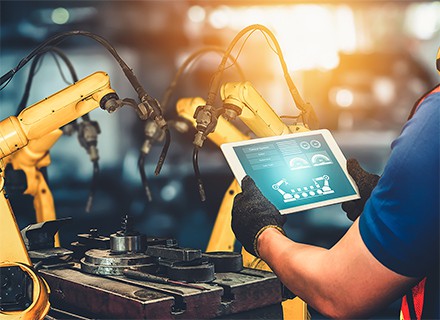
The task list gets more useful. O*NET includes preventive and corrective maintenance, troubleshooting robotic systems, installing or repairing robot controllers and programmable controllers, modifying computer-controlled robot movements, attaching wiring between controllers, testing assemblies, replacing sensors and servomotors, and helping engineers configure or apply robotic systems.
In practice, that can mean moving between several kinds of work in the same day:
- Preventive maintenance: inspecting robot cells, checking wear items, testing safety devices, servicing peripheral equipment, and documenting work.
- Fault diagnosis: figuring out whether a stopped cell has a robot fault, sensor problem, electrical issue, PLC/I/O problem, mechanical bind, pneumatic problem, or failed component.
- Robot operation and adjustment: using a teach pendant, jogging the robot safely, checking alarms, adjusting points or movements, and verifying the cell after a repair.
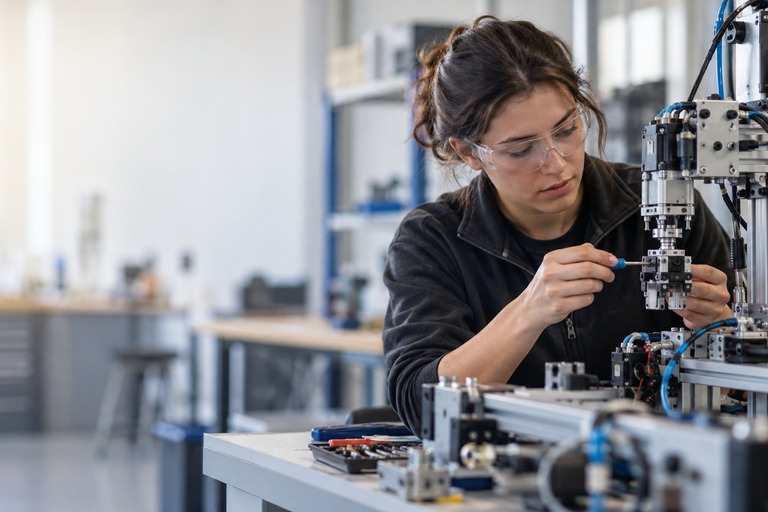
- Hardware repair: replacing sensors, encoders, servomotors, controllers, wiring, end-of-arm tooling, or related components.
- Installation and integration: helping install new robots, connect controllers and peripherals, test I/O, and support startup or commissioning.
- Documentation: recording service work, test results, changes, and recurring faults.
This is not a pure programming job. It is also not just industrial mechanic work with a shiny robot in the corner. The useful technician sits at the intersection of mechanical systems, industrial electricity, electronics, controls, sensors, and robot-specific operation.
The Robotics & Automation Job-Title Decoder
Employer titles overlap. O*NET's 2026 Robotics Technicians profile itself lists reported titles including Automation Technician, Instrumentation and Controls Technician, Process Control Technician, and Programmable Logic Controllers Technician. The broader Electro-Mechanical and Mechatronics occupation also includes Automation Technician among reported titles.
So the title alone is not enough. Read the equipment and skills in the job posting.
| Job title | Usual emphasis | Robot work | Mechanical | Electrical | PLC / controls | Training clue | Important caveat |
|---|---|---|---|---|---|---|---|
| Robotics technician | Robot arms, controllers, end effectors, workcells, sensors | Primary | High | High | Moderate | Robotics, mechatronics, automation | O*NET has a dedicated 17-3024.01 robotics specialization. |
| Automation technician | Entire automated line: robots, conveyors, sensors, drives, PLCs | Moderate | Moderate | High | High | Automation or mechatronics | The title appears across more than one O*NET profile. |
| Mechatronics technician | Integrated mechanical, electrical, pneumatic, electronic, and control systems | Moderate | High | High | High | Mechatronics | Usually broader than robot-only work. |
| PLC technician | PLCs, remote I/O, HMIs, VFDs, ladder logic | Low–moderate | Low | High | Primary | Controls, electrical, automation | Often a job title rather than a neat federal occupation. |
| Controls technician | Control panels, PLCs, networks, HMIs, SCADA, sensors | Low–moderate | Low | High | Primary | Electrical / controls technology | Duties may map to several occupational classifications. |
| Instrumentation & controls technician | Transmitters, process sensors, valves, loops, DCS / PLC systems | Usually low | Low–moderate | High | High | Instrumentation technology | More common in process industries than robot-cell maintenance. |
| Industrial maintenance technician | Plant machinery, motors, gearboxes, pumps, production equipment | Low–moderate | Primary | Moderate | Low–moderate | Industrial maintenance | Robotics may be only one slice of the job. |
| Robotics field-service technician | Robot installation, troubleshooting, repair at customer sites | Primary | High | High | Moderate–high | Robotics / mechatronics plus vendor training | Travel can be a major part of field-service roles. |
How to use this: treat the table as a job-posting translation aid, not an official federal taxonomy. Employers can use the same title for materially different work.
For a deeper look at controls-heavy work, see our instrumentation and controls technician career guide. To compare education built around these overlapping skills, see mechatronics, PLC, and automation technician schools.
What Skills Do Robotics Technicians Need?
The strongest technicians are multi-skill troubleshooters. They do not need to be experts in every engineering discipline, but they need enough range to isolate a fault instead of blindly replacing parts.
Robot operation and programming
You should be comfortable using a teach pendant, jogging an industrial robot, changing operating modes, reading alarms, selecting programs, adjusting positions, and understanding coordinate frames. Depending on the employer, technicians may also make limited program changes or support more advanced programming performed by controls specialists or engineers.
PLCs, I/O, and industrial controls
A robot rarely works alone. It exchanges signals with PLCs, safety systems, sensors, conveyors, vision systems, and other machines. A technician should be able to follow I/O, understand basic ladder logic, trace interlocks, and determine whether a fault is inside the robot or somewhere else in the automated line.
O*NET's software data for Robotics Technicians includes PLC software, SCADA software, Siemens SIMATIC STEP 7, ABB RobotStudio, ladder logic, and other engineering/control tools. That does not mean every employer expects every package. It means controls literacy belongs in the skill stack.
Industrial electricity and electronics
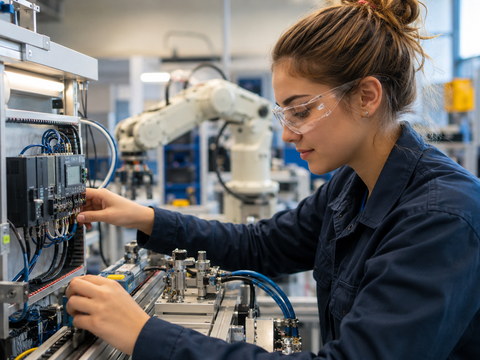
Expect schematics, multimeters, control voltage, motors, drives, relays, sensors, connectors, and controller hardware. A robotics program that avoids electrical troubleshooting is missing a major part of the work.
Mechanical systems and fluid power
Robot cells still contain bearings, belts, gears, couplings, fasteners, fixtures, conveyors, pneumatic actuators, and end-of-arm tooling. O*NET includes aligning and assembling components and replacing servomotors and other hardware among core tasks. Many automated systems also use compressed air or hydraulics for grippers, clamps, lifts, presses, and tooling.
Documentation and disciplined troubleshooting
Fast guessing is not the same thing as troubleshooting. Good technicians read alarms, verify inputs, isolate variables, test safely, document what changed, and leave useful records for the next shift.
How Much Do Robotics Technicians Make?
The important caveat: BLS does not publish a standalone national wage table for O*NET 17-3024.01 Robotics Technicians. The closest official wage data are for the broader SOC 17-3024 occupation, Electro-Mechanical and Mechatronics Technologists and Technicians.
For that broader occupation, May 2025 BLS data show:
| BLS measure | Amount |
|---|---|
| Median annual wage | $73,900 |
| Median hourly wage | $35.53 |
| 10th percentile annual wage | $47,840 |
| 25th percentile annual wage | $59,780 |
| 75th percentile annual wage | $88,540 |
| 90th percentile annual wage | $109,890 |
| National employment, OEWS | 15,520 |
Do not read those percentiles as an experience ladder. The 90th percentile is not automatically a "senior robotics technician salary," and the 10th percentile is not automatically an entry wage. Industry, location, shift premiums, overtime, specialization, employer size, and job duties all affect compensation.
BLS also reports different median wages among major industries employing the broader occupation. In May 2025, the median was $101,580 in scientific research and development services and $78,270 in transportation equipment manufacturing, compared with $67,720 in computer and electronic product manufacturing, $64,700 in machinery manufacturing, and $64,220 in engineering services.
What is the job outlook?
BLS projects employment for SOC 17-3024 to grow from about 15,700 jobs in 2025 to about 16,200 in 2035. That is a 2.6 percent increase in the underlying Employment Projections data, displayed as 3 percent in the Occupational Outlook Handbook after rounding.
More useful than the percentage alone: BLS projects about 1,400 openings per year, on average, over the decade. Many openings are expected to come from workers transferring to other occupations or leaving the labor force.
There is an interesting tension in the outlook. BLS says increasing use of autonomous systems and robotics may raise demand for workers who develop, produce, and operate them. At the same time, automated equipment, testing, and design can replace some technician tasks. Translation: automation creates technician work and automates some technician work at the same time. Technology rarely has the decency to move in one direction.
What Education Do Robotics Technicians Need?
BLS says electro-mechanical and mechatronics technologists and technicians typically need either an associate degree or a postsecondary certificate. O*NET places Robotics Technicians in Job Zone Three: Medium Preparation Needed, meaning vocational training, related experience, an associate degree, or some combination is common.
O*NET's displayed education responses for Robotics Technicians show 45 percent reporting an associate degree as the education needed for a new hire, 23 percent reporting a postsecondary certificate, and 18 percent reporting a bachelor's degree. Those responses come from an older underlying education survey, so treat them as occupational context rather than a live census of 2026 job postings.
Common program names to look for
| CIP code | Program title | What it emphasizes |
|---|---|---|
| 15.0405 | Robotics Technology/Technician | Robot systems, testing, maintenance, control languages, and industrial applications |
| 15.0406 | Automation Engineer Technology/Technician | PLCs, instrumentation, electrical/hydraulic/pneumatic controls, actuators, sensors, process control, and robotics |
| 15.0407 | Mechatronics, Robotics, and Automation Engineering Technology/Technician | Integrated computer/software, controls, electrical/electronic, mechanical, and robotics technology |
| 15.0403 | Electromechanical/Electromechanical Engineering Technology/Technician | Combined mechanical and electrical/electronic systems |
The program name matters less than the lab and curriculum.
Certificate or associate degree?
A certificate can make sense if it gives you real hands-on industrial training and you already bring useful mechanical, electrical, maintenance, or manufacturing experience. It can also be a fast entry point into a stackable pathway.
An associate degree usually gives you more room for electrical theory, controls, mechanical systems, math, communications, and broader technical coursework. That can be helpful when employers want technicians who can troubleshoot the whole automated system rather than only operate a robot.
Can robotics technician training be online?
Some of it can. Electrical theory, controls concepts, ladder-logic fundamentals, documentation, math, safety concepts, and robot simulation can all be taught online to varying degrees. FANUC itself offers online learning alongside instructor-led robotics training, and robot vendors provide simulation tools for programming and setup practice.
But O*NET's core tasks also include attaching wires between controllers, aligning and assembling components, testing robotic assemblies with instruments, performing maintenance, replacing physical components, and installing robotic systems. Those are hands-on competencies.
So be skeptical of a program that claims to prepare a brand-new robotics technician entirely through videos and browser simulations with no meaningful physical lab experience. Online coursework can be part of a strong program. For first-time technicians, it should not be the entire program unless there is a credible local lab, employer, apprenticeship, or residency component supplying the missing hands-on work.
How to Evaluate a Robotics or Automation Program
- Industrial-grade robot experience: What robots will you physically operate, jog, recover, and troubleshoot?
- PLC and controls training: Will you trace I/O, work with PLCs, and understand how sensors and safety systems interact with the robot?
- Electrical troubleshooting: Will you read schematics, use meters, and diagnose motors, drives, relays, sensors, and control circuits?
- Mechanical and fluid-power fundamentals: Does the curriculum cover bearings, drives, alignment, pneumatics, hydraulics, conveyors, and end-of-arm tooling?
- Fault-based lab work: Do students diagnose intentionally created faults, or mainly complete guided exercises where everything works?
- Employer-aligned equipment: Which robot brands, PLC platforms, and automation systems do nearby employers use?
- Work experience: Are co-ops, internships, apprenticeships, or active employer partnerships available?
- Stackability: If you start with a certificate, do the credits apply toward a related associate degree?
Explore robotics and automation training and mechatronics, PLC, and automation technician programs to compare related education paths.
Do Robotics Technicians Need Certification or a License?
There is no single nationwide "robotics technician license" that everyone must hold before working in the occupation. Requirements can still attach to specific work, especially electrical work governed by state or local rules, so verify the legal scope of the job where you live and work.
Industry credentials are different from occupational licenses. They can help document specific skills, but their value depends heavily on the employer, equipment, and region.
SACA robotics and automation credentials
The Smart Automation Certification Alliance offers stackable Industry 4.0 credentials. Its Certified Industry 4.0 Robotics Specialist includes core micro-credentials in basic operations, advanced operations, Robot System Operations 1, and Robot Systems Integration 1.
SACA offers Silver and Gold versions. Silver is based on the written knowledge exam. Gold adds a hands-on performance assessment on approved equipment. That distinction is useful when you want a credential that documents both knowledge and physical skill.
PMMI mechatronics certification tests
PMMI offers modular mechatronics certification tests covering areas such as industrial electricity. These can be relevant in automated manufacturing and packaging environments, especially when the tested skill set matches the job you want.
Vendor training and certifications
Robot manufacturers train workers on their own equipment. FANUC, for example, offers robotics courses in programming, electrical and mechanical maintenance, vision, safety, robot-specific systems, and robot/PLC integration. FANUC also works with NOCTI on operator and technician certifications through certified education programs.
Vendor-specific training can be valuable when local employers actually use that vendor's hardware. A certificate from a famous brand is not magic if the plants hiring near you use completely different platforms.
What Is the Work Environment Really Like?
This is hands-on industrial technical work, not a laptop career with occasional robot selfies.
BLS says the broader electro-mechanical/mechatronics occupation works primarily in manufacturing and professional, scientific, and technical services, often at both production sites and in offices. Some workers put in more than 40 hours per week.
O*NET's Robotics Technicians work-context responses also point to a real plant-floor environment. Respondents frequently reported wearing common protective equipment, working around hazardous equipment, dealing with time pressure, and spending substantial portions of the workday standing. Some reported irregular schedules, although regular schedules were more common in the displayed responses.
OSHA's industrial robot guidance treats a robot system as more than the arm itself: it includes the manipulator, end effector, controller, power sources, sensors, and communications/I/O. OSHA emphasizes risk assessment, safeguarding, training, PPE where required, and safe procedures for workers who operate or maintain robot systems.
That safety piece is not decorative. A technician may need to troubleshoot equipment close to the exact machines that can move unexpectedly if energy control, guarding, or safety logic is mishandled.
Who Is This Career a Good Fit For?
- Troubleshooters: You enjoy turning "the line is down" into a testable sequence of possible causes.
- Machines-plus-computers people: You want software and controls in your work without sitting at a desk all day.
- Hands-on technical workers: You are comfortable using tools, meters, schematics, and diagnostic software in the same hour.
- Precision-minded people: Small mistakes can create large downtime or safety problems.
- Continuous learners: Robot controllers, PLC platforms, sensors, and networks keep changing.
- People who like visible results: The reward for a correct diagnosis is often immediate: the cell runs again.
O*NET's interest data strongly emphasize mechanics/electronics and engineering for this occupation, with information technology also showing up as an important interest area.
Who should think twice?
This path may be a poor fit if you strongly dislike industrial environments, PPE, machinery noise, diagnosing problems under time pressure, shift schedules or occasional overtime, electrical and mechanical troubleshooting, or taking safety procedures seriously every single time.
If you mostly want to design robots, write advanced autonomy software, or develop new mechanisms from first principles, you may be looking for an engineering path rather than a technician path. Our engineering technology vs. engineering guide explains that distinction in more detail.
Where Can a Robotics Technician Career Lead?
Robotics technicians can deepen their skills in robot maintenance, controls, machine vision, industrial networking, field service, integration, or supervisory work. The exact ladder depends on the employer, so avoid treating any single sequence of titles as universal.
A technician career can also build excellent practical knowledge for further education. But experience does not automatically convert a technician role into an engineering degree.
Some employers use flexible internal titles such as automation engineer or controls engineer for highly experienced technical staff. Others reserve engineering positions for candidates with bachelor's degrees in engineering or engineering technology. If engineering is your long-term goal, choose technical education with transfer in mind and ask exactly how an associate degree articulates into a bachelor's program.
For another adjacent path, see mechanical engineering technology programs. If you want a broader maintenance route, compare industrial maintenance training.
Job-Board Search Terms Worth Trying
Do not search only for "robotics technician." Depending on your skills and region, relevant postings may use:
- robot technician
- robotics maintenance technician
- automation technician
- industrial automation technician
- mechatronics technician
- electro-mechanical technician
- controls technician
- PLC technician
- instrumentation and controls technician
- maintenance technician with robotics or automation responsibilities
- robotics field-service technician
Then read the actual duties. Job titles are cheap. Equipment lists tell the truth.
12 Questions to Ask a School Before Enrolling
- Which industrial robots will I physically operate and troubleshoot?
- How many courses include hands-on lab work?
- Will I use PLCs and troubleshoot I/O between the PLC and robot controller?
- Does the program include industrial electricity, sensors, motors/drives, and mechanical systems?
- Will I use meters and diagnostic tools on real equipment?
- Are pneumatics or hydraulics covered?
- Do students troubleshoot seeded faults, or mainly complete guided exercises?
- Which local employers advise, recruit from, or provide equipment to the program?
- Are internships, co-ops, or apprenticeships available?
- Do certificate credits stack into an associate degree?
- Which vendor or industry credentials can students earn, and are they included in tuition?
- What percentage of the program can be completed online, and where does the hands-on training happen?
Bottom Line
Robotics technician can be a strong path if you want technology-heavy work that stays connected to real machines. The appeal is the mix: robots, controls, electrical troubleshooting, mechanical repair, sensors, and software all collide in one job.
The catch is that the labor market refuses to use one tidy title. "Robotics technician" may be the cleanest label, but nearby roles in automation, mechatronics, controls, instrumentation, and industrial maintenance can overlap heavily.
Choose training by what you will physically learn to troubleshoot, not by whether the program title contains the word robotics. A strong program should make you useful when the robot stops, the sensor lies, the PLC waits for a signal that never arrives, and everyone on the line is staring at the same blinking fault light.
Frequently Asked Questions
What is a robotics technician?
A robotics technician builds, installs, tests, maintains, troubleshoots, or repairs robotic equipment and related automated production systems. O*NET classifies Robotics Technicians as 17-3024.01.
How much do robotics technicians make?
BLS does not publish a separate national wage table for the O*NET robotics specialization. The broader SOC 17-3024 occupation had a median wage of $73,900 in May 2025. Use that as a parent-occupation benchmark, not a robotics-only salary.
What education do robotics technicians need?
BLS says workers in the broader electro-mechanical and mechatronics occupation typically need an associate degree or postsecondary certificate. O*NET places Robotics Technicians in Job Zone Three, which typically involves vocational training, related experience, or an associate degree.
Do robotics technicians need programming skills?
Usually some. O*NET includes modifying robot movements and installing or programming robot controllers and programmable controllers among occupational tasks. The amount of programming varies by employer; many technician roles focus more on troubleshooting and adjustment than developing complex software from scratch.
Do robotics technicians need PLC skills?
PLC knowledge is very useful because industrial robots exchange signals with the rest of the automated line. O*NET specifically includes programmable controllers in robotics-technician tasks and lists PLC software among relevant industrial-control software.
Can you become a robotics technician through online training?
Online courses can teach theory, controls concepts, software, and simulation. But major O*NET tasks are physical: wiring, assembly, testing, installation, maintenance, and hardware repair. New technicians should look for meaningful hands-on lab, apprenticeship, employer, or residency experience.
Are robotics technicians the same as mechatronics technicians?
Not exactly. Robotics technicians have a dedicated O*NET specialization centered on robotic equipment and related automated systems. Mechatronics work is usually broader across mechanical, electrical, electronic, and control systems. Employer titles overlap, so compare actual job duties.
Is certification required?
There is no single nationwide robotics-technician credential required for every job. Employers may value industry or vendor credentials such as SACA robotics certifications, PMMI mechatronics tests, or manufacturer training. Local licensing rules can apply to particular electrical duties.
Sources
Data and sources checked September 20, 2026.
- U.S. Bureau of Labor Statistics, Occupational Outlook Handbook: Electro-Mechanical and Mechatronics Technologists and Technicians. May 2025 wage data and 2025–2035 projections.
- U.S. Department of Labor, O*NET OnLine: Robotics Technicians, 17-3024.01. Updated 2026.
- National Center for Education Statistics: CIP 15.0405 Robotics Technology/Technician, CIP 15.0406 Automation Engineer Technology/Technician, and CIP 15.0407 Mechatronics, Robotics, and Automation Engineering Technology/Technician.
- Occupational Safety and Health Administration: Industrial Robot Systems and Industrial Robot System Safety.
- Smart Automation Certification Alliance: Smart Automation Certifications and Specialist Certifications.
- PMMI: Mechatronics Certification Test: Industrial Electricity 2.
- FANUC America: FANUC Academy robotics training and FANUC/NOCTI robotics certifications.
Explore Training Options
If this kind of multi-skill troubleshooting sounds like your flavor of technical chaos, compare nearby or online programs carefully and make sure the hands-on component is real.