How to Become a Water or Wastewater Treatment Operator


You can often start a career in water or wastewater treatment with a high school diploma or GED, no prior operator experience, and training on the job. But there is no single national operator license. Depending on your state and specialty, you might take an entry exam before applying for work, finish an approved course first, or get hired into a supervised operator-in-training (OIT) position. Drinking water operators make water safe to use; wastewater operators clean sewage before discharge or reuse. Both are included in a Bureau of Labor Statistics (BLS) occupation with a May 2025 median wage of $60,020. The crucial first step is checking the rules where you intend to work, before spending money on training.
The quick facts
| Measure | U.S. figure | What it really means |
|---|---|---|
| Typical entry education | High school diploma or equivalent | National BLS entry profile; state certification and hiring requirements can add conditions |
| Typical work experience for entry | None | You may still need supervised hours for a full state credential |
| Typical training | Long-term on-the-job training | There is no universal short-course-to-license shortcut |
| Median annual wage | $60,020 | May 2025 BLS OEWS, combined water and wastewater operators, SOC 51-8031 |
| 25th to 75th wage percentiles | $48,040 to $74,780 | Distribution of occupational wages, not a guaranteed starting-to-senior pay range |
| Projected employment change | -5.7% from 2025 to 2035 | BLS Employment Projections; the OOH rounds this to -6% |
| Average annual openings | 10,000 | Openings despite the projected decline, primarily as people leave or change occupations |
Bottom line: This can be an excellent fit if you like mechanical equipment, chemistry, field inspections, and public service, and you can live with shift work and safety rules. It is not a fast-growing occupation on current BLS projections. Sources: BLS Occupational Outlook Handbook, BLS OEWS, and BLS Employment Projections.
Which water-utility career do you actually want?
People casually call several different jobs "water operators." That creates expensive confusion: treatment-plant licenses and experience may not transfer to outdoor pipe-network work. Decide what equipment and work environment appeals to you first.
| Track | What you operate | Typical work | What to verify |
|---|---|---|---|
| Drinking water treatment | Wells or intakes, filters, chemical-feed systems, tanks, and plant controls | Test samples, adjust treatment, track quality, monitor pumps and computerized controls | The state's drinking water treatment credential, often graded by plant complexity |
| Wastewater treatment | Screens, clarifiers, biological treatment basins, disinfection, sludge equipment | Monitor incoming sewage and treated effluent, manage processes, test samples, file operating records | The separate wastewater treatment credential and qualifying plant hours |
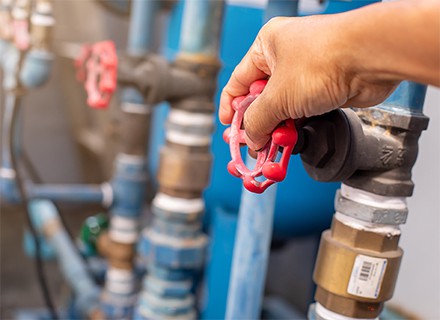
| Water distribution | Water mains, valves, hydrants, booster pumps, tanks, and meters | Outdoor maintenance, pressure troubleshooting, main repairs, flushing | Whether the state has a distribution license and whether hours count toward treatment |
| Wastewater collection | Sewers, manholes, lift stations, force mains, and cleaning equipment | Fieldwork, lift-station monitoring, cleaning/jetting, pump maintenance | Whether the state has a collection credential and its separate experience rules |
Do not confuse treatment with septic servicing. Cleaning septic tanks or sewer pipes is not automatically the same occupational pathway as running a municipal wastewater treatment plant.
What a real shift looks like
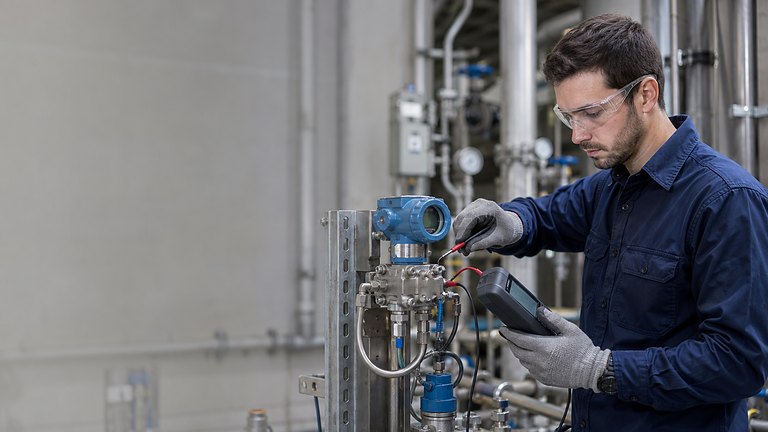
At a drinking water plant, an operator might check reservoir or well conditions, take and analyze samples, review treatment performance, adjust authorized chemical feeds, inspect pumps and filters, investigate an alarm on a SCADA (supervisory control and data acquisition) screen, and record results for compliance. At a wastewater plant, the shift might involve checking an aeration basin, reviewing lab results, troubleshooting a pump or blower, watching disinfection and solids handling, and documenting discharge measurements.
The work includes both hands-on maintenance and careful recordkeeping. It can move between a control room, a lab bench, outdoor basins, and equipment areas in a single day. As you gain experience, understanding instruments, sensors, and controls matters as much as being handy with tools. See the BLS task description and O*NET occupational tasks.
If you would rather repair water mains or install piping than operate treatment processes, explore the plumbing trade as a related, but distinct, career direction.
Can you start without a college degree or operator license?
Often, yes. The BLS lists a high school diploma or equivalent, no related work experience, and long-term on-the-job training as the typical national entry profile. However, that is not a license to operate an entire plant independently. States determine how workers become authorized, which duties need certified supervision, what coursework qualifies, and how many hours count toward a full credential.
For example, Arizona allows applicants with a high school diploma or GED to take a Grade 1 operator exam without facility experience. Florida's typical Class C treatment entry requires a state-approved course before the exam, and a full license requires documented operational experience. California wastewater trainees must hold plant-specific OIT authorization to accumulate the required qualifying experience under certified supervision. Pennsylvania allows candidates to take exams before meeting the experience requirements, but certification comes later.
Five ways people enter the field
- Get hired as a utility trainee. Search municipal public works agencies, water districts, contract operators, and utilities for "operator trainee," "operator I," "OIT," and "plant operator in training." Confirm who supervises you and whether your duties earn qualifying hours.
- Complete a state-approved basic course. In course-first states this may be the best initial investment. First verify that the exact course, provider, and completion date will satisfy the specific license and grade you want.
- Take a community college certificate or associate program. Useful for process chemistry, basic electricity, pumps, labs, and future advancement. It may reduce experience requirements for certain grades where allowed, but a school credential is not itself an operator license.
- Enter a registered apprenticeship. Programs connected with rural water associations and participating utilities combine paid work and instruction. They need an employer sponsor, and opportunities vary geographically. Start with the National Rural Water Association apprenticeship network.
- Use relevant military or industrial experience. Water-purification, mechanical, electrical, or utility-related experience can be useful. Ask the licensing board exactly what records and hours it accepts rather than assuming credits automatically transfer.
A training-cost example, not a required purchase
Sacramento State's Water Treatment Plant Operations Specialist is a 270-hour, three-course distance program. Its listed price is $912 per course, plus separate manuals. That is an example of structured training, not a universal prerequisite, and completing its certificate does not issue a state operator license. Before enrolling, ask your regulator whether its credits are accepted for the exact certification you plan to seek. Costs and enrollment authorization can vary.
The licensing roadmap: find your state's first gate
An applicant's most useful question is not "Which national certification should I buy?" It is "What must I complete before I can legally earn experience or take the first exam in my state?"
The U.S. Environmental Protection Agency oversees drinking-water operator certification through state-administered programs under the Safe Drinking Water Act. Wastewater certification is administered under state rules rather than one nationwide operator credential. Some states use the same agency for both; others do not. Start with the EPA's state drinking-water operator contact directory, then locate the matching wastewater board for your state.
Three common starting sequences (examples, not a 50-state classification)
| Step | Exam-first example | Course-first example | Employer-first OIT example |
|---|---|---|---|
| Check eligibility | Arizona Grade 1: confirm HS/GED and exam rules; Pennsylvania: exam eligibility differs from full certification | Florida Class C: complete DEP-approved training; Texas Class D wastewater: complete Basic Wastewater Operation | California wastewater: confirm the educational points and OIT rules for your target grade |
| Next action | Take an entry exam before or while applying for a job | Apply for exam after the required course | Find a qualifying plant and supervising chief operator |
| Supervised work | Follow the state's permitted duties and document any qualifying experience | Complete the hours needed for the full credential or upgrade | Obtain a plant-specific OIT certificate and record hours under certified supervision |
| Certification | Passing an exam is not always the same as holding full certification | Send the license application and qualifying hours as required | California wastewater Grade I needs at least 1,800 hours of qualifying wastewater operations experience |
The sequence matters: If your work site or assignment does not meet the state's definition of qualifying experience, a year on the job may not bring you a year closer to certification. For example, Pennsylvania distinguishes treatment from distribution or collection experience, and California excludes some industrial, agricultural, manufacturing, and shipboard work from wastewater qualifying experience.
Five-state licensing snapshot, verified November 12, 2026
| State | Beginner route worth checking | One easily missed rule | Official regulator |
|---|---|---|---|
| California | Drinking water T1 can begin with HS/GED and an exam; wastewater follows a separate Grade I/OIT route | California wastewater OIT is tied to a specific treatment plant; qualifying Grade I experience is at least 1,800 hours. Wastewater certificates renew on a three-year cycle. | State Water Board operator certification, wastewater OIT, renewal |
| Texas | Wastewater Class D: HS/GED, approved Basic Wastewater Operation course, no prior work experience, and exam | Class D wastewater is not renewable for operators at certain plant types, including any activated-sludge treatment facility. A provisional Class D option has different education and duration rules. | TCEQ wastewater licensing |
| Florida | Typical plant-entry Class C: HS/GED, DEP-approved course before the exam, then documented plant experience | Full Class C licensure calls for 2,080 hours of appropriate operational experience. The June 2026 handbook provides an evaluation route for out-of-state license reciprocity, not a guarantee. | DEP operator certification, June 2026 handbook |
| Arizona | Grade 1: HS/GED and entry examination; no previous facility experience required to sit | Arizona has separate treatment, distribution, and collection grades. Passing the exam still must be certified through ADEQ's portal. | ADEQ operator certification |
| Pennsylvania | Candidates may sit for the relevant exams before getting operating experience; full certification depends on education, system class, subclass, and qualifying hours | Exam passage alone does not confer full certification; the state requires the applicable class/subclass experience and approval. | DEP initial certification |
Important: This is a five-state starting comparison, not proof that all other states fit one of these models. Grade letters and numbers are not transferable definitions. State agencies can revise fees, authorized courses, renewal rules, and reciprocity policies. Follow the live regulator link before paying or applying.
How to avoid the expensive trainee-hours trap
Before accepting a job, ask the prospective employer which class of plant you will work at, what duties you'll perform, whether a certified operator will supervise you, whether your state requires an OIT card before those hours begin, and who will sign your records. Keep dated hours, plant classifications, supervisor details, job descriptions, and course completion certificates. Do not rely on a verbal promise that "all your hours will count."
What are the exams like?
Expect questions about process operations and safety, measurements, basic calculations, sampling, disinfection, equipment, and applicable laws. Different tracks emphasize different subjects: water treatment often involves filtration, disinfection, and source-water quality; wastewater often involves biological treatment, sludge handling, effluent monitoring, and process adjustments. The exact topics, allowable reference materials, formulas, and passing scores are set by the regulator or its exam provider.
For study, use the official Texas wastewater licensing and study guidance or Pennsylvania exam preparation resources, then find the matching guide for your state. Do not mistake an unofficial practice test for a state-approved course or official examination.
Water and wastewater operator pay
BLS reports drinking water and wastewater treatment plant and system operators together under SOC 51-8031. There is no separate official BLS national median for each treatment track, so claims that one categorically pays more are not supported by that federal dataset.
| National wage measure | May 2025 amount |
|---|---|
| 10th percentile annual wage | $39,110 |
| 25th percentile annual wage | $48,040 |
| Median annual wage | $60,020 |
| 75th percentile annual wage | $74,780 |
| 90th percentile annual wage | $91,060 |
| Median hourly wage | $28.86 |
The percentiles describe a wage distribution across employed operators. They are not labeled "beginner," "experienced," or "manager," and the figures are not a career-progression guarantee. Pay depends on employer, region, facility complexity, certifications, contracts, overtime, and other factors.
Most operators work for local governments: BLS identifies 74% in local government, excluding education and hospitals, in its 2025 employment profile. The May 2025 occupational median in that industry is $60,300. Compare local job postings and collective agreements rather than assuming the national figure is what your first employer will offer.
Data note: The May 2025 BLS Occupational Employment and Wage Statistics (OEWS) survey estimates 128,490 employed operators; the separate BLS Employment Projections program estimates 131,000 jobs in its 2025 baseline. Those are different statistical series and should not be treated as conflicting job counts. Wage and employment citations: BLS OOH and BLS May 2025 OEWS release.
Outlook: a shrinking workforce can still have job openings
This is the part glossy career articles tend to skip. BLS projects employment in the combined occupation to move from about 131,000 in 2025 to 123,500 in 2035, a loss of 7,500 jobs or 5.7% (rounded to -6% in its Occupational Outlook Handbook). More capable treatment equipment and automation are part of the explanation. That is a headcount forecast, not a claim that water treatment itself is becoming less important.
BLS also forecasts approximately 10,000 occupational openings each year, on average, over 2025-2035. Workers retire, leave the labor force, or switch careers even when net employment falls. Openings are not the same thing as new positions, guaranteed vacancies in your town, or evidence of growth. Check municipal hiring notices in your region and ask prospective employers about trainee pipelines and succession needs.
As plants adopt more instrumentation and automated controls, developing SCADA, mechanical troubleshooting, laboratory, and compliance-reporting competence may be valuable. It does not make the occupation immune to automation. For a deeper look at those technical specialties, see our guides to instrumentation and controls technicians and industrial maintenance technicians.
Working conditions: what the brochure rarely tells you
Water and wastewater facilities may run continuously. Shift rotation, nights, weekends, holidays, and emergency calls are common. A trainee may not get a weekday-only schedule, especially in a smaller plant with a small crew. Ask what "on call" actually means: response time, staffing, standby compensation, overnight callouts, and training coverage.
Both tracks involve real hazards. Drinking water operations can involve strong treatment chemicals, pressurized systems, motors, wet or slippery surfaces, and confined work areas. Wastewater plants add biological exposures, odors, potentially hazardous gases, moving machinery, and confined-space risks. PPE, procedures, air monitoring, lockout/tagout, and supervision reduce risks; they do not erase them. Operators must follow their employer's safety program and applicable regulations.
Recordkeeping is also part of the job. Operators may take samples, record readings, calculate treatment adjustments, document incidents, and prepare environmental compliance reports. If you want to solve mechanical and chemical problems but loathe documentation, understand that accurate logs are not optional paperwork.
Is the field right for you?
It may fit if you enjoy troubleshooting pumps and valves, applied math and science, routine observation, maintaining public health infrastructure, and taking responsibility for processes that must work every day.
Think twice if you need predictable 9-to-5 hours immediately, want to avoid outdoor or unpleasant environments altogether, dislike complying with strict safety processes, or expect a short online course to qualify you to operate a plant unsupervised.
If you like electrical controls but not operational shifts, investigate instrumentation. If you prefer repairing equipment to monitoring treatment, investigate industrial maintenance. For a broader sector view, read Is Public Utilities a Good Career Path?.
Ten questions to ask before enrolling or accepting a trainee job
- Does my state specifically approve this course for the treatment type and license grade I want?
- Does completing the course meet only an exam prerequisite, or does any part count toward operating-experience credit?
- What is the total cost, including manuals, application fees, exam fees, background checks, and renewals?
- Can I take the entry exam before employment in my state, or must I first obtain OIT authorization?
- Will this particular plant and my actual job duties count as qualifying treatment-plant experience?
- Who will directly supervise me and verify my hours in writing?
- Does the position include paid classroom training or a registered apprenticeship?
- What are the shift, overtime, standby, weekend, and emergency-call expectations?
- How long do passed exam scores and prerequisite courses remain valid, and what is the renewal schedule?
- If I move, will another state evaluate my license for reciprocity, an exam waiver, or experience credit?
Best next move: Find the drinking-water and wastewater certification rules for your state, write down the entry grade and exact eligibility requirements, and then search for employer-sponsored trainee openings. Comparing schools comes after that, not before.
Frequently asked questions
Do I need a degree to become a water treatment operator?
Usually not. BLS lists a high school diploma or equivalent as the typical entry education, but the state's operator exam, courses, experience, and licensing requirements still apply. A college program can be useful preparation or support advancement.
Can I work as a wastewater operator before getting licensed?
Some states let beginners perform supervised trainee duties while earning experience, but authorization and permitted duties differ. California wastewater workers, for example, need the appropriate plant-specific OIT certificate for qualifying trainee operations; employers and applicants must check the state rules.
Do drinking-water operators earn more than wastewater operators?
The national BLS wage data combines both under SOC 51-8031, so it does not establish which treatment specialty has the higher median. Compare actual wages for similarly graded positions in the same labor market.
Are operator licenses recognized across state lines?
Not automatically. States may evaluate out-of-state credentials, grant an exam waiver, or require additional proof or testing. Florida's June 2026 handbook explicitly offers a process to evaluate an active out-of-state treatment operator license, with no guaranteed outcome.
Is water treatment a good career if jobs are declining?
It can be, depending on local demand and the lifestyle you want. BLS projects a 5.7% net employment decline for 2025-2035 but about 10,000 annual openings from turnover. That does not promise hiring at any particular plant.
Is an online water treatment course enough to get certified?
Not by itself. Online study can meet prerequisites if the regulator approves it, but exam passage and verified supervised experience may also be required. Verify the provider and exact grade with your state before buying.
Sources and editorial methodology
The statistical layer uses BLS OEWS May 2025 for wages and surveyed employment and BLS Employment Projections 2025-2035 for projected employment and annual openings. Both datasets cover combined SOC 51-8031. State licensing examples were checked against the agency documents and pages current on November 12, 2026. State policies are examples, not a universal standard; confirm today's regulations with the licensing agency.
- BLS Occupational Outlook Handbook: Water and Wastewater Treatment Plant and System Operators
- BLS May 2025 Occupational Employment and Wage Statistics
- BLS Employment Projections tables
- O*NET: Water and Wastewater Treatment Plant and System Operators
- EPA: About Operator Certification
- EPA: State Drinking-Water Operator Certification Contacts
- California: Wastewater OIT Requirements and Renewal Rules
- Texas: Wastewater Licensing Requirements
- Florida: Operator Certification Handbook (June 2026)
- Arizona: Operator Certification
- Pennsylvania: Initial Certification
- Sacramento State: Water Treatment Plant Operations Specialist
- National Rural Water Association: Registered Apprenticeship