
Manufacturing Careers: High-Skill Jobs Beyond the Assembly Line



Manufacturing is not one career, and it is not just an assembly line. Modern plants employ machinists, welders, industrial mechanics, electricians, mechatronics technicians, engineering technologists, inspectors, calibration specialists, semiconductor technicians, and plenty of people whose work sits somewhere between tools, computers, sensors, and production systems.
Quick take: Is manufacturing a good career path?
It can be. Manufacturing is a particularly strong fit for people who like tangible work, mechanical or electrical troubleshooting, precision, process improvement, or technology that controls real machines. Some paths are accessible with a high school diploma plus substantial on-the-job training. Others commonly require an apprenticeship, a postsecondary certificate, or an associate degree.
But the field is not uniformly growing, easy, clean, or high-paying. BLS projects overall production occupations to edge down 0.4% from 2025 to 2035, yet the same group is expected to generate about 867,700 openings per year, mostly because workers retire, leave the labor force, or change occupations.
Useful rule: the more a job depends on diagnosing faults, programming systems, making judgment calls, working to tight tolerances, or maintaining expensive equipment, the less it resembles the stereotypical repetitive factory job.
What the current data says
+17.8%Projected growth for industrial machinery mechanics, 2025–35
-9.4%Projected change for CNC tool operators, 2025–35
+5.9%Projected growth for CNC tool programmers, 2025–35
$78,190May 2025 median for electrical/electronics engineering technologists and technicians
Sources: BLS May 2025 Occupational Employment and Wage Statistics and 2025–35 Employment Projections. National occupation figures cover all industries unless noted.
Manufacturing is an industry, not a single kind of job
The Census Bureau classifies manufacturing as NAICS sectors 31–33: establishments that transform materials, substances, or components into new products. That definition describes what the employer produces, not what every employee does.
BLS occupational classifications work differently. They group workers by their duties. That is why an industrial machinery mechanic is in installation, maintenance, and repair occupations, an electrician is in construction and extraction occupations, and a mechatronics technician is in architecture and engineering occupations even when all three spend every day inside a manufacturing plant.
This distinction matters when you compare pay and outlook. An electrician's national wage figure includes electricians working outside manufacturing. The same is true for many engineering technicians and maintenance occupations. The career table below therefore uses national occupational data consistently instead of pretending every figure is a factory-only wage.
Advanced manufacturing is broader still. Manufacturing USA describes it as technology-driven production that can integrate automation, software, sensing, networking, advanced materials, and other emerging capabilities. It is not a separate occupation. Think of it as a more connected and technology-intensive way of making things.
Six manufacturing career families
1. Machining & precision production
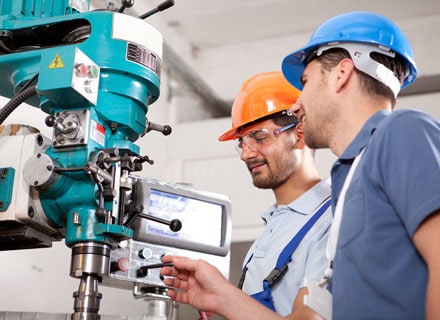
This lane is for people who like exact dimensions, blueprints, machine tools, and turning raw stock into a part that actually measures correctly.
Paths include machinist, CNC operator, CNC setup technician, CNC tool programmer, and tool and die maker. The big career distinction is often how much of your job involves tending a machine versus setting up, troubleshooting, programming, or improving the process.
Good fit if: you like measurement, spatial reasoning, tolerances, tooling, and steady technical refinement.
Explore CNC machining and machinist training or read our CNC machinist career guide.
2. Welding & fabrication
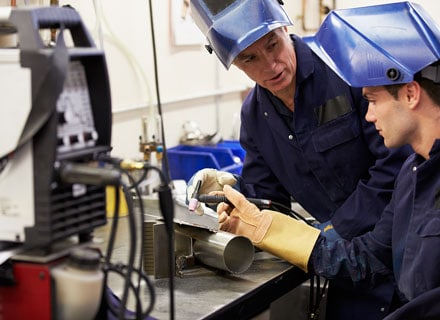
Welding careers center on joining, cutting, and fabricating metal. The work can range from production welding to specialized code work on structural, pipe, pressure, aerospace, or other critical components.
Good fit if: you like physical craftsmanship, metalwork, visible results, and improving a skill through repetition.
Think twice if: heat, fumes, protective gear, awkward positions, or physically demanding work are deal-breakers.
3. Industrial maintenance & reliability
If your favorite question is "why did that machine stop working?" this may be the best manufacturing lane on the page.
Industrial machinery mechanics diagnose and repair production equipment. Millwrights often focus more heavily on installing, moving, aligning, and overhauling large machinery.
Good fit if: you enjoy mechanical troubleshooting, root-cause hunting, and learning how multiple subsystems interact.
4. Automation, robotics, electrical & controls
This is where manufacturing starts looking less like the old factory stereotype and more like a giant electromechanical puzzle.
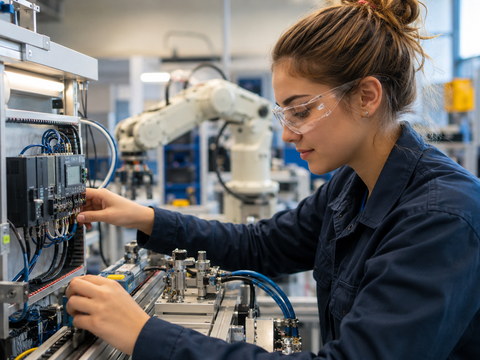
Roles may involve sensors, motors, programmable controllers, robotics, electrical systems, test equipment, networks, or a mixture of all of them. Be careful with titles: "robotics technician" and "automation technician" do not map neatly to one BLS occupation.
Good fit if: you like electrical diagrams, logic, sensors, programming, machines, and cross-system troubleshooting.
See mechatronics and automation technician training, robotics and automation programs, or instrumentation and controls careers.
5. Quality, inspection, metrology & testing
Not everyone wants to build or repair the thing. Some people would rather prove that the thing is actually right.
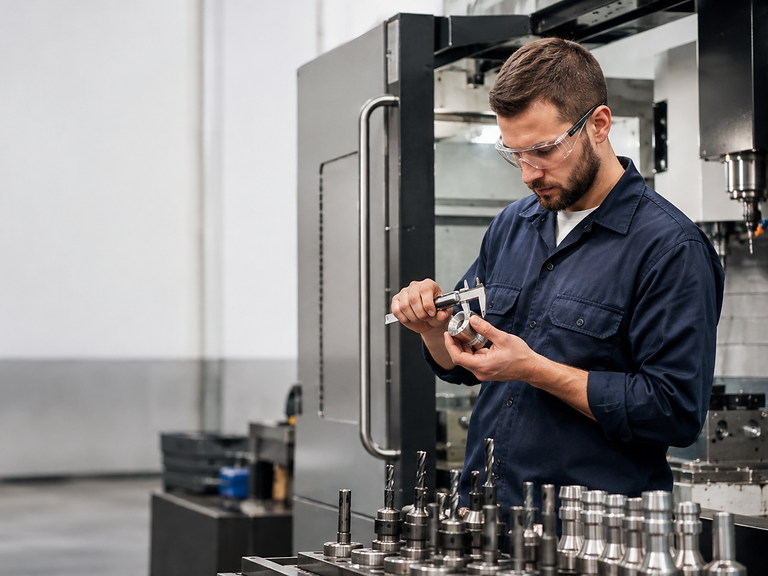
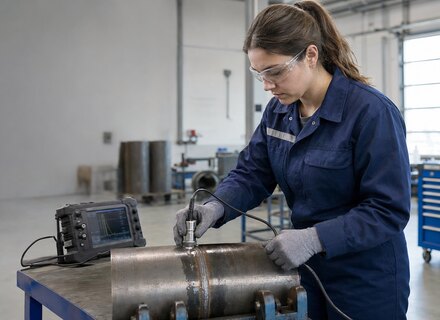
Quality control inspectors check products and materials. Calibration technicians verify measurement and test equipment. NDT specialists evaluate parts without destroying them.
Good fit if: you are detail-oriented, methodical, comfortable with documentation, and strangely happy when a measurement agrees to the third decimal place.
Read our NDT technician career guide.
6. Manufacturing & process technology
This lane sits between engineering theory and shop-floor execution. Industrial engineering technologists and technicians may analyze workflow, layouts, costs, quality, and process efficiency. Mechanical engineering technologists and technicians may support testing, prototyping, equipment design, and product development.
Good fit if: you like improving systems, analyzing why a process is inefficient, working with data, and still being close to real equipment.
Manufacturing career map: pay, outlook & training
The table uses May 2025 national OEWS median wages and BLS 2025–35 Employment Projections. These are national occupational figures across industries, not manufacturing-only pay rates. "Typical education" is BLS's national entry-level classification, not a promise that every employer hires that way.
| Career | Typical education / training | Median wage | 2025–35 | Annual openings | Good fit if you like... |
|---|---|---|---|---|---|
| Machinist | High school + long-term OJT | $58,750 | +1.0% | 26,100 | Precision parts, machines, measurement |
| CNC tool operator | High school + moderate-term OJT | $50,690 | -9.4% | 12,500 | Machine operation and production routines |
| CNC tool programmer | Postsecondary nondegree award + moderate-term OJT | $68,120 | +5.9% | 2,700 | CAD/CAM, code, tooling strategy |
| Welder / cutter / brazer | High school + moderate-term OJT | $53,750 | +2.4% | 40,300 | Metalwork and fabrication |
| Industrial machinery mechanic | High school + long-term OJT | $64,520 | +17.8% | 44,400 | Mechanical diagnostics and repair |
| Millwright | High school + apprenticeship | $65,700 | +0.9% | 3,200 | Heavy machinery installation and alignment |
| Electrician* | High school + apprenticeship | $63,190 | +9.2% | 72,700 | Electrical systems and troubleshooting |
| Mechatronics technician | Associate degree | $73,900 | +2.6% | 1,400 | Mechanical + electrical + automation systems |
| Electrical/electronics engineering tech | Associate degree | $78,190 | +2.4% | 8,100 | Electronics, testing, automation support |
| Industrial engineering tech | Associate degree | $66,120 | +3.1% | 6,600 | Workflow, quality, process improvement |
| Calibration technician | Associate degree | $67,820 | +4.8% | 1,500 | Precision measurement and instrumentation |
| Quality control inspector | High school + moderate-term OJT | $48,570 | +2.5% | 66,700 | Inspection, measurement, compliance |
| Semiconductor processing technician | High school + moderate-term OJT | $51,430 | +8.2% | 3,400 | Cleanroom technology and process equipment |
*BLS does not publish a separate national occupation for "industrial electrician." The electrician row covers electricians across industries, so use it as a broad benchmark, not a factory-only pay figure.
Growth leaderIndustrial machinery mechanics at +17.8% among careers compared here
Pay leaderElectrical/electronics engineering techs at $78,190 median among careers compared here
Watch the taskCNC operator -9.4% vs. CNC programmer +5.9%
Automation is changing manufacturing jobs, not changing them all the same way
Automation is easiest to understand at the task level. When equipment can automatically load material, repeat a motion, monitor a basic condition, or execute a programmed cycle, employers may need fewer people whose main job is routine tending.
But automated systems also create more equipment that must be installed, configured, maintained, diagnosed, calibrated, and repaired. Sensors fail. Drives fault. Robots lose position. Bearings wear. Networks drop devices. Measurements drift. Production still stops when the physical system cannot do what the software expects.
Current BLS projections reflect that split. Routine CNC tool operator employment is projected to fall, while CNC programming and industrial machinery maintenance are projected to grow. NIST and Manufacturing USA are also building workforce frameworks around automation, robotics, sensing, software, and other advanced manufacturing technologies.
No, that does not make any career "AI-proof." The safer conclusion is that higher-value technical tasks such as diagnosis, programming, repair, integration, precision measurement, and process judgment are different labor-market bets from repetitive machine tending.
Four common training routes into manufacturing
| Route | How it works | Best for | Watch out for |
|---|---|---|---|
| Employer OJT | Paid work plus structured or informal employer training | Production, inspection, machine operation, some maintenance paths | Skills can be narrow and employer-specific |
| Certificate / technical diploma | Focused postsecondary training; length varies by program | Welding, machining, industrial maintenance, electronics, targeted skill building | Credential value varies; verify external certifications and transferability |
| Registered apprenticeship | Paid job + structured OJL + mentorship + related instruction + progressive wages | Electrician, millwright, and other sponsor-dependent skilled trades | Availability and length vary by occupation and local sponsor |
| Associate degree | Technical labs plus broader theory and general education | Mechatronics, electronics, engineering technology, calibration, process technology | Higher time and tuition commitment than a narrow certificate |
Registered Apprenticeship is especially worth understanding. Apprenticeship.gov defines it as a paid job with structured on-the-job learning, mentorship, related classroom instruction, progressive wages, and a portable nationally recognized credential. Program length varies by occupation and sponsor.
For a deeper comparison of education routes, see trade school vs. certificate vs. apprenticeship.
Manufacturing credentials worth understanding
A state license, an industry certification, a school certificate, an apprenticeship credential, and a safety-training card all mean different things. Here are the distinctions that actually matter.
AWS Certified Welder
AWS says its Certified Welder program is performance-based and has no prerequisite course, certification, or minimum experience requirement. You qualify by passing the required weld test at an AWS Accredited Test Facility.
Translation: a school completion certificate and an AWS performance qualification are not the same thing.
NIMS credentials
NIMS says most credentials combine a knowledge exam with a performance evaluation, such as an inspected project or verified workplace-style task.
Translation: if a machining program advertises NIMS alignment, ask which specific credentials students can earn and how the performance component works.
MSSC CPT 4.0
The Certified Production Technician 4.0 program evaluates four core areas: safety, quality practices and measurement, manufacturing processes and production, and maintenance awareness. Green Production is optional.
Translation: useful broad production foundations, not a replacement for specialized trade training.
ISA CCST Level I
ISA requires at least five years of combined education and training, including at least one year of related work experience.
Translation: this is not a fresh-out-of-school credential. It is a later-career controls benchmark.
ASNT NDT Level II
Current ASNT Level II requirements vary by testing method and include documented training plus supervised NDT experience. Employer practical or job-specific exams may also be required.
Translation: a classroom NDT course alone does not make someone a fully qualified Level II technician.
SME CMfgT
SME positions the Certified Manufacturing Technologist as an entry-level manufacturing certification, while recommending at least four years of combined manufacturing-related education and/or work experience.
Translation: useful broader manufacturing-tech validation, but not the obvious first credential for every new production worker.
And OSHA 10/30? OSHA says Outreach Training cards are not certifications or licenses, the program is voluntary at the federal level, and the courses do not satisfy the training requirements of OSHA standards. Employers or jurisdictions may still require them.
What manufacturing work is really like
The phrase "manufacturing job" hides enormous variation.
A welder may spend much of the day in protective gear around heat, fumes, sparks, and awkward positions. A millwright or industrial mechanic may climb, lift, work around guarded machinery, and squeeze into uncomfortable places during repairs. A machinist may stand for long periods while handling parts, measuring tolerances, and working around coolant and chips.
At the other end of the spectrum, an industrial engineering technician may split time between a production floor and a computer. A calibration technician may spend much of the day with precision instruments and documentation. Semiconductor technicians can work in tightly controlled cleanroom environments rather than a heavy fabrication shop.
Schedules vary too. Plants that run continuously may use evenings, nights, weekends, rotating shifts, or overtime. Maintenance and controls staff can also face intense pressure when a high-value production line is down.
The better question is not "Do I want to work in manufacturing?" It is "Which manufacturing environment and problem set can I tolerate for years without wanting to launch a torque wrench through drywall?"
Choose your lane
This is an editorial shortcut, not a personality test.
I want to make precise parts
Start with machining and CNC. If you enjoy the code and process side more than repetitive tending, bias toward programming, setup, metrology, and process-improvement skills.
I want to build and join metal
Start with welding and fabrication. Compare nearby industries because structural, pipe, production, aerospace, and other welding environments can require very different qualifications.
I want to fix machines
Start with industrial maintenance. Industrial machinery mechanic and millwright paths reward mechanical diagnosis, patience, and the ability to work through ugly failures under pressure.
I want robots, sensors & PLCs
Start with mechatronics, automation, electronics, or controls. These paths usually demand more electrical theory and troubleshooting than basic production work.
I want to inspect and measure
Start with quality, calibration, metrology, or NDT. These fit people who enjoy precision and procedure more than fabrication.
I want to improve the whole process
Start with industrial or manufacturing engineering technology. Expect more flow analysis, quality, data, layout, documentation, and process-performance work.
How to evaluate a manufacturing training program
A good program should be able to answer specific questions without drowning you in marketing foam.
- What will I physically use in the lab? Ask for actual machines, tools, controllers, instruments, welding processes, software, or test equipment.
- How much supervised hands-on practice do students get? Do not accept "hands-on" as a slogan. Ask how lab time works and how many students share equipment.
- Which external credentials can graduates actually earn? Ask for the exact issuer and credential name.
- Does the curriculum match local employers? A technically good program can still be a weak choice if it trains on irrelevant equipment or misses the skills regional employers hire for.
- Are there apprenticeship, internship, co-op, or employer partnerships? Ask what those relationships produce in practice.
- What jobs did recent graduates get? Request job titles, not just a placement percentage.
- What does the placement rate include? Find out whether it counts any job or only work related to the program.
- What happens if I want to continue my education later? Ask whether credits transfer or stack into a higher-level program.
- Can the hands-on portion really be completed online? Simulation can help, but machining, welding, wiring, alignment, robotics, and physical inspection ultimately require real equipment.
- What will this program not qualify me to do? This is the question marketing departments hate and useful schools can answer.
For a broader enrollment checklist, see how to choose a trade school.
The practical bottom line
Manufacturing is neither dying nor universally booming. It is becoming more technically uneven.
Some routine production roles are shrinking. At the same time, employers still need large numbers of replacement workers, and several technical occupations tied to maintenance, programming, automation, electronics, measurement, and process technology have stronger outlooks than the broad production category.
So do not choose "manufacturing" as if it were one career. Choose a lane.
If you want the fastest entry, employer training or a focused certificate may make sense. If you want a licensed trade, investigate apprenticeship routes and local licensing rules. If you want robotics, electronics, calibration, or engineering-technology work, an associate degree may offer a stronger technical foundation.
And before spending tuition money, verify the equipment, labs, credentials, employer connections, and actual graduate outcomes. A modern factory can be a phenomenal place to build a career. A vague program with shiny robots in the brochure can still be expensive bullshit.
Frequently asked questions
Which manufacturing careers are growing the fastest?
Among the occupations compared in this guide, industrial machinery mechanics have the strongest BLS 2025–35 projected growth at 17.8%. Semiconductor processing technicians are projected at 8.2%, electricians at 9.2% across all industries, CNC tool programmers at 5.9%, and calibration technicians at 4.8%. These are national projections, not guarantees for a specific region.
Do you need a college degree for manufacturing careers?
Often, no. BLS lists a high school diploma plus on-the-job training as typical for machinists, welders, industrial machinery mechanics, quality control inspectors, semiconductor processing technicians, and several other occupations. Engineering-technology and mechatronics roles more commonly list an associate degree as the typical entry education.
Are robots replacing manufacturing workers?
Automation is reducing demand for some routine tasks, but it is not affecting every occupation the same way. BLS projects CNC tool operator employment to decline 9.4% while industrial machinery mechanics grow 17.8% and CNC tool programmers grow 5.9%. The safer conclusion is that automation shifts demand toward diagnosis, programming, maintenance, measurement, and integration skills rather than making every manufacturing job disappear.
What is the difference between manufacturing and production occupations?
Manufacturing is an industry classification based on what an establishment produces. Production occupations are a BLS occupational group based on what workers do. A manufacturing plant can employ production workers as well as electricians, mechanics, engineering technicians, managers, software specialists, and other occupations outside the production group.
Which certifications matter most in manufacturing?
It depends on the lane. AWS credentials can matter in welding, NIMS credentials in machining and industrial skills, MSSC CPT 4.0 in front-line production, ASNT credentials in nondestructive testing, ISA CCST in experienced controls work, and SME credentials in broader manufacturing technology. None is a universal "manufacturing certification."
Is an OSHA 10 or OSHA 30 card a manufacturing certification?
No. OSHA says Outreach Training cards are course-completion cards, not certifications or licenses. The training is voluntary at the federal level, although particular employers, states, unions, or jurisdictions may require it.
Related TSNET guides



Sources & data
Labor data and credential details were checked October 5, 2026.
- U.S. Bureau of Labor Statistics, Occupational Employment and Wage Statistics, May 2025: National Occupational Employment and Wage Estimates
- U.S. Bureau of Labor Statistics, Employment Projections 2025–35: Occupational projections and characteristics
- U.S. Census Bureau: 2022 NAICS Sector 31–33 Manufacturing definition
- Manufacturing USA: Advanced Manufacturing Occupation and Competency Framework
- Apprenticeship.gov: Registered Apprenticeship Program
- American Welding Society: Certified Welder Program
- NIMS: Credentialing
- Manufacturing Skill Standards Council: MSSC certifications and CPT 4.0
- International Society of Automation: CCST requirements
- American Society for Nondestructive Testing: ASNT NDT Level II certification
- SME: Certified Manufacturing Technologist
- OSHA: Outreach Training Program
Explore training options
Once you know which manufacturing lane fits, compare programs that teach the actual equipment and skills employers use in your area.