ADAS Calibration Training & Certification: How to Become a Technician



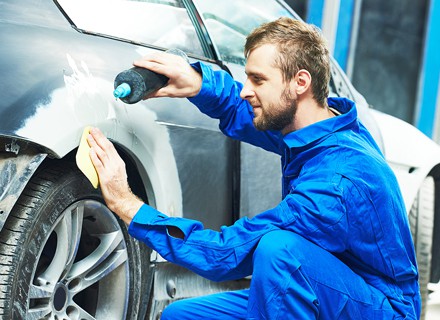
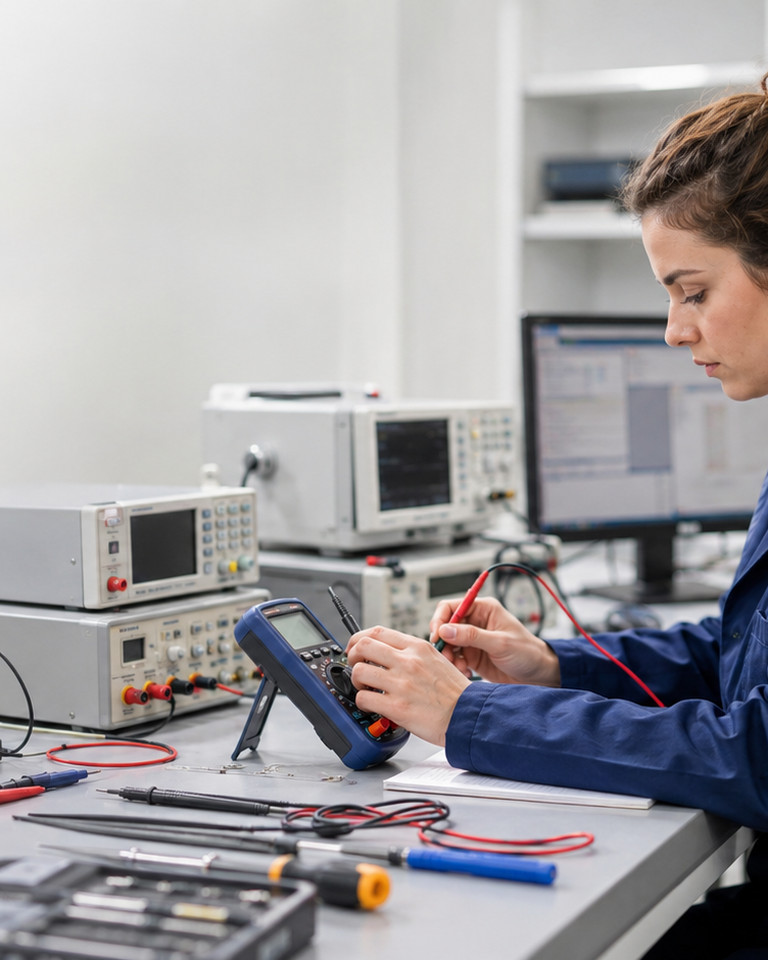
U.S. training and career guide. Provider and credential information reviewed October 14, 2026. Cover: AI-generated editorial illustration; not a photograph of a school or its trainees.
Quick answer: ADAS calibration is a specialty built on automotive diagnostics, collision repair, wheel alignment, or auto glass experience. Newcomers usually need foundational training and supervised shop practice before an advanced calibration class makes sense. Working technicians may be ready for targeted, two- or three-day hands-on courses. An ADAS course completion certificate, I-CAR Platinum recognition, and ASE L4 certification are different credentials with different rules.
ADAS stands for advanced driver assistance systems. Its cameras, radar units, and other sensors support functions such as automatic emergency braking, adaptive cruise control, and lane keeping. When parts are repaired or replaced, technicians may need to identify which systems require calibration, follow the manufacturer's instructions, and document that the work was completed correctly.
This guide helps you choose the right training for your starting experience, compare eight specific offerings, understand which credentials are actually portable, and decide whether paying for a short course is worthwhile.
Different career, similar name: Searching for laboratory instrument calibration, industrial metrology, or precision measurement equipment? See our industrial calibration technician career guide. BLS tracks that occupation separately from automotive repair.
What an ADAS calibration technician actually does
An ADAS technician may work for a dealership, collision repair center, auto glass business, wheel alignment shop, dedicated calibration center, or mobile diagnostics provider. The job is more than placing a calibration target in front of a car and pressing a button.
A typical workflow can include identifying the systems installed on the vehicle; reviewing original equipment manufacturer (OEM) procedures; checking tires, suspension geometry, sensor mounting, and repair history; using a scan tool to review faults and system data; performing the specified calibration; troubleshooting unsuccessful attempts; and documenting the result. Technicians sometimes deal with electrical circuits, vehicle network communications, and module configuration, depending on their role. The official ASE L4 task list covers that broader diagnostic scope.
Scanning is not the same as calibration
A pre- or post-repair scan reads electronic information, including diagnostic trouble codes. It does not independently establish that a camera or radar unit is aimed to factory specifications. A vehicle may have a damaged or displaced sensor mount without displaying an obvious warning. Technicians must look up the correct calibration triggers and procedures rather than conclude that no fault code means no calibration is necessary. See I-CAR's repairability guidance.
Static versus dynamic calibration
| Type | Where it happens | What training must teach |
|---|---|---|
| Static calibration | A controlled shop bay while the vehicle is stationary | OEM-specified target placement, measurements, floor and lighting conditions, vehicle preparation, and verification |
| Dynamic calibration | During a prescribed road-drive routine | Scan-tool setup, driving conditions, system status, safe operation, and manufacturer-specific completion checks |
| Both | In-shop and on-road, when required for a particular vehicle | Correct order of operations and documentation of both procedures |
The required method varies by vehicle, system, repair, and automaker. Some procedures also depend on correct wheel alignment, tire pressure, vehicle loading, or ride height. Never use general training material as a substitute for the current OEM service procedure for the exact vehicle.
Choose an ADAS training path based on your experience
There is no single 'ADAS school' pathway that makes sense for everyone. Start with your existing skills and the kind of shop where you want to work.
Path 1: You're completely new to automotive work
Start with automotive technology or collision repair fundamentals, not a three-day advanced course. Look for supervised instruction in electrical diagnosis, digital multimeter use, wiring diagrams, scan tools, steering and suspension, wheel alignment, safety procedures, and introductory ADAS work. A certificate, diploma, associate degree, or a suitable paid apprenticeship can provide a starting point. Training length varies by program; a two-year degree is not the only legitimate route.
Then seek shop experience assisting with inspections, alignments, post-repair scans, and supervised calibration tasks. A short vendor class can make more sense once you know how to diagnose why a calibration fails. An example of integrated college instruction is Howard Community College's AUTO 210, which teaches ADAS diagnosis and calibration within its automotive curriculum.
Start here: Compare automotive mechanic training programs and collision repair schools. Check the actual campus catalog for ADAS labs before making a school inquiry. A general automotive program does not automatically include dedicated calibration equipment.
If you're unsure which foundation fits, read auto body versus auto mechanic training.
Path 2: You already work on mechanical repairs or wheel alignments
Your experience with suspension, steering angles, vehicle geometry, and scan tools is a useful foundation. The remaining gaps may be ADAS sensor locations, OEM procedures, target placement, shop-environment requirements, and failed-calibration troubleshooting.
Compare an equipment-focused hands-on option such as Hunter's two-day Introduction to ADAS with Autel Academy's two- or three-day program or I-CAR courses. Choose training compatible with the equipment you will use at work. Ask your employer to pay for training if the shop benefits directly from your new skills.
Path 3: You work in collision repair or auto glass
Your structural repair, refinish, sensor mounting, or windshield experience is relevant, but you may need more electrical, communication-network, and wheel-alignment instruction. I-CAR's ADAS education catalog includes online subjects such as damaged mounting locations, OEM calibration requirements, electrical diagnostics, and what to do when a calibration fails.
For a structured collision-industry route, investigate the I-CAR ADAS Technician Platinum path and its required three-day static calibration skills course. For a Ford network facility, the required training is different: Ford's I-CAR training plan includes 17 online prerequisite courses and a two-day hands-on component for at least one technician per location.
Path 4: You're already an experienced diagnostic technician
If you have substantial hands-on repair experience, strong electrical diagnosis, scan-tool and network skills, and access to OEM information, a credential-first approach may be appropriate. Review the ASE L4 study guide, the composite vehicle reference, and the work-experience rules before purchasing exam preparation.
A specialized equipment course can then close gaps in the particular fixtures and calibration workflows your shop uses. Being experienced does not eliminate the need to follow vehicle-specific service procedures or maintain competence with new systems.
New to automotive work? Find the right foundation first.
Review automotive mechanic programs or collision repair training before investing in an advanced ADAS-only class. Ask each school whether its campus has actual calibration lab instruction. School listings may be sponsored; we do not claim every listed program offers an ADAS certificate.
ADAS training path finder
Choose your experience, equipment access, and goal. The tool provides a suggested research route, not a certification eligibility determination or a guarantee that a school or employer will accept a credential.
Find the right next training step
Your next step
Based on published training scopes and credential rules, not a personal skills assessment. Employers, course providers and ASE make final eligibility decisions.
ADAS certification: What each credential actually means
ASE L4: Advanced Driver Assistance Systems Specialist
ASE L4 is an individual technician certification involving diagnosis, service, and calibration of ADAS. There are no prerequisite certifications required to take the L4 exam. ASE specifies 50 questions, including 40 scored and 10 research questions, and a 120-minute time limit. About half of its questions refer to an ASE-supplied composite vehicle document.
Passing the exam does not immediately make you ASE L4 certified. ASE also requires three years of relevant hands-on repair experience, or an approved combination of work and eligible formal education. You can pass the test first and submit the required experience later. See ASE L4's official FAQ and the ASE work-experience instructions.
Formal education can count toward part, not all, of those three years:
| Qualifying education | Maximum credit toward the L4 three-year experience requirement |
|---|---|
| Completed ASE-accredited automotive, truck, or collision program | 1 year |
| Completed ASE-accredited OEM-sponsored cooperative program, including the required co-op component | 2 years |
| Passed at least three different ASE Entry-Level tests | 1 year |
| Other documented qualifying training | Up to 1 year, subject to ASE's conversion rules |
ASE says these substitution categories cannot be stacked. It must approve the submitted education and work history. An entry-level student who earns credit for school still needs relevant experience before certification.
Exam fee discrepancy (verified October 14, 2026): ASE's L4 FAQ lists $34 registration plus a $100 advanced-level test fee ($134). Its general test-fee page instead lists $34 plus $124 ($158). Check the amount in myASE at purchase; don't rely on an old blog's advertised fee.
I-CAR Platinum ADAS Technician versus Gold Class
I-CAR Platinum is an individual role recognition within collision-repair professional development. The ADAS Technician route involves ProLevels 1-3 and a hands-on static ADAS calibration course with prerequisites. I-CAR's current course catalog lists a three-day, 24-hour hands-on course and a prerequisite learning plan of 9 hours 15 minutes; review the actual enrollment plan for the full sequence and prices.
Gold Class is different. It recognizes qualifying repair businesses, not individual technicians. Completing a single I-CAR module or attending a three-day class on its own is not the same as earning Platinum status, and neither is an ASE L4 certificate.
OEM network and vendor training
Ford's Certified Collision Network uses shop-level requirements, including Ford-specific ADAS training and equipment. Vendor training focuses on operating particular calibration systems. For example, Autel Academy offers an Autel Academy ADAS Level 1 credential through its three-day program, with eligibility for certain I-CAR credits subject to I-CAR's rules. That is not an ASE L4 credential, even though Autel describes its training organization as ASE-accredited.
A Bosch system owner's virtual onboarding, a Hunter completion record, and a college course credit have different meanings again. Before buying, ask: Who awards it? What ability does it assess? Will my employer or intended network recognize it?
What about ASE's new calibration credential?
In May 2026, ASE announced development of a separate ADAS calibration technician credential intended for a wider range of repair, glass, and alignment professionals. This is distinct from the more diagnostic-intensive L4 certification. We did not find an official live registration and eligibility specification for the new credential in ASE's current published testing pages as of October 14, 2026. Treat it as announced, not a credential you can presently assume is available. Monitor ASE's current test directory for changes.
Do you need a government license to calibrate ADAS?
There is no single federal ADAS-calibration technician license. State repair-shop registration, consumer disclosure, and liability requirements can still matter, and some OEM networks impose facility and technician training requirements. California's Bureau of Automotive Repair guidance, for example, explains documentation and authorization requirements for registered automotive repair dealers. Ask the relevant state regulator and employer which rules apply to your actual work; don't mistake a private vendor certificate for a state license.
Eight real ADAS training options compared
These are examples for evaluating your pathway, not a ranking of 'best schools'. They serve different audiences, and not all offer public enrollment or an independently portable certification. Information checked against provider materials in October 2026; prices and course availability may change.
| Program or provider | Best suited to | Format and verified scope | Credential or cost caveat |
|---|---|---|---|
| I-CAR Static ADAS Calibration Hands-On | Collision technicians following I-CAR's role pathway | Three-day in-person static-calibration training; online prerequisites first | Counts toward an I-CAR path, not ASE L4; confirm full learning-plan and live-course charges |
| I-CAR / Ford ADAS Hands-On | Ford Certified Collision Network shop technicians | Two days hands-on plus a 17h 20m online prerequisite plan | Helps satisfy a Ford facility network requirement; not a general technician license |
| Autel Academy ADAS Comprehensive Training | Technicians learning Autel tools and workflows | Two- or three-day in-person hands-on course; regional U.S. events | November 2026 CA listings: $1,295 two days / $1,895 three days. Level 1 credential requires the three-day option |
| Hunter Introduction to ADAS | Alignment or mechanical technicians | Two-day class emphasizing calibration after wheel alignment | Hunter-focused continuing training; public directory does not state tuition |
| Bosch DAS 3000 Virtual Training | Shops that have purchased the Bosch DAS 3000 | Virtual equipment onboarding with purchase/registration | Not an open-enrollment independent certificate or substitute for live vehicle practice |
| Car ADAS Solutions Technician Training | Partner calibration-center staff | Weeklong classroom and practical instruction, with at least 10 live calibrations described | Part of a turnkey center package; standalone public tuition not stated |
| Howard Community College AUTO 210 | Automotive technology students | Three-credit, classroom-plus-lab ADAS diagnosis and calibration course within a college pathway | Academic credit; not automatic ASE L4 certification |
| Northern Virginia Community College EV/Hybrid/Autonomous Vehicles CSC | Students looking for a wider vehicle-technology foundation | One-year, 17-credit career studies certificate listed at Alexandria and Manassas | Broad program includes autonomous/ADAS technologies; confirm exact campus lab content |
What does hands-on training really buy you?
You should practice preparing vehicles, finding OEM requirements, selecting and placing equipment, attempting calibrations, documenting results, and investigating unsuccessful attempts. Ask about actual supervised vehicle work rather than counting hours spent watching an instructor perform demonstrations. A certificate of attendance may be valuable evidence of training, but it is not a national proficiency license.
If a course teaches only one hardware brand, that may be fine when your employer uses that system. It is less useful if you don't have access to the same equipment afterward.
ADAS technician salary and job outlook: Be precise about the data
BLS does not publish a separate national wage for 'ADAS calibration technician'. The following are related-occupation reference points, not claims about the typical pay of ASE L4 holders or graduates of an ADAS course.
| BLS occupation | May 2025 national median annual wage | 2025-2035 projected growth | Average annual openings |
|---|---|---|---|
| Automotive service technicians and mechanics (49-3023) | $50,620 | 5.0% | 66,200 |
| Automotive body and related repairers (49-3021) | $54,890 | 3.7% | 12,600 |
| Automotive glass installers and repairers (49-3022) | $47,630 | 5.7% | 1,300 |
Source: U.S. Bureau of Labor Statistics, May 2025 Occupational Employment and Wage Statistics for national wage medians and 2025-2035 Employment Projections for growth and openings. Retrieved from current TSNET BLS reference datasets and checked October 14, 2026. An employment projection for all mechanics or body repairers does not establish growth in the ADAS specialist subset.
The company, geographic market, type of shop, diagnostic responsibilities, and existing experience can make job offers quite different. The dossier reviewed employer postings that asked for prior shop experience and sometimes paid considerably more than general automotive medians, but individual advertisements are not representative national wage estimates. Ask about the base rate, overtime, travel, training reimbursement, diagnostic accountability, and access to current OEM subscriptions.
Don't mix up career categories: The separate BLS occupation for industrial calibration technologists and technicians has a $67,820 May 2025 median. That reflects metrology and instrument-calibration work, not automotive camera-and-radar technician pay.
Who should wait before paying for an advanced course?
A short course may be the wrong first purchase when:
- You have no experience diagnosing automotive electrical systems or interpreting repair manuals.
- You have never worked with steering, suspension, wheel alignment, scan tools, or collision/auto glass procedures.
- The provider assumes you'll return to a shop equipped with calibration targets and OEM software, but you have no such access.
- The tuition is for training on a brand of hardware your employer doesn't use.
- You think completing a three-day course will bypass an employer's experience requirements or ASE's separate experience approval.
- You have not asked a current employer whether it will pay for relevant continuing education.
Better move: First establish your foundation or find an employer-sponsored training pathway. For a working tech with the right prerequisites and equipment access, a focused hands-on course can be a sensible next step. The point is fit, not whether the course is short or long.
Before paying: 10-point ADAS training checklist
Use these questions with any school, employer, or training company. A printable checklist is included below.
Bring this list to admissions or a training provider. Ask for answers in writing before paying.
Frequently asked questions
Can anyone take the ASE L4 test?
ASE states there are no prerequisite certifications to sit the L4 exam. To become certified, you must pass the test and have three years of relevant hands-on repair experience or an approved education/work combination. ASE explains the requirement.
Does a three-day Autel or I-CAR class make me ASE certified?
No. I-CAR training can count toward I-CAR recognition, and Autel's three-day program offers its own Level 1 credential. ASE L4 is a separate test-plus-experience certification. Always identify the actual issuing organization.
Can I become an ADAS technician in three days with no experience?
You can learn introductory calibration workflows in a short course, but that alone is not reliable preparation for independent diagnosis and repair of complex vehicle safety systems. Build automotive electrical, chassis, and OEM-service-information skills, then gain supervised practical experience.
Can ADAS calibration be learned completely online?
Online courses are useful for theory and prerequisites. They cannot provide real-world practice physically aligning targets, preparing vehicles, or troubleshooting a failed calibration. For independent hands-on work, prioritize supervised practice and manufacturer-specific procedures.
Is an ADAS calibration technician the same as an industrial calibration technician?
No. Automotive ADAS technicians work with vehicle safety sensors and automotive repair systems; industrial calibration technologists and technicians test and adjust measurement instruments in manufacturing, labs, and related settings. Compare the industrial career.
Primary sources and methodology
Checked October 14, 2026. We compared published material from credential issuers, training providers, colleges, and BLS. Provider claims describe what those providers advertise; they do not independently prove a course leads to employment, a higher salary, or approval by an unrelated credentialing body. Wages use individual BLS detailed SOC occupations and do not represent an ADAS-only survey.
- ASE L4 specialist test, rules, and exam FAQs
- ASE formal education and work-experience substitutions
- ASE current general test fee schedule
- I-CAR ADAS course and prerequisite directory
- I-CAR Ford ADAS network training requirements
- Autel Academy training and credentials
- Hunter alignment and ADAS course descriptions
- Bosch DAS 3000 onboarding description
- Howard CC AUTO 210 course
- NOVA automotive technology program
- BLS: Automotive service technicians and mechanics
- BLS: Automotive body and glass repairers
- BLS: 2025-2035 occupational projections