Audio Engineering, Music Production, and Recording Arts Schools



Audio engineering and music production schools can help you build the recording, mixing, editing, live sound, and studio-production skills used in music, podcasts, film, video, broadcasting, games, live events, worship spaces, schools, and creative media work.
But audio training is not one-size-fits-all. Some programs lean technical, with microphones, consoles, acoustics, signal flow, Pro Tools, and live sound. Others lean creative, with beat-making, arrangement, MIDI, Ableton Live, Logic Pro, songwriting, sampling, and artist production. The right program depends on whether you want to record bands, produce tracks, mix audio, run live events, work in post-production, or build a broader media-technology career.
Use this guide to compare audio engineering schools, music production programs, sound engineering training, and recording arts pathways before choosing a program.
Audio Engineering & Music Production Schools
Sponsored Listings
SAE Institute
- Atlanta, Georgia
- Chicago, Illinois
- Miami, Florida
- Nashville, Tennessee
- Vancouver, British Columbia
- Audio
- Audio Engineering and Music Production
- Audio Technology
- Electronic Music Production
- Entertainment Business
Full Sail University
- Winter Park, Florida
- Online
- Audio Production
- Entertainment Business
- Music Business
- Music Production
- Recording Arts
Quick answer: Is audio school worth it?
Audio school can be worth it if the program gives you structured practice, real feedback, studio access, current software training, portfolio projects, and chances to connect with instructors or industry contacts. Those things are hard to replace with random tutorial videos, especially when you need to learn real studio workflow instead of just collecting plugins like shiny little mistakes.
But a certificate or degree is not a magic backstage pass. Audio careers are competitive, and employers or clients often care most about your ear, portfolio, reliability, technical skill, communication, and ability to solve problems under pressure. Before enrolling, look closely at the program's equipment, instructor experience, hands-on hours, graduate support, and portfolio expectations.
In plain English: school can give you structure and access. You still need practice, taste, persistence, and the ability to stay useful when a cable dies five minutes before doors open.
Which audio path fits you?
Audio careers overlap, especially in small studios and independent production work. Still, it helps to know the difference between the major paths before picking a school.
| If you want to... | Look for programs focused on... | Skills to compare |
|---|---|---|
| Record bands, vocals, podcasts, or instruments | Audio engineering, recording arts, sound engineering | Microphone placement, signal flow, Pro Tools, editing, mixing, acoustics, studio sessions |
| Produce beats, songs, or artist projects | Music production, audio production, electronic music production | Song arrangement, MIDI, sampling, Ableton Live, Logic Pro, FL Studio, plugins, artist direction |
| Mix or master tracks | Audio engineering, mixing, mastering, music production | EQ, compression, gain staging, critical listening, stereo imaging, loudness, mastering workflows |
| Run concerts, conferences, worship services, or events | Live sound, audio technician, A/V technology | Sound boards, speakers, monitors, wireless mics, troubleshooting, event setup, signal routing |
| Work in film, TV, games, or online video | Post-production audio, sound design, media production | Foley, dialogue editing, ADR, syncing audio to picture, sound effects, game audio workflows |
| Support broadcast, podcast, corporate, or school media systems | Audio/video technician, broadcast technology, media technology | Audio and video equipment setup, recording, transmission, editing, maintenance, problem solving |
Audio engineering vs. music production vs. recording arts
People use these terms loosely, and schools do not always label programs the same way. The practical difference is usually about the work you want to do most.
| Term | Main focus | What it usually includes | Best fit |
|---|---|---|---|
| Audio engineering | Technical recording, editing, mixing, and sound quality | Microphones, consoles, signal flow, acoustics, editing, mixing, mastering, Pro Tools | People who like precision, gear, problem-solving, and the science of sound |
| Sound engineering | Often used interchangeably with audio engineering | Studio sound, live sound, broadcast sound, event audio, sound reinforcement | People interested in studio or live technical audio roles |
| Recording arts | Studio recording and creative audio production | Recording sessions, editing, mixing, music production, studio workflow | People who want a broad creative-studio education |
| Music production | Creative development of songs or tracks | Beat-making, arrangement, MIDI, DAWs, sampling, artist direction, production style | People who want to shape the sound and direction of music projects |
| Audio production | Broad digital audio creation | Recording, editing, mixing, music, podcasts, video sound, digital media | People who want flexible audio skills across media types |
| Audio technician | Setup, operation, and troubleshooting of audio or A/V systems | Live sound, speakers, microphones, cables, mixers, media systems, repairs | People who like hands-on technical work in events, venues, schools, offices, or broadcasts |
If you picture yourself placing mics, setting levels, editing takes, and mixing tracks, audio engineering may be the stronger match. If you picture yourself building beats, shaping arrangements, coaching artists, and developing a track's creative identity, music production may fit better. If you want concerts, venues, churches, conferences, or broadcast setups, look hard at live sound or A/V technician training.
What audio engineering schools teach
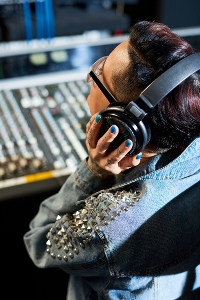 Audio engineering programs usually focus on the technical side of capturing and shaping sound. Depending on the school, you may study:
- Sound theory, acoustics, frequency, amplitude, phase, and room behavior
- Microphone types and placement for vocals, drums, guitars, voiceover, podcasts, and location sound
- Signal flow through interfaces, preamps, patch bays, mixers, consoles, and digital audio workstations
- Studio recording workflows, including session setup, tracking, overdubbing, comping, and editing
- Mixing techniques such as EQ, compression, reverb, delay, automation, and stereo imaging
- Mastering basics, loudness, limiting, translation across playback systems, and release preparation
- Pro Tools and other DAWs used for recording, editing, and post-production
- Troubleshooting noise, latency, clipping, feedback, routing problems, and other session-killing nonsense
Strong programs should give you repeated hands-on time with recording equipment. Watching someone else touch the gear is not the same as learning to run a session when a singer is impatient, the drummer is too loud, and the clock is burning money.
What music production schools teach
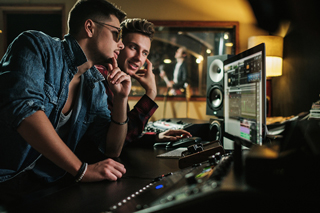 Music production programs usually focus more on creative direction, song construction, and digital production. Depending on the program, you may study:
- Song structure, arrangement, rhythm, melody, harmony, and production style
- MIDI sequencing, sampling, beat-making, synthesis, and sound design
- DAWs such as Ableton Live, Logic Pro, FL Studio, Studio One, Cubase, or Pro Tools
- Virtual instruments, plugins, drum programming, vocal production, and electronic music workflows
- Artist collaboration, session planning, creative feedback, and project management
- Mixing fundamentals for producers who need to finish polished demos or release-ready tracks
- Music business basics such as copyright, publishing, royalties, contracts, marketing, and entrepreneurship
Music production can be more self-directed than technical audio work. A good program should still push you to finish portfolio pieces, collaborate with other students, and get useful critique. Loops are fun. Finished work is what proves you can actually complete a project.
Recording arts and studio training
Recording arts programs often blend audio engineering and music production. They may be a good fit if you want a broader studio-focused path rather than a narrow technical or producer-only program.
A recording arts curriculum may include studio recording, critical listening, music production, mixing and mastering, live sound basics, post-production audio, audio for video, music business, and portfolio or capstone projects.
The phrase "recording arts" is still common in some school catalogs, but many students now search for "audio engineering" or "music production." When comparing programs, do not get stuck on the label. Read the course list and ask what you will actually do in the studio.
Live sound and audio technician training
Not every audio career happens in a studio. Live sound and audio technician roles can involve concerts, theaters, sports, worship services, corporate events, conventions, schools, hotels, hospitals, broadcast environments, and media rooms.
- Setting up microphones, speakers, monitors, cables, and mixing boards
- Front-of-house mixing and monitor mixing
- Wireless microphone coordination
- Feedback control and room tuning
- Audio/video equipment setup and maintenance
- Event troubleshooting under time pressure
- Basic lighting, video, projection, streaming, or broadcast equipment
This path can be a better fit if you like active work, live events, and solving problems fast. It can also mean evenings, weekends, load-ins, tear-downs, and the occasional joy of finding out someone used your good mic stand as a coat rack.
Audio for film, TV, games, and digital media
Audio training can also lead toward media production rather than music. Film, TV, online video, podcasting, animation, and game audio all need people who can record, edit, clean up, synchronize, and design sound.
- Dialogue editing
- Foley and sound effects
- ADR, or automated dialogue replacement
- Location recording
- Audio cleanup and restoration
- Sound design
- Audio syncing to picture
- Game audio implementation basics
- Podcast and broadcast production
If this is your goal, look for programs that connect audio training with film and video production, animation, game design, or media production. A music-only program may not cover enough post-production workflow.
Certificate, diploma, associate degree, or bachelor's degree?
Audio programs vary a lot. Some are short certificate or diploma programs. Others are associate or bachelor's degree programs with broader academic requirements. The right choice depends on your goals, budget, timeline, and how much general education you want with your technical training.
| Program type | Typical length | Best for | Watch out for |
|---|---|---|---|
| Certificate | A few months to about 1 year | Focused skill-building in recording, production, DAWs, live sound, or Pro Tools | May be too narrow if you want a broader degree or long-term academic pathway |
| Diploma | About 9 months to 2 years | Hands-on career training with fewer general education courses | Quality depends heavily on gear access, instructor experience, and portfolio work |
| Associate degree | About 2 years | Students who want technical audio training plus communication, business, or general education | May take longer and cost more than a certificate |
| Bachelor's degree | About 4 years | Students interested in deeper music, media, engineering, business, or production education | Bigger commitment, and not every audio role requires a bachelor's degree |
| Online course or bootcamp | Varies widely | Self-motivated producers learning DAWs, composition, mixing, or music business | Limited access to studio rooms, microphones, consoles, and live systems |
Do not choose only by program length. A short program with strong studio time and honest career support may be more useful than a longer program with weak hands-on access. A degree may be valuable if you want broader media, business, technical, or academic options. The trick is matching the credential to the work you actually want.
Online vs. in-person audio training
Online audio training can make sense for music production, DAW skills, songwriting, beat-making, music business, and some mixing concepts. If you already have a home setup, online courses can help you build disciplined workflows and finish projects.
In-person training becomes more important when you need access to studios, microphones, consoles, live sound systems, acoustic spaces, and real-time troubleshooting. Recording drums in a treated room is not the same as dragging loops onto a laptop track. Both can be useful, but they teach different muscles.
Ask yourself:
- Do I need studio access or mostly software training?
- Do I already own a computer, interface, headphones, monitors, MIDI controller, or microphone?
- Will the program provide feedback on actual projects?
- Can I collaborate with other students or artists?
- Is there a portfolio, demo reel, or capstone requirement?
- Are classes live, asynchronous, or self-paced?
Software and tools to compare
Audio programs should teach tools that match your target path. You do not need every DAW on earth. You do need to understand the software and workflow expectations for the type of work you want.
| Tool or skill area | Why it matters |
|---|---|
| Pro Tools | Common in professional recording, editing, and post-production workflows |
| Logic Pro | Popular for songwriting, composition, production, and Mac-based music creation |
| Ableton Live | Strong for electronic music, beat-making, live performance, sampling, and loop-based workflows |
| FL Studio | Popular with many producers, beat-makers, and electronic music creators |
| Studio One, Cubase, or other DAWs | Useful depending on school, genre, region, and workflow preference |
| Microphones | Essential for recording vocals, instruments, podcasts, voiceover, Foley, and live sound |
| Mixing consoles and control surfaces | Important for studio, live sound, broadcast, and larger production environments |
| Audio interfaces and preamps | Core recording-chain tools that affect gain, routing, and signal quality |
| Plugins and virtual instruments | Used for EQ, compression, reverb, delay, synthesis, sampling, and production textures |
| Monitoring and acoustics | Critical for hearing accurately and making mixes that translate outside the room |
Software changes. Core listening skills, clean routing, problem-solving, and good taste age better.
Is Pro Tools certification worth it?
Pro Tools certification can be useful if you want a structured way to prove software knowledge, especially for recording, editing, post-production, or studio-assistant work. Avid offers certification paths tied to Pro Tools training, and some schools or training partners may prepare students for those exams.
That said, certification is not the same thing as an occupational license. Audio engineers generally are not licensed by a state just to operate Pro Tools or work in a studio. Certification is a software credential. It can help signal competence, but employers and clients will still care about your work samples, speed, reliability, communication, and ability to solve real session problems.
Before paying extra for certification prep, ask:
- Is the school an official training partner or using current course materials?
- Which certification level does the course prepare for?
- Is the exam fee included?
- Which Pro Tools version is covered?
- How much hands-on editing and mixing practice is included?
- Will I leave with portfolio pieces, or only a test-prep credential?
Career paths in audio
Audio training can lead toward several kinds of work. Some roles are employee jobs. Others are freelance, contract, project-based, or self-employed. Many people combine multiple income streams, especially early on.
- Recording engineer
- Assistant engineer
- Mix engineer
- Mastering engineer
- Music producer
- Beat-maker or electronic music producer
- Live sound technician
- Front-of-house or monitor engineer
- Audio/video technician
- Broadcast technician
- Podcast producer or editor
- Dialogue editor
- Foley or sound effects editor
- Game audio assistant or sound designer
- Studio manager
- Worship audio technician
- Corporate A/V technician
Some of these jobs overlap. A small studio may expect one person to record, edit, mix, troubleshoot the interface, calm down the vocalist, and make the coffee. Larger productions may separate those jobs into specialized roles.
Pay, outlook, and the reality check
The U.S. Bureau of Labor Statistics groups many audio-related roles under broadcast, sound, and video technicians. For that broader group, the median annual wage was $56,600 in May 2024. Sound engineering technicians had a higher median wage of $66,430, while audio and video technicians had a median wage of $54,830.
BLS projects overall employment for broadcast, sound, and video technicians to grow 1 percent from 2024 to 2034, slower than the average for all occupations. Even with limited growth, BLS projects about 11,100 openings per year on average, largely from workers leaving the occupation or transferring to other fields.
Those numbers are useful, but they are not the whole story. Audio income can vary widely by city, industry, client base, union environment, skill level, reputation, and whether you are employed, freelancing, or running your own small production business. A school should never imply that a program guarantees a studio job, a record deal, or a pile of money. If it does, treat that as a warning sign.
Who audio training may be good for
Audio engineering or music production training may be a good fit if you:
- Care about sound quality and tiny details most people miss
- Like both creative work and technical problem-solving
- Can handle repeated practice without instant applause
- Want to build a portfolio, not just earn a credential
- Are willing to learn software, hardware, signal flow, and collaboration skills
- Can take feedback without treating every critique like a personal attack
- Understand that careers in music and media often require networking, hustle, and flexibility
Who should think twice
This path may be a rough fit if you:
- Want guaranteed employment from a short program
- Hate technical troubleshooting
- Need a predictable 9-to-5 schedule right away
- Do not want to work nights, weekends, or events
- Prefer solo work and dislike client feedback
- Expect software certification alone to make you employable
- Are choosing the field only because you like listening to music
Liking music is the starting point, not the qualification. Lots of people like music. The work is making sound behave when equipment, people, rooms, deadlines, and budgets are all being annoying at once.
Questions to ask audio engineering and music production schools
Before choosing a school, ask direct questions. A good admissions team should be able to answer without tap-dancing into fog.
- How much hands-on studio time is included?
- What is the student-to-gear ratio?
- Which DAWs are taught, and which versions are used?
- Is Pro Tools, Logic Pro, Ableton Live, FL Studio, or other software training required or optional?
- Does the program include live sound, post-production, podcasting, or broadcast audio?
- Are instructors currently active in music, media, live sound, or audio production?
- Will I complete portfolio projects, a demo reel, or a capstone?
- Can students use studios or labs outside class hours?
- Are internships, externships, or industry projects available?
- What jobs have recent graduates actually gotten?
- Are job placement statistics documented and current?
- What equipment is available for students to use directly?
- Are certification exam fees included, optional, or separate?
- What total costs should I expect, including software, hardware, books, fees, and equipment?
- How does the program help students build local industry connections?
Common mistakes when choosing an audio school
Choosing by studio photos alone
A beautiful studio photo does not tell you how often students use the room, whether the gear works, or whether beginners get meaningful hands-on time. Ask about access.
Ignoring the difference between engineering and production
Audio engineering and music production overlap, but they are not identical. Pick a program that matches the work you want to do most.
Assuming a degree guarantees a music career
It does not. Training can help you build skills and connections, but creative careers depend heavily on work samples, relationships, consistency, and being useful when things get messy.
Forgetting the business side
Freelancers need more than taste and plugins. They need pricing, contracts, communication, file management, client expectations, and the ability to finish work.
Choosing software over fundamentals
Learning a DAW matters. Learning how sound works matters more. Software gets updated. Your ear, workflow, and problem-solving habits stick around.
Find audio engineering and music production schools
If you want a structured path into audio, start by comparing programs that match your goal: studio recording, music production, live sound, audio/video technology, post-production, or media arts.
Look for programs that clearly explain what you will learn, what equipment and software you will use, how much hands-on time is included, what projects you will complete, and what support is available after graduation.
Audio engineering and music production school FAQ
What is the difference between audio engineering and music production?
Audio engineering usually focuses on the technical side of recording, editing, mixing, and reproducing sound. Music production usually focuses more on the creative direction of a song or track, including arrangement, beat-making, sound design, and guiding the overall feel of the project. In smaller studios, one person may do both.
What do audio engineering schools teach?
Audio engineering schools commonly teach recording techniques, microphone placement, signal flow, acoustics, digital audio workstations, editing, mixing, mastering, live sound, and sometimes post-production audio for film, video, podcasts, or games.
Do I need a degree to become an audio engineer?
Not always. Educational expectations vary by role, employer, and market. Some people enter audio work through certificates, diplomas, associate degrees, bachelor's degrees, internships, self-directed projects, or freelance experience. What matters most is whether you can demonstrate useful skills and finish good work reliably.
Are online music production programs worth it?
Online music production programs can be useful for DAW skills, beat-making, songwriting, mixing concepts, and music business. They may be less useful if you need access to recording studios, microphones, consoles, live sound systems, or in-person collaboration. The better choice depends on your current setup and goals.
Is Pro Tools certification required?
Pro Tools certification is not usually required by law. It is a software credential that may help show proficiency, especially for studio or post-production workflows. It should be viewed as a useful signal, not a substitute for strong portfolio work and real session experience.
How long does audio engineering school take?
Program length varies. Some focused certificates or bootcamps may take a few months. Diploma programs may take about a year or more. Associate degrees often take about two years, and bachelor's degrees typically take about four years. Always verify the actual schedule, credits, and hands-on requirements with each school.
Can audio training lead to jobs outside music?
Yes. Audio skills are used in broadcasting, podcasting, live events, corporate A/V, schools, houses of worship, film, television, online video, game audio, and media production. If you want broader job options, compare programs that include live sound, A/V systems, post-production, or broadcast workflows, not only music production.
What should I ask before choosing an audio school?
Ask about studio access, student-to-gear ratio, software versions, instructor experience, portfolio projects, internship options, certification prep, total cost, graduate outcomes, and whether students can use labs or studios outside regular class time.